




























































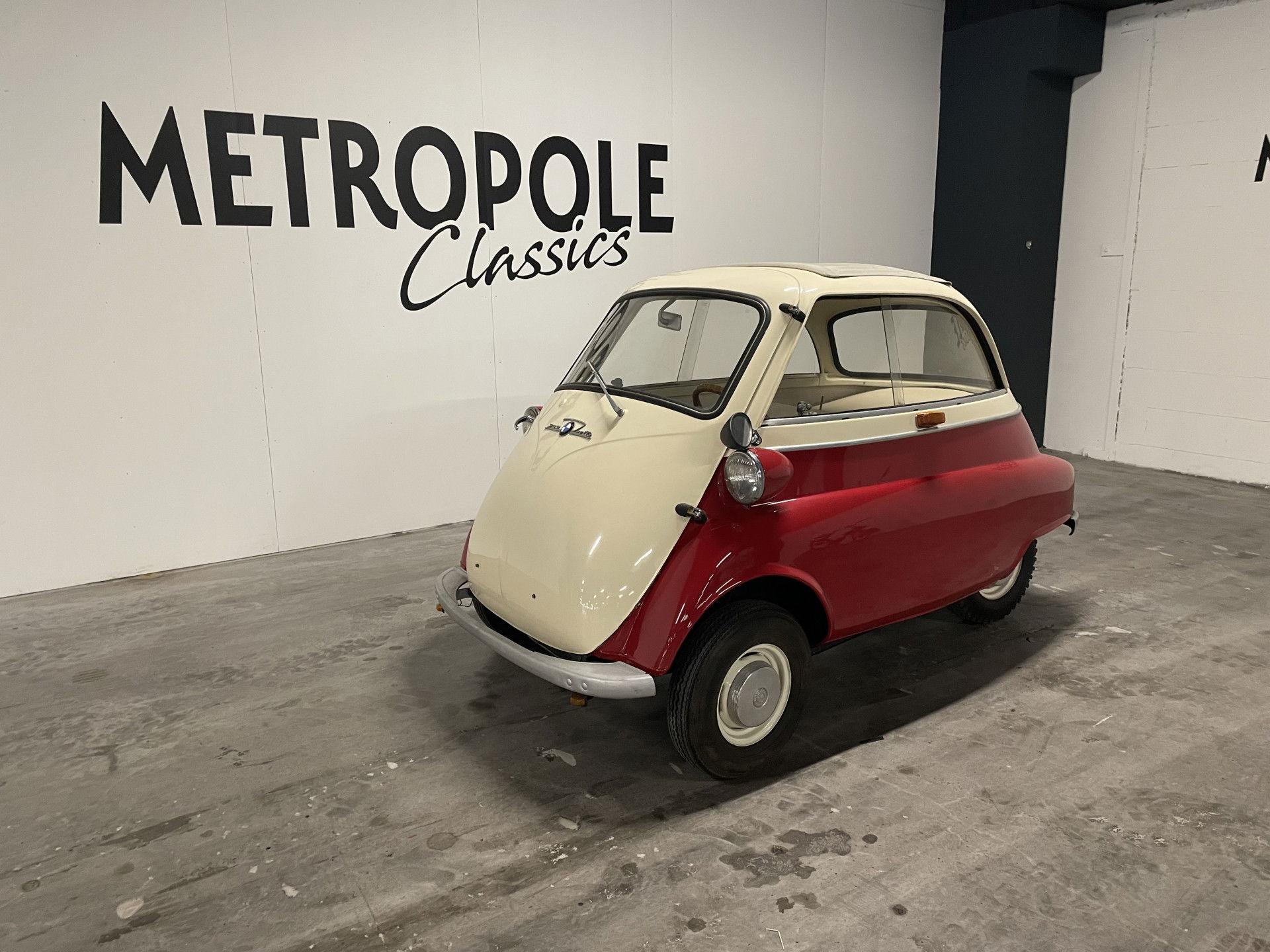
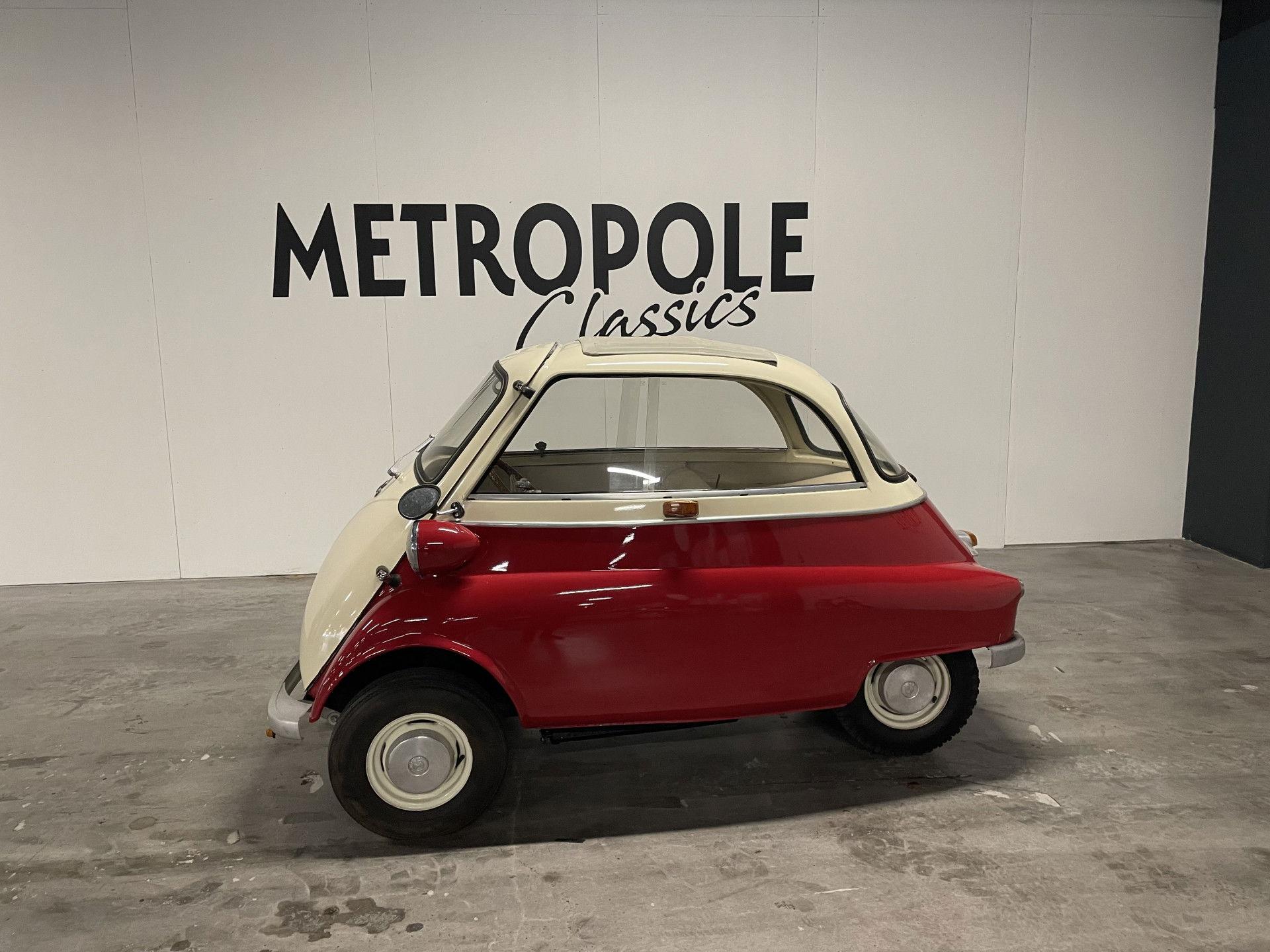
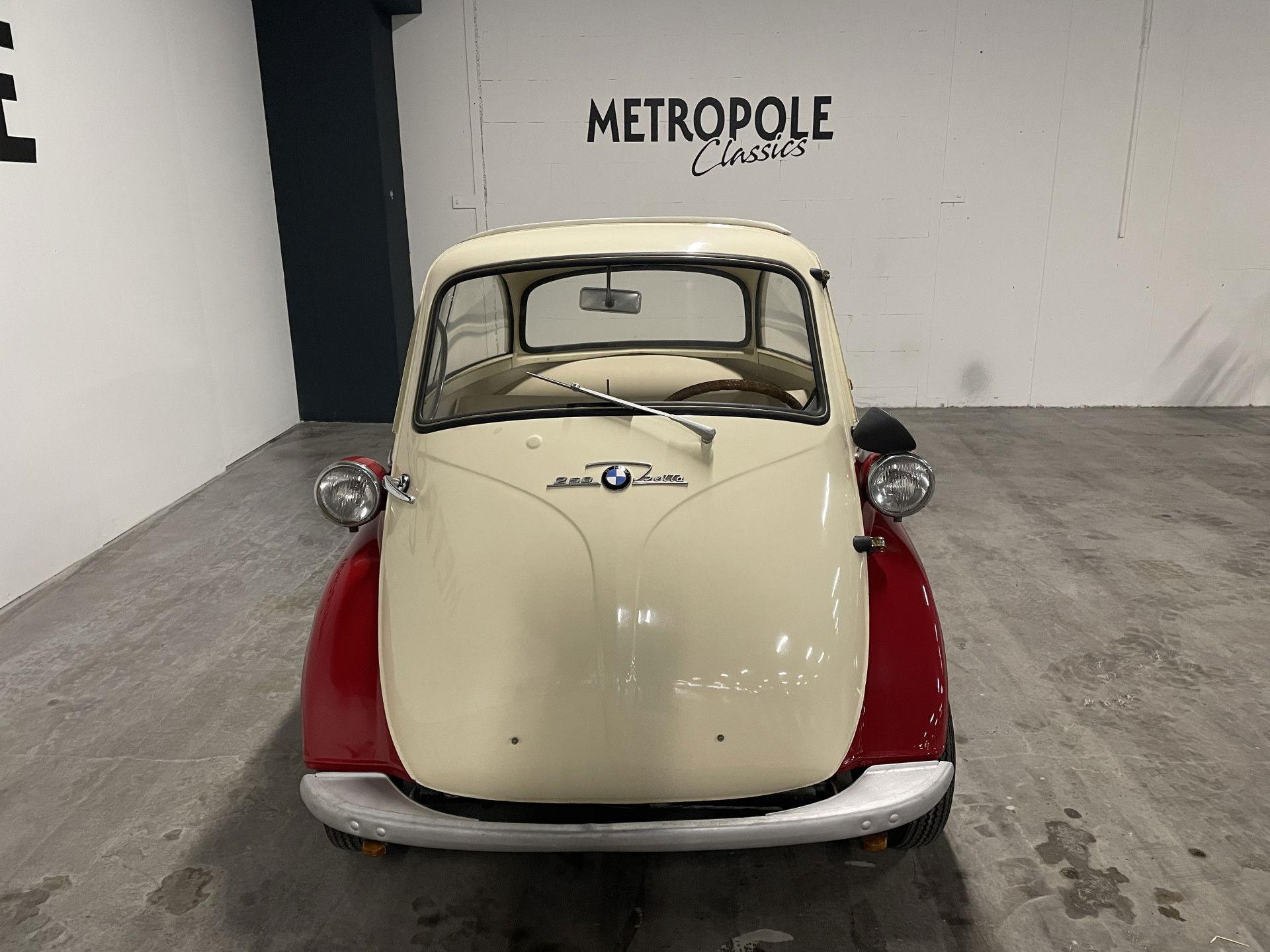
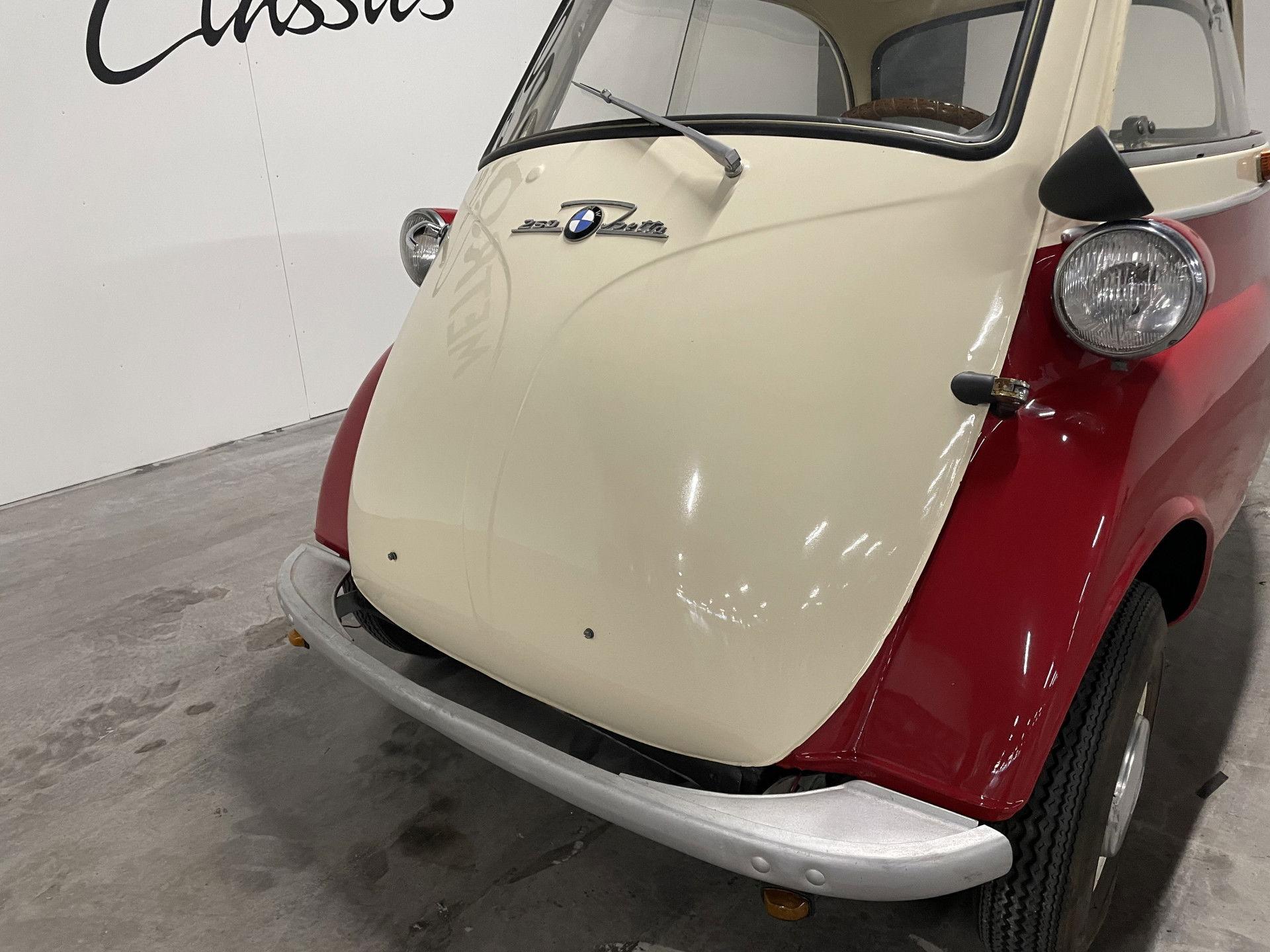
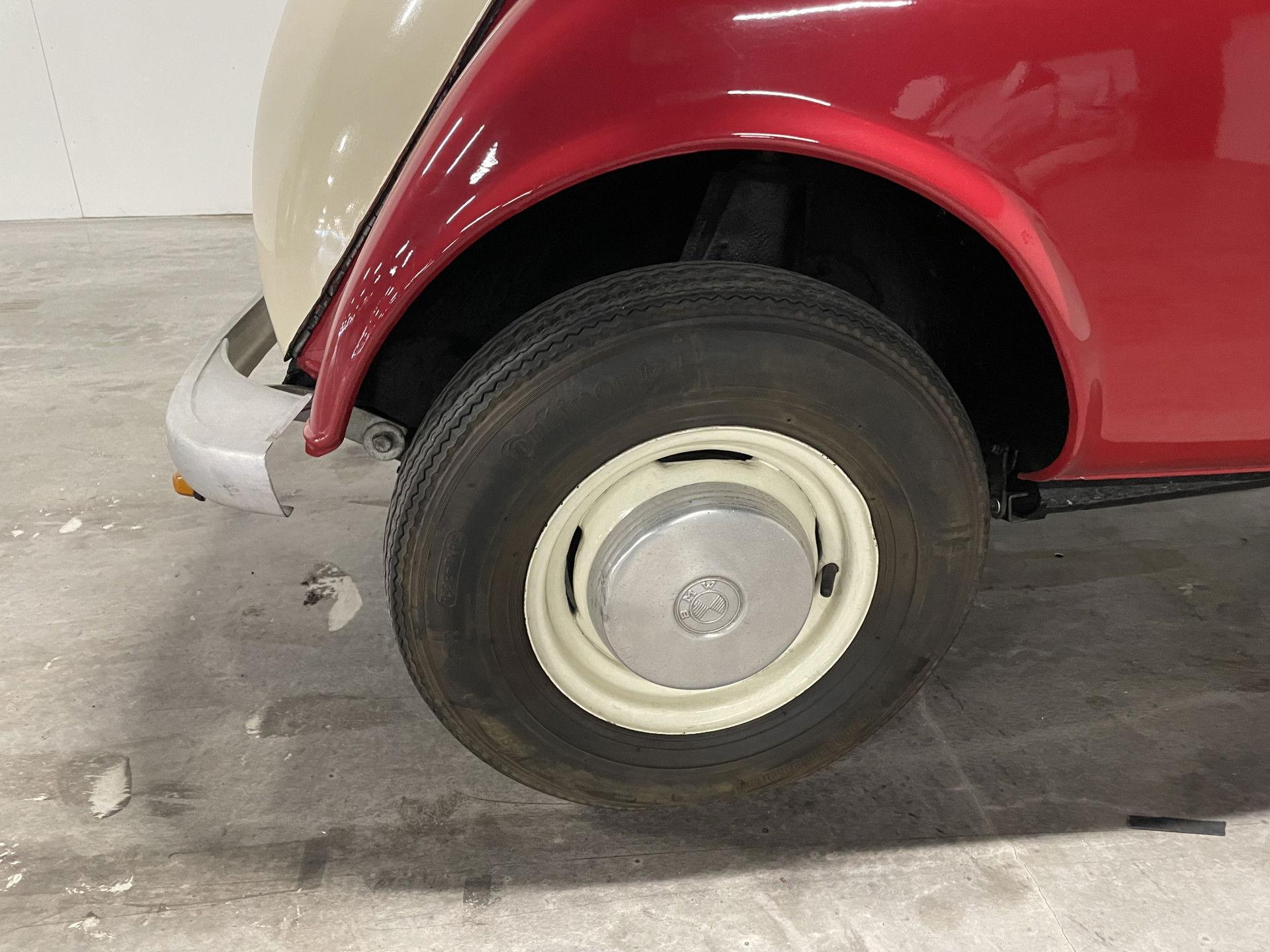
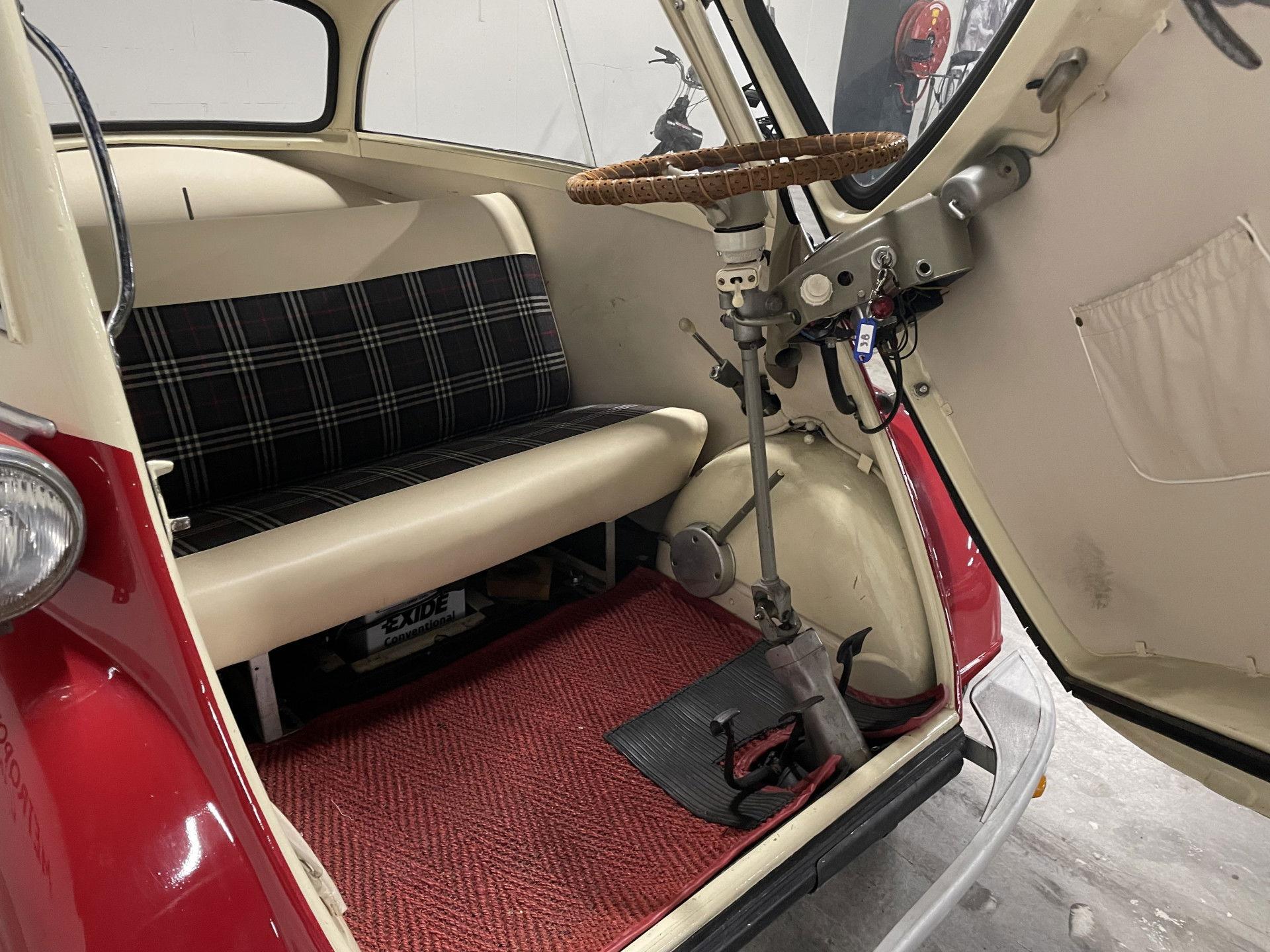
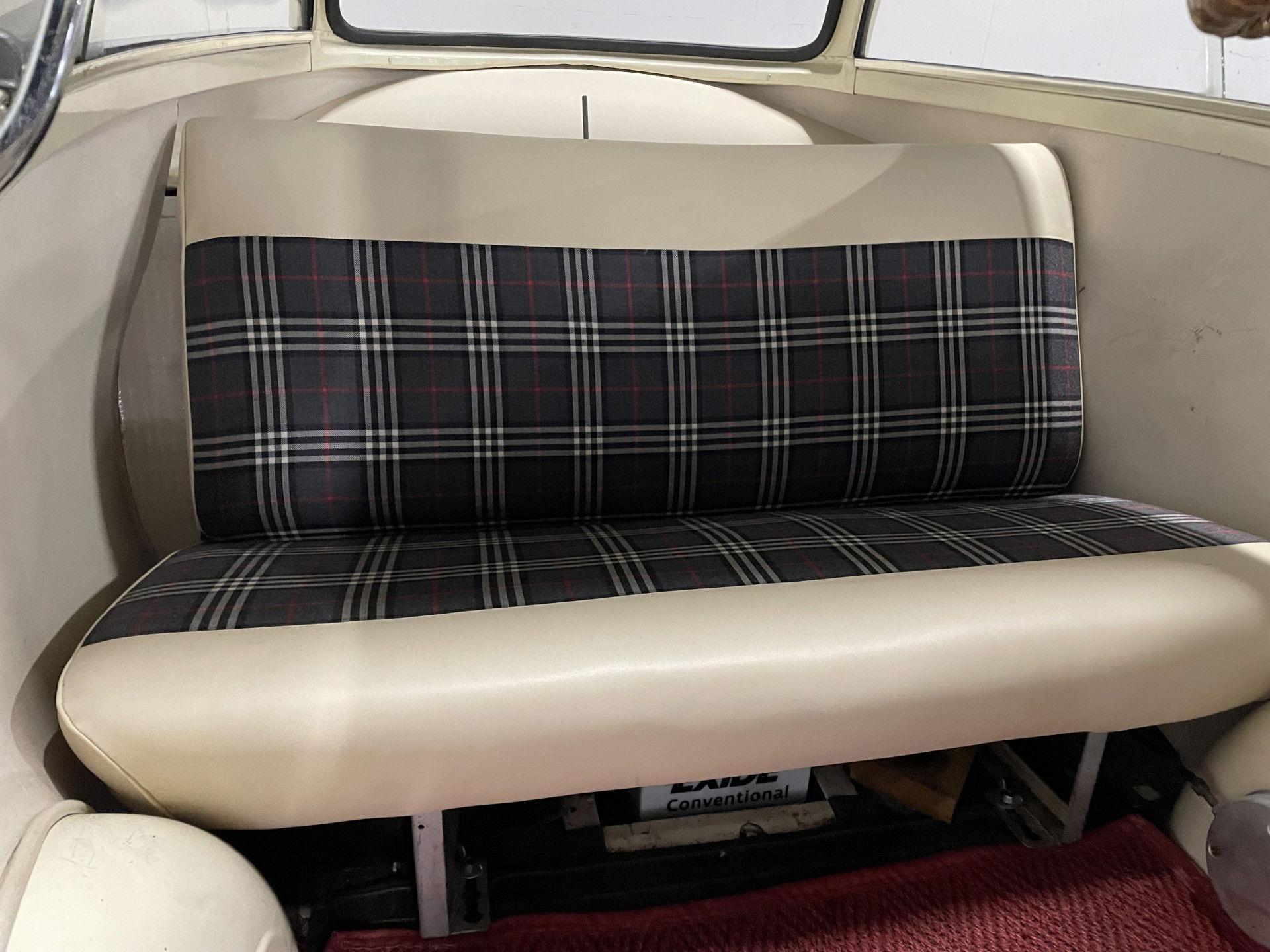
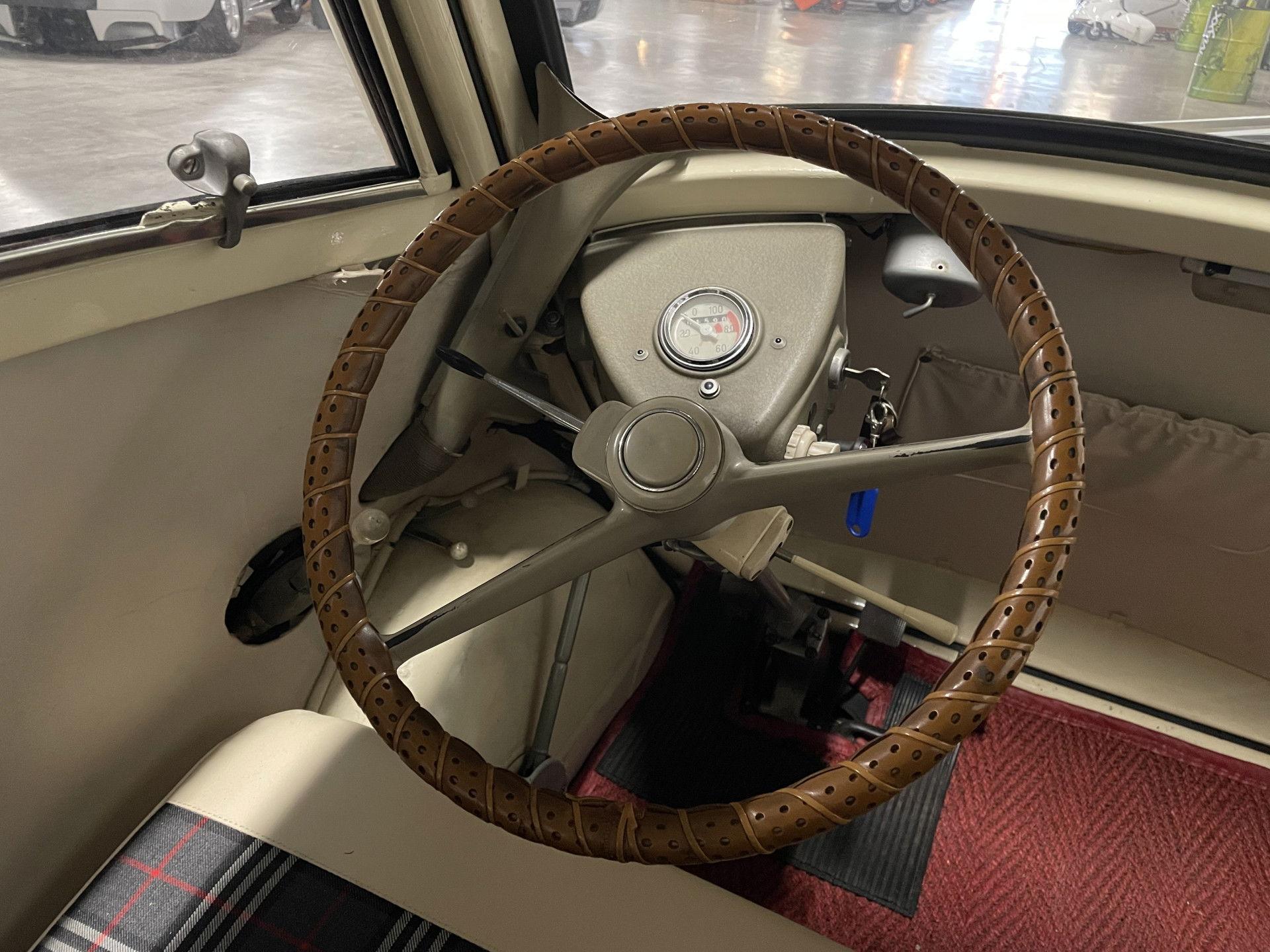
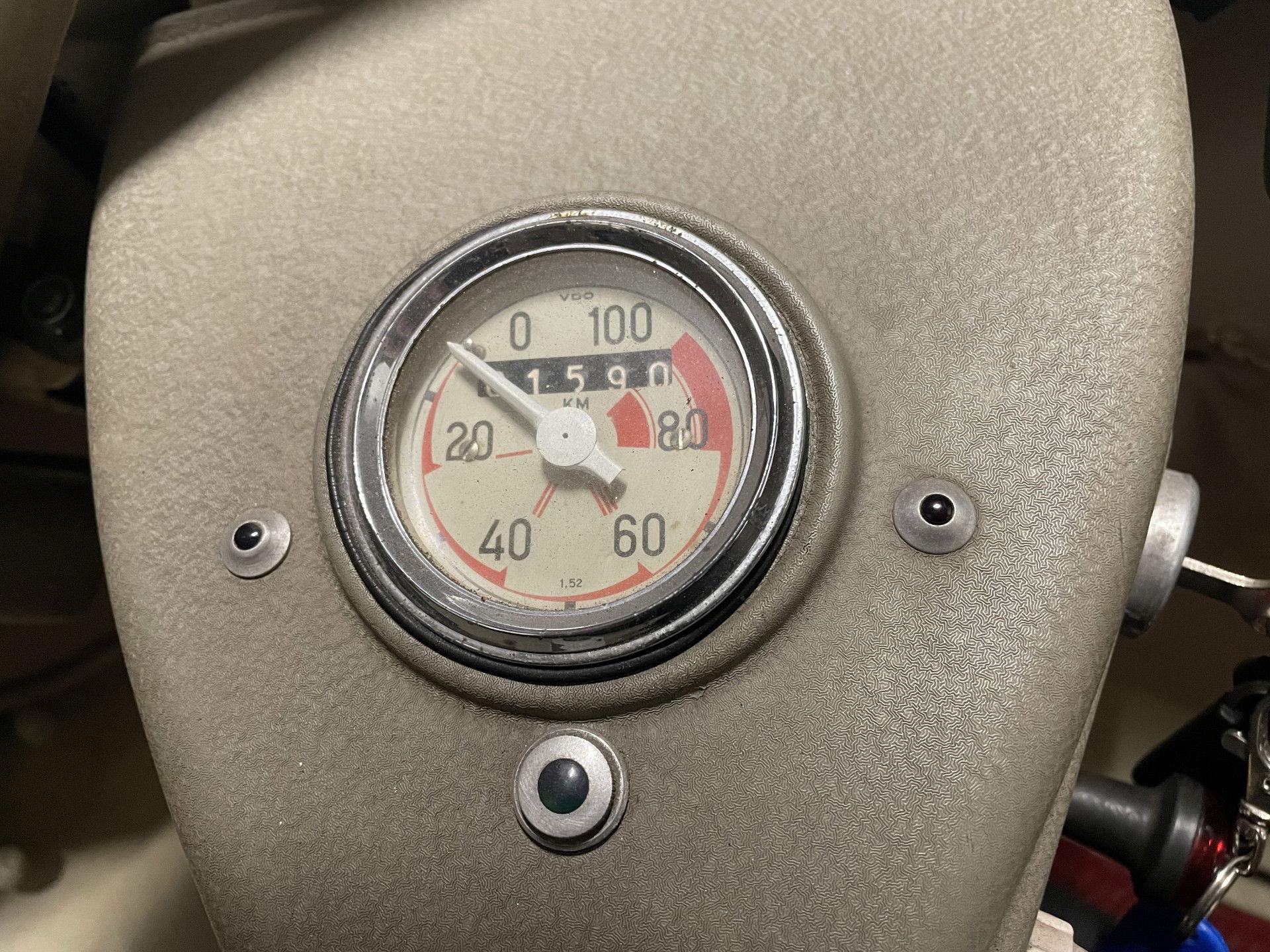
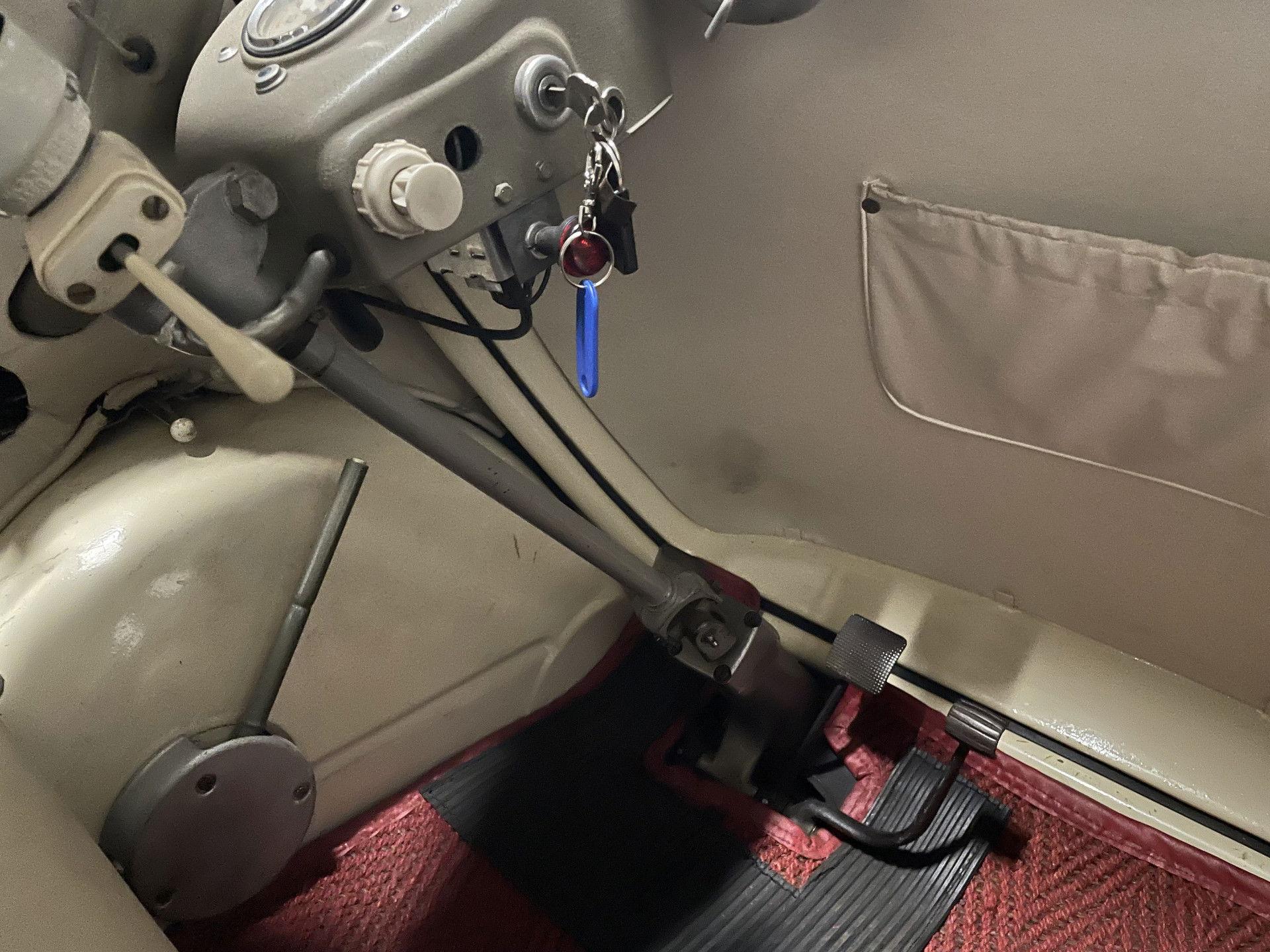
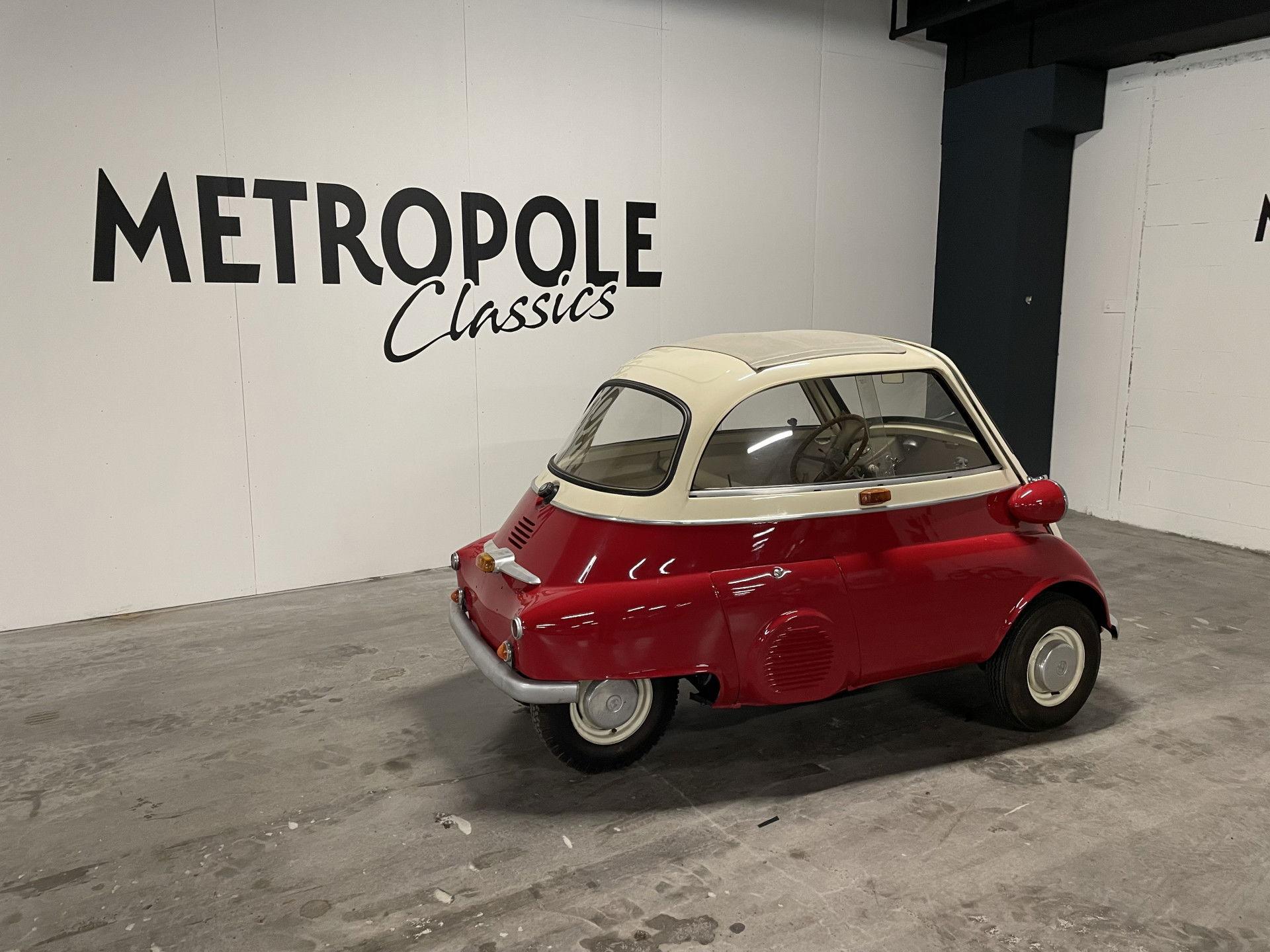
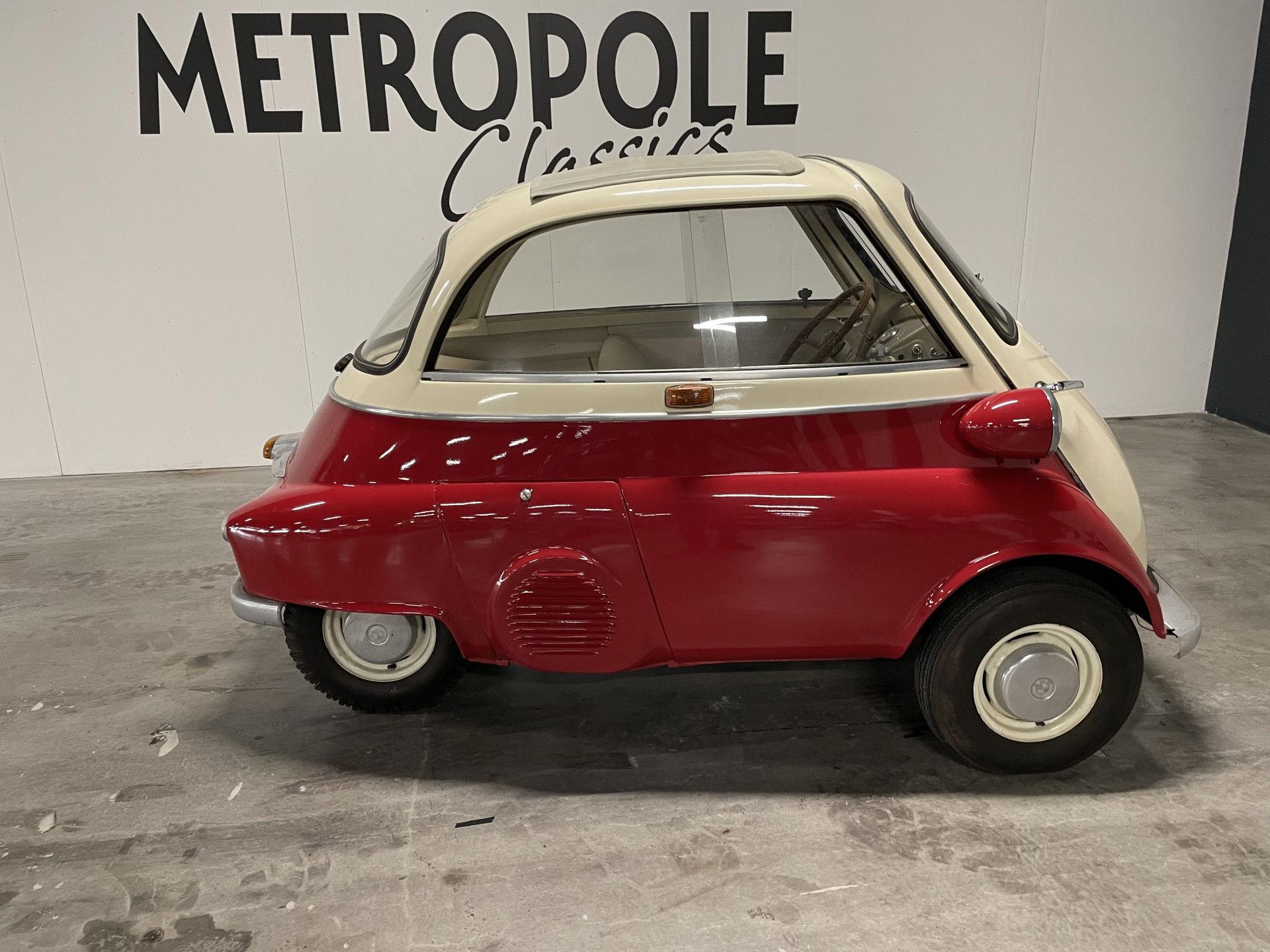
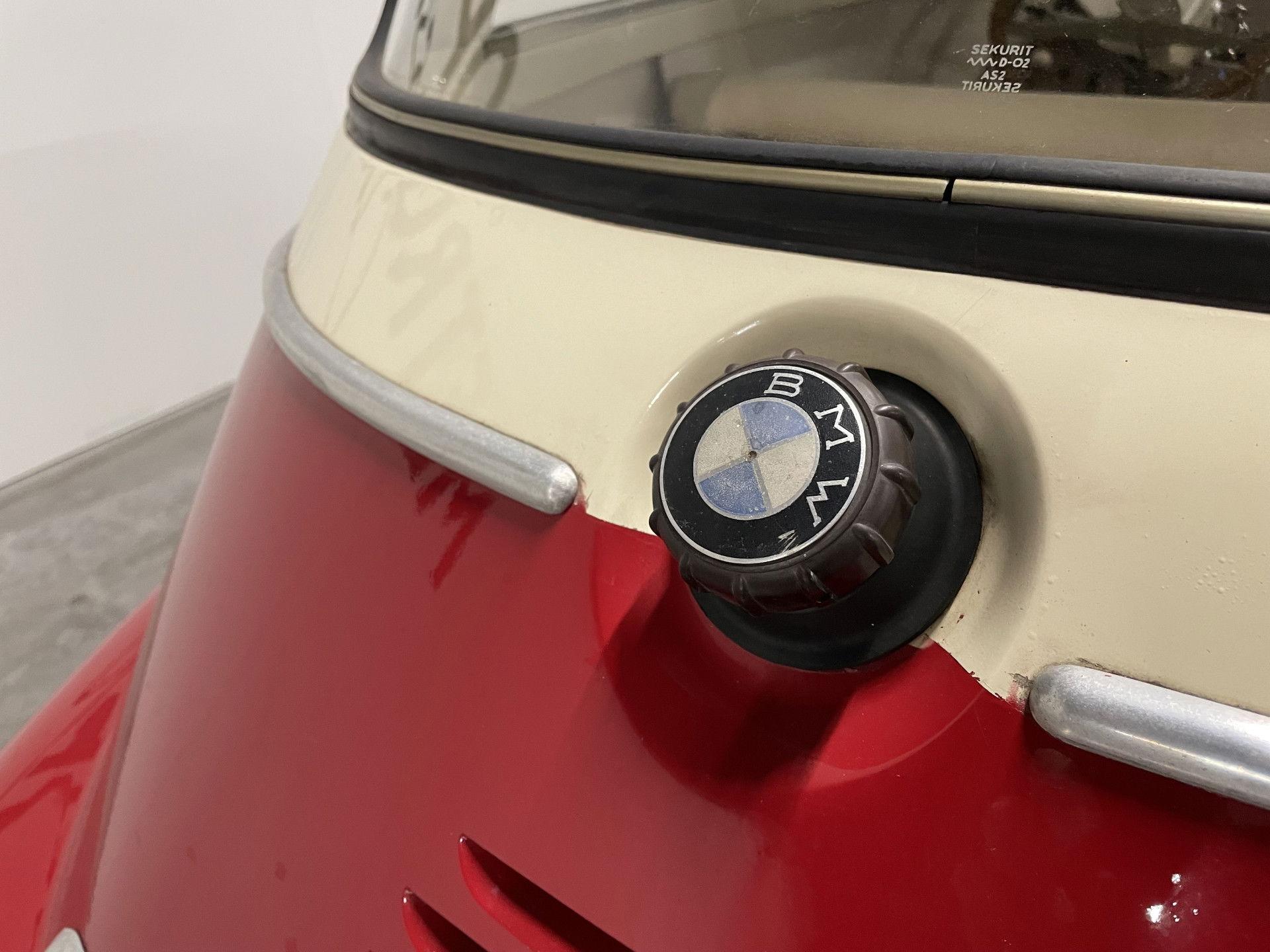
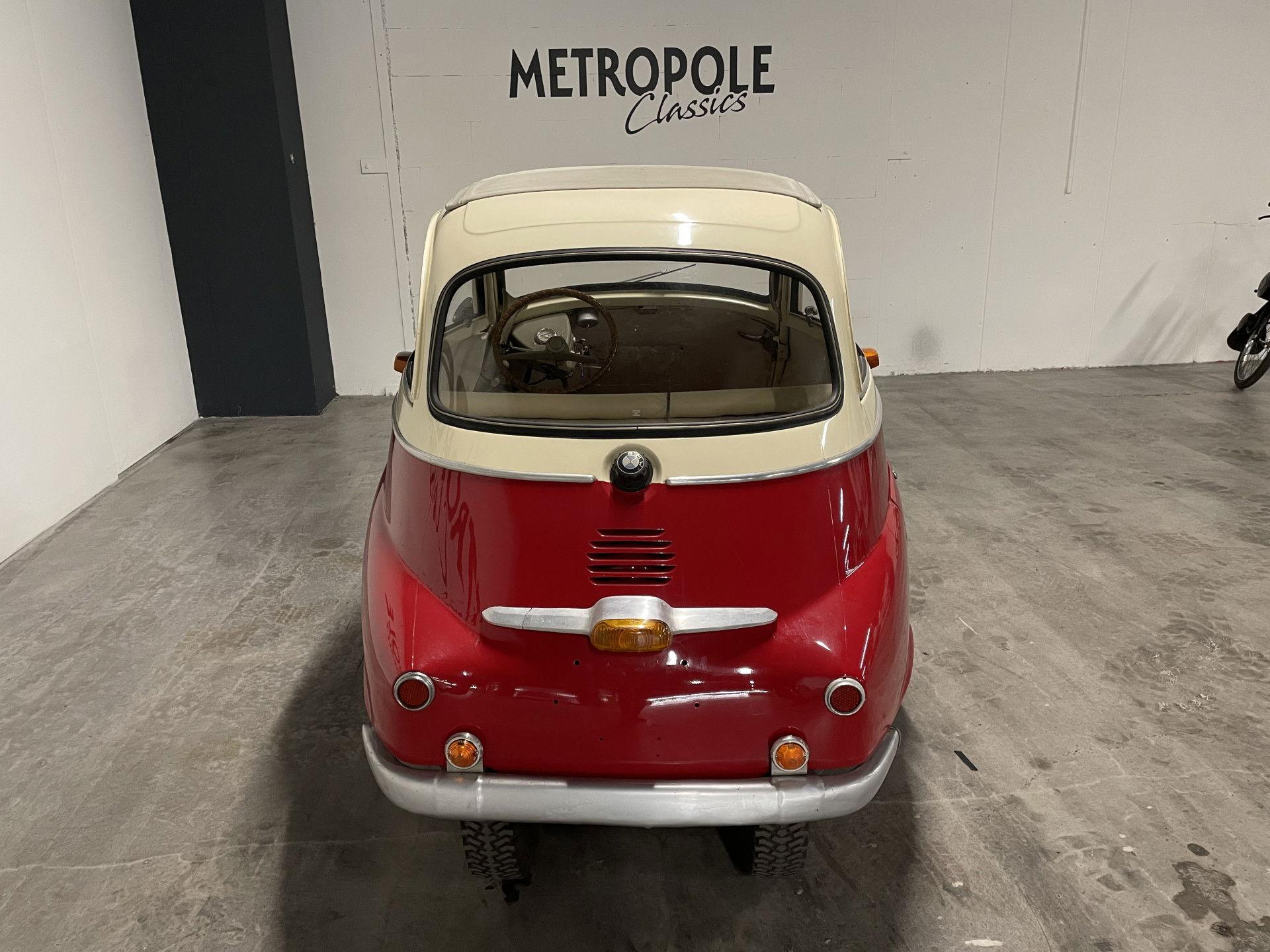
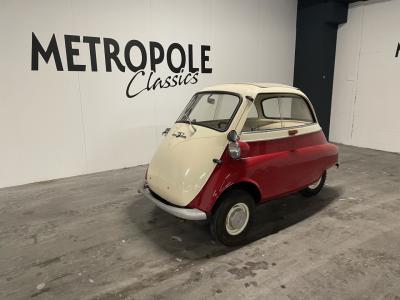
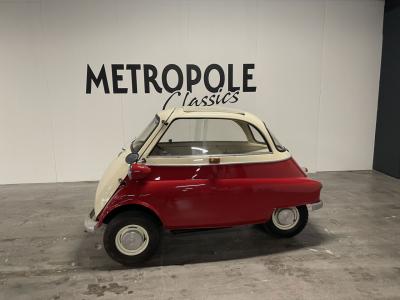
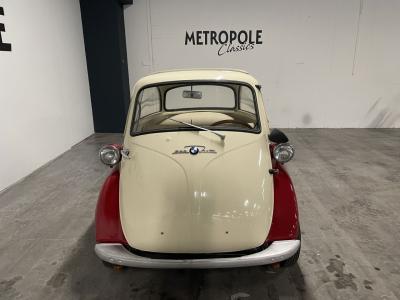
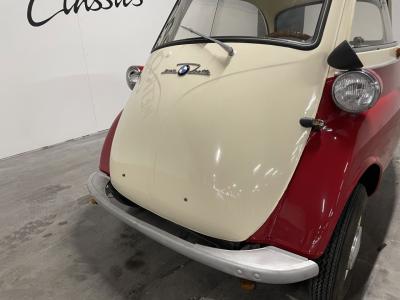
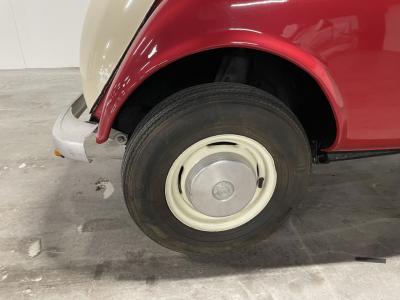
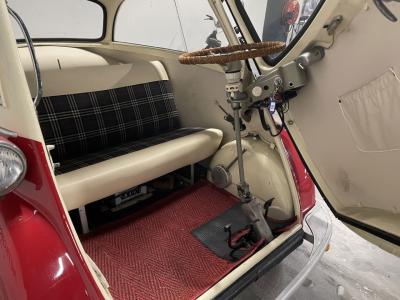
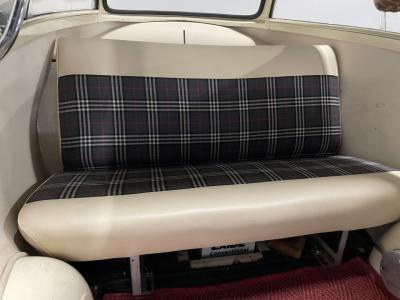
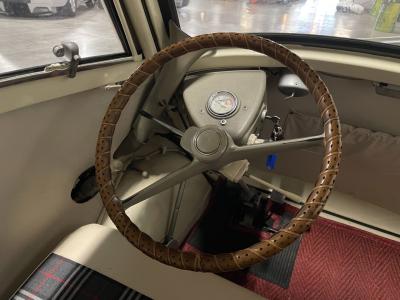
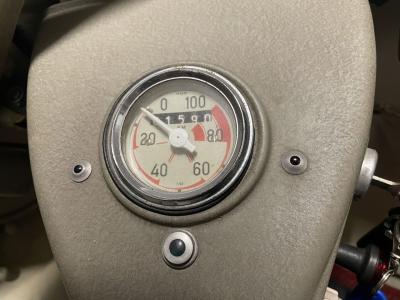
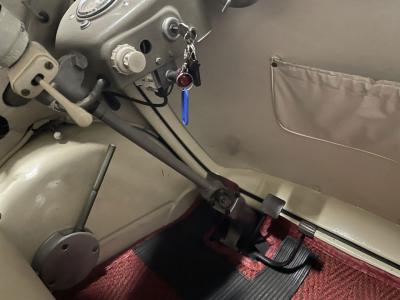
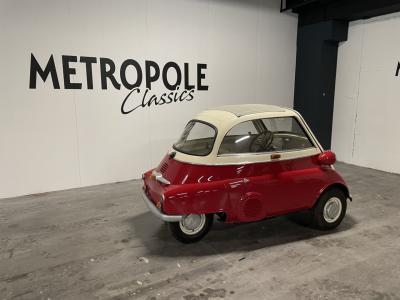
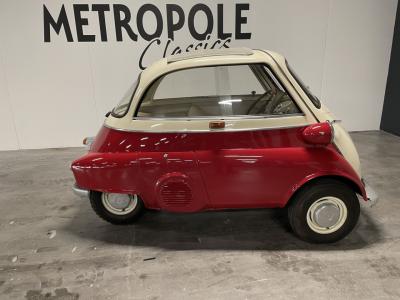
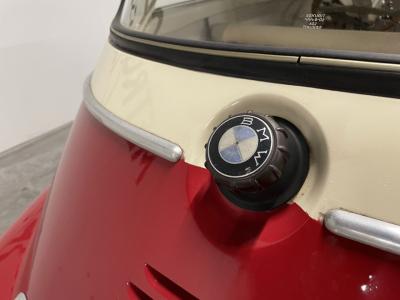
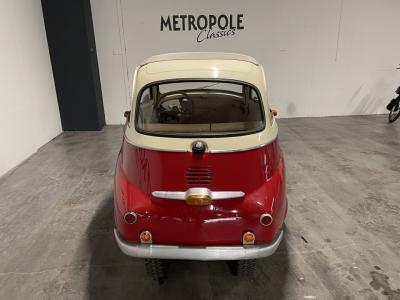
Mint condition. bodywork and paint almost spotless. interior as new. engine runs as if it just left the factory. The 'front door' also closes perfectly and its fittings are also correct. Very rare .
About the BMW Isetta 250:
The egg-shaped Isetta caused a sensation when it was introduced to the motoring press in Turin, Italy in November 1953 as it was unlike anything seen before and is today widely regarded as the best microcar ever, it is certainly the archetypal 'bubble car ' and is today recognized and loved worldwide by classic car collectors and microcar enthusiasts alike. The totally unconventional design made a splash when it was introduced in Turin and from this influential debut a number of licensed branches grew around the world, the most famous of which was of course BMW in Germany, where it became obvious to look for the working man's car to go and by November 1955, ten thousand had been built.
Small, only 7,5 ft long by 4,5 ft wide and egg-shaped, with bubble-like windows, it was seen by BMW as a gap between their motorcycle range and the luxury 501 models and the entire front of the car was hinged outwards to allow access . In the event of an accident, the driver and passenger had to exit via the canvas sliding roof. The steering wheel and instrument panel swung outward with the single door as this made access to the single bench seat easier. The seat provided reasonable comfort for two occupants and a small child. Behind the seat was a large parcel shelf with a spare wheel underneath. A heater was optional and ventilation was provided by opening the fabric sunroof.
Initially power came from a 236 cc (14,4 cu in), 7,1 kW (9,5 hp) 2-stroke motorcycle engine and a manual gearbox with four forward and reverse gears. A chain drive connected the gearbox to a solid rear axle with a pair of closely spaced 25 cm (10 in) rear wheels. The first prototypes had one wheel at the rear, but with a single rear wheel the car was prone to tipping over so the rear wheel layout was changed to two wheels spaced 48 cm (19 in) apart. This narrow track eliminated the need for a differential. The Isetta took more than 30 seconds to reach 50 km/h from a standstill. Top speed was only about 75 km/h (47 mph). The fuel tank held only 13 liters (3,4 US gal; 2,9 imp gal).
In 1956, the government of the Federal Republic of Germany amended the regulations for motor vehicles. Class IV driving licenses issued from then on could only be used for driving small motorcycles and no longer for driving motor vehicles with a capacity of less than 250 cc. At the same time, the maximum allowable capacity for the load category of the Isetta was 300 cc. This change in regulations encouraged BMW to overhaul their Isetta micro cars. In February 1956 a 300cc engine was introduced. The engineers enlarged the single-cylinder engine to a diameter of 72 mm (2,8 in) and a stroke of 73 mm (2,9 in), giving a displacement of exactly 298 cc; at the same time they increased the compression ratio from 6,8 to 7,0:1. As a result, engine power increased to 10 kW (13 hp) at 5200 rpm and torque increased to 18,4 N⋅m (13,6 ft⋅lbf ) at 4600 rpm. The maximum speed remained at 85 km/h (53 mph) but there was a marked increase in flexibility, especially noticeable on slopes and in October 1956 the Isetta Moto Coupe DeLuxe (sliding window Isetta) was introduced. The bubble windows were replaced by longer side windows.
Contact Us
