
































































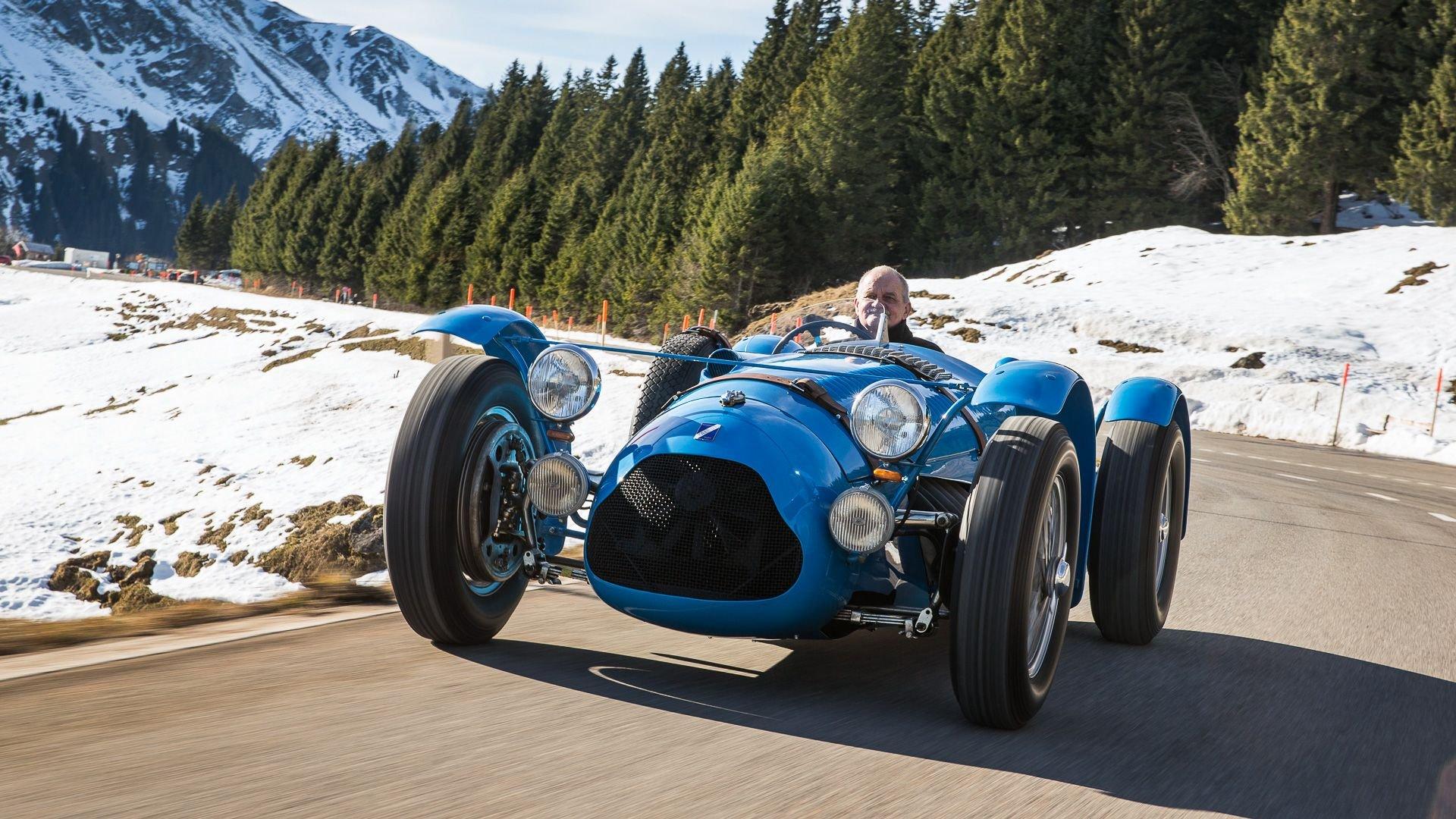
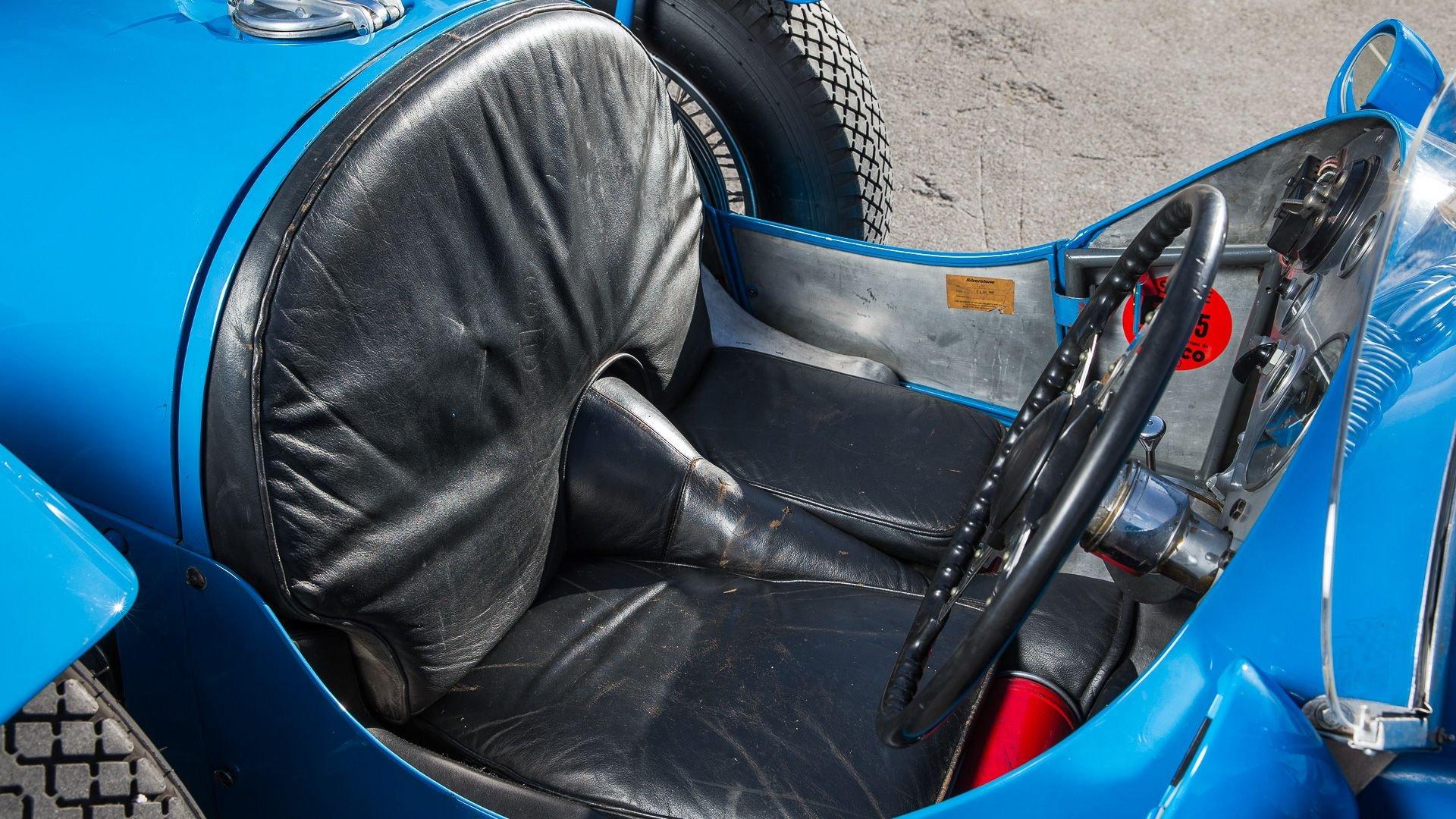
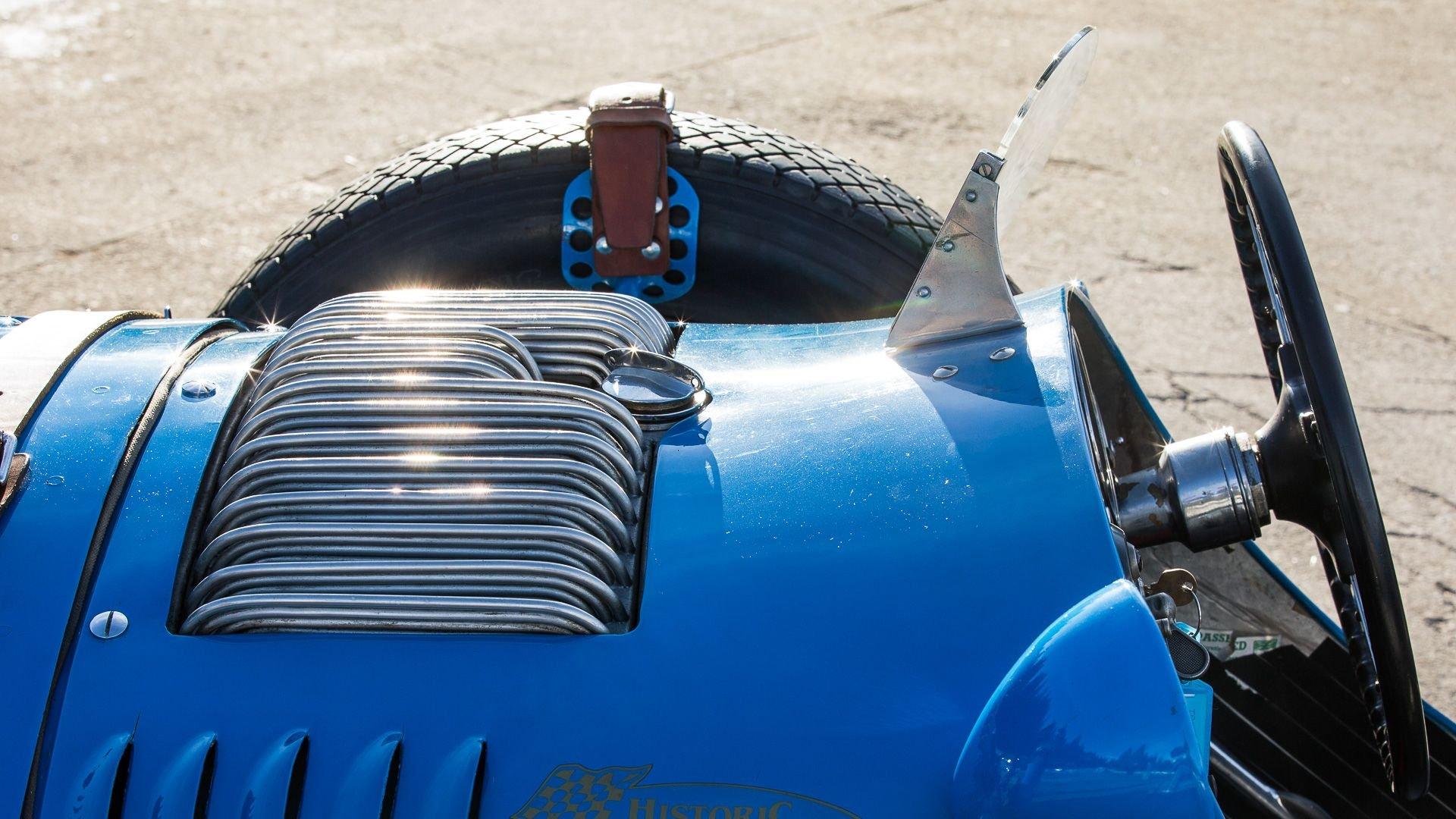
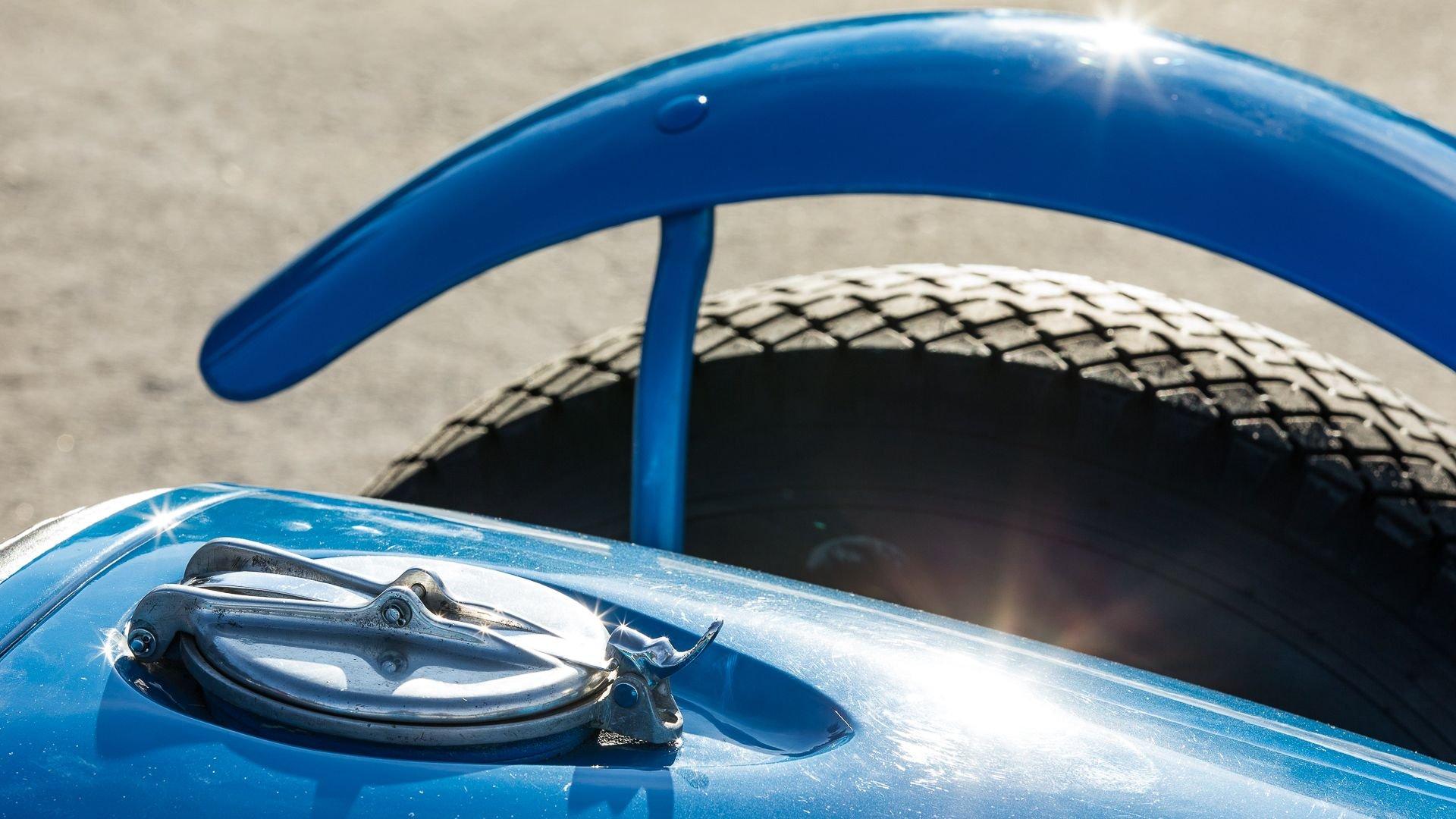
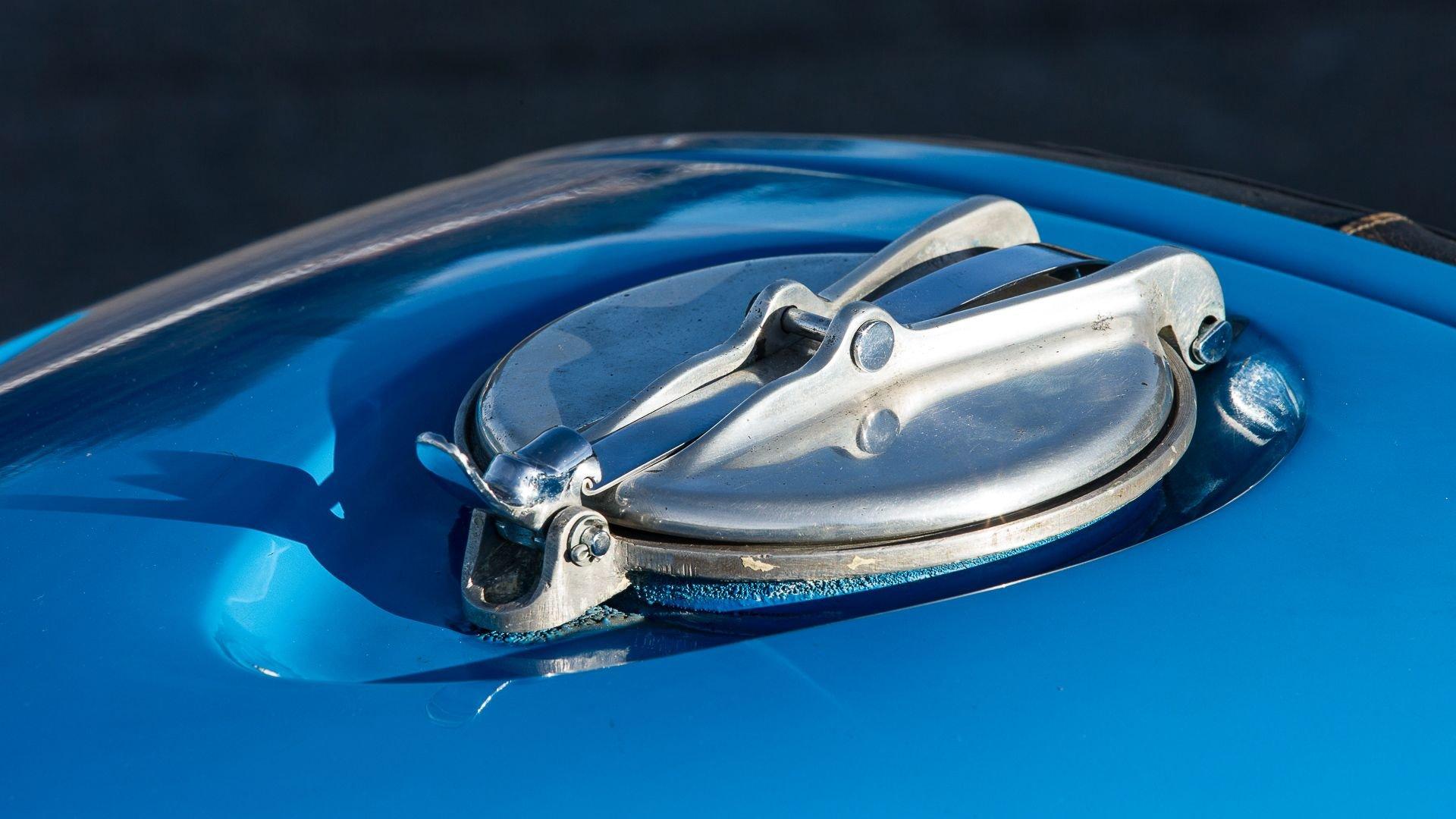
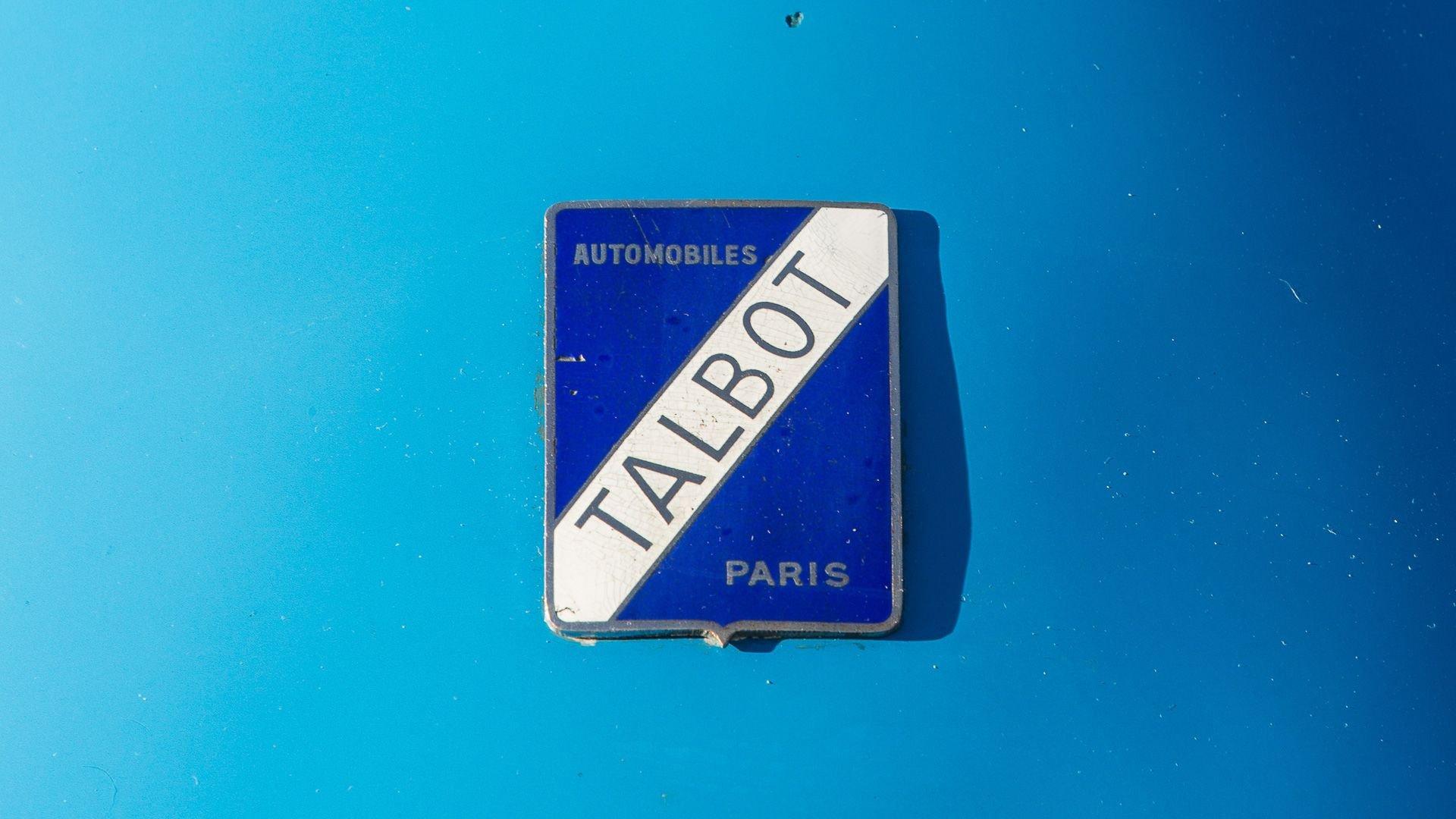
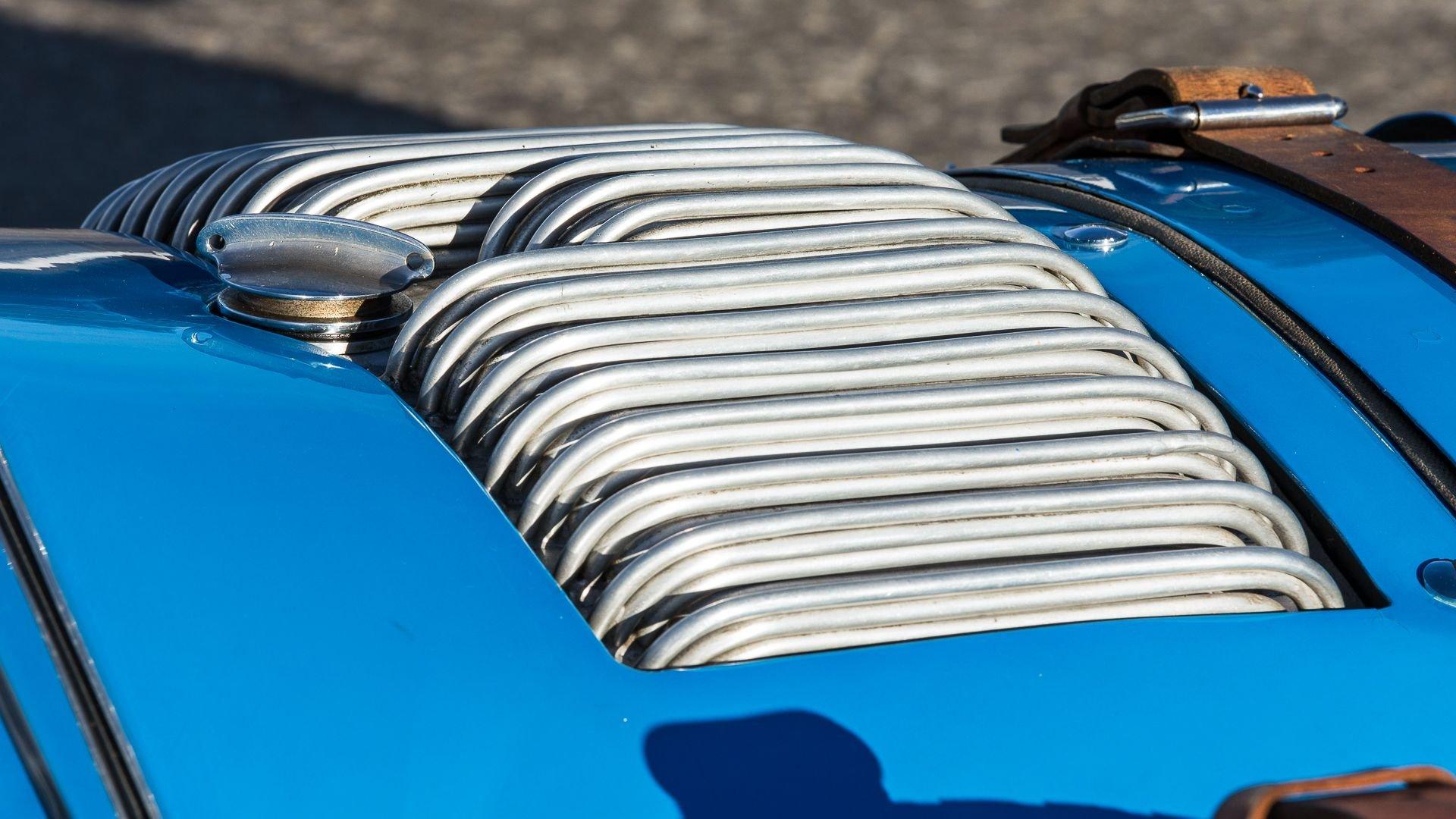
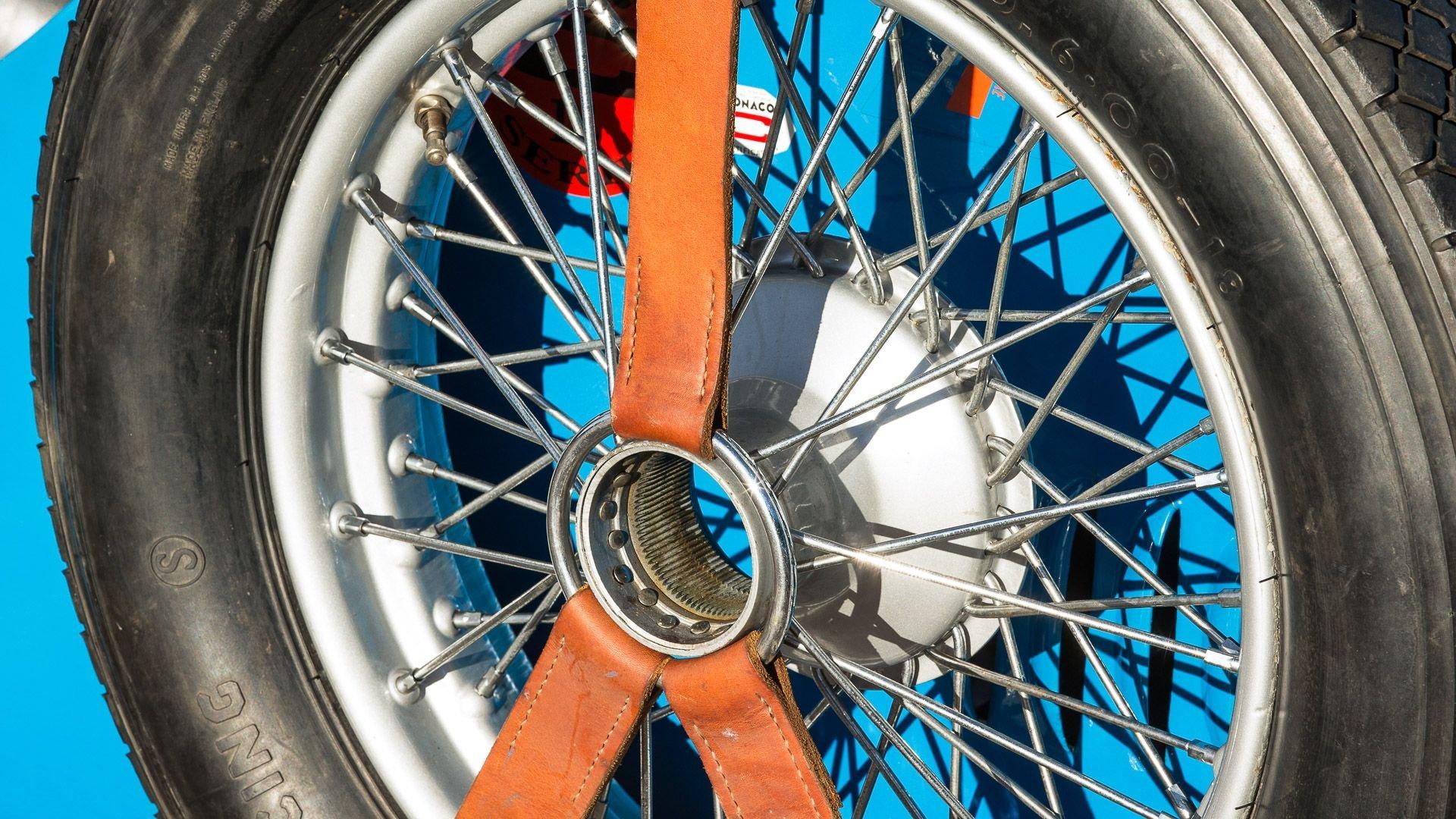
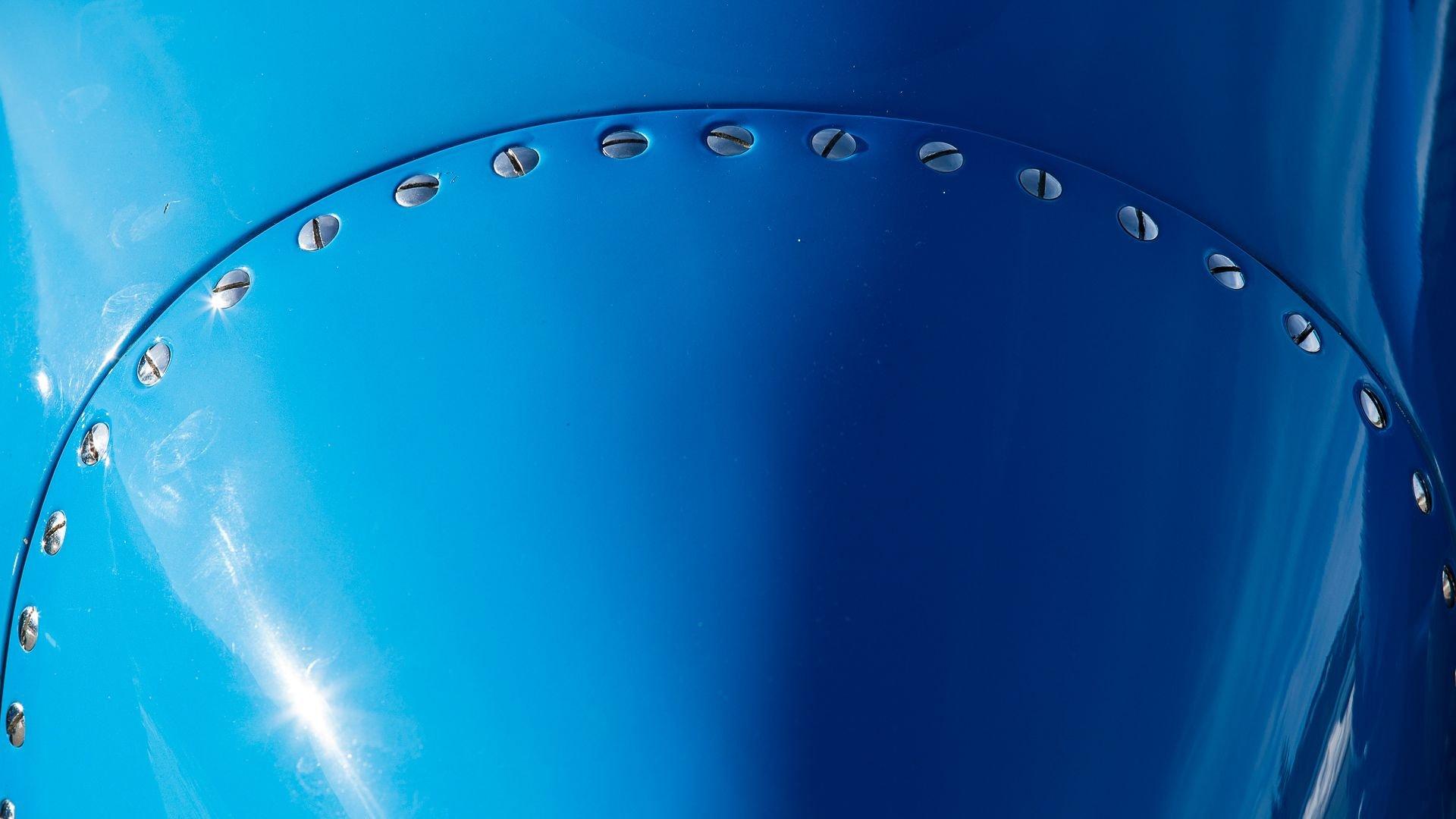
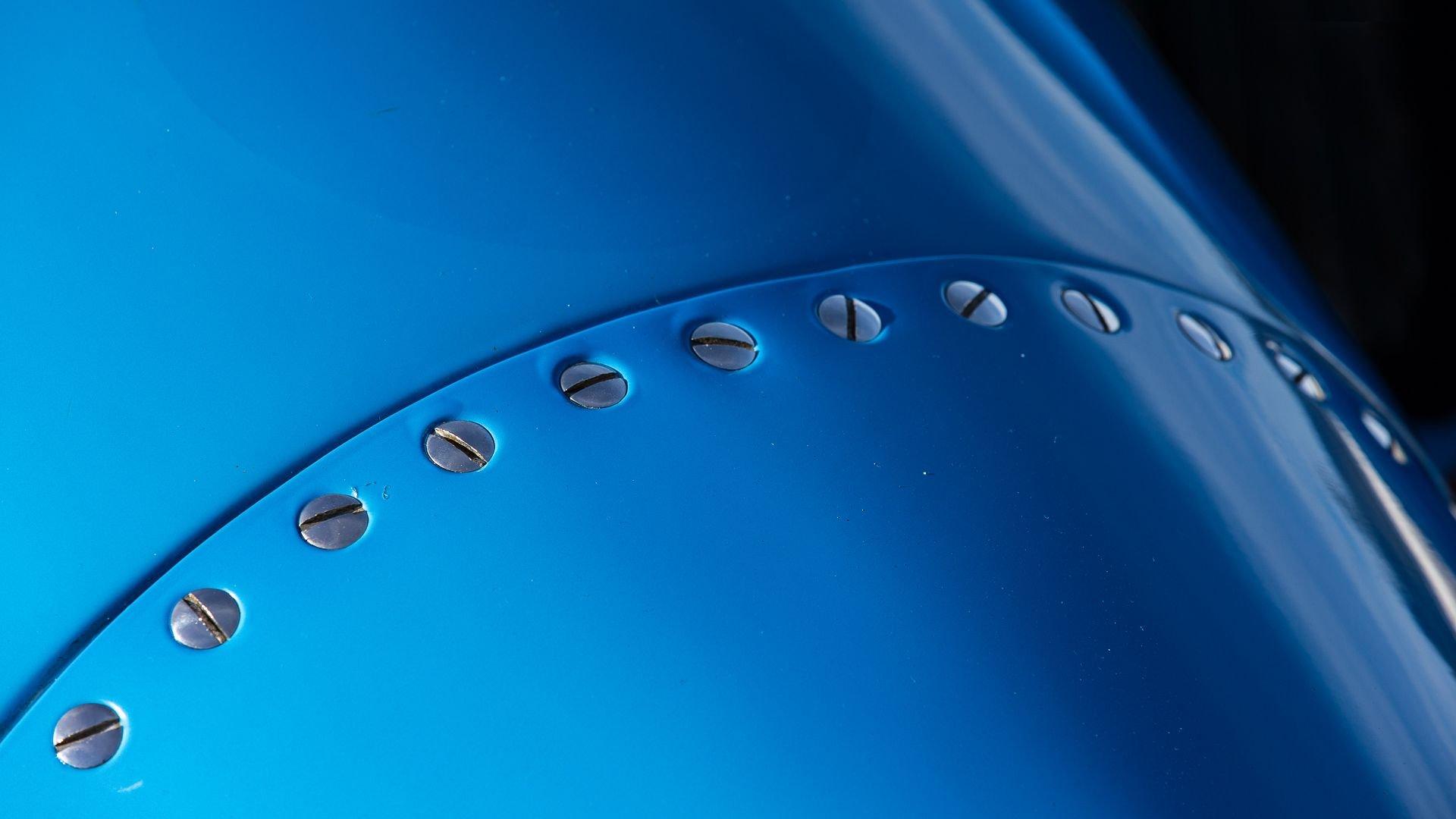
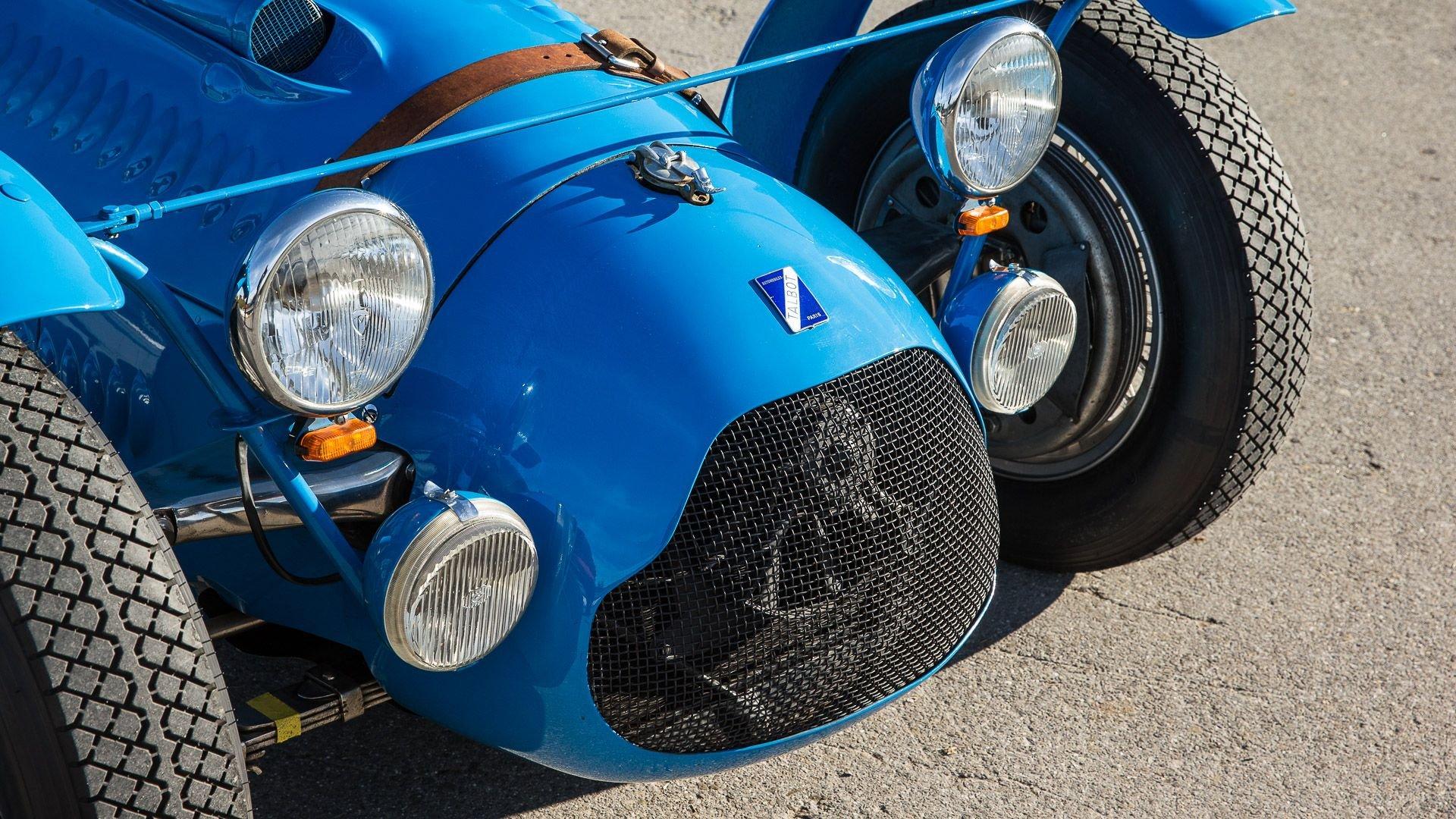
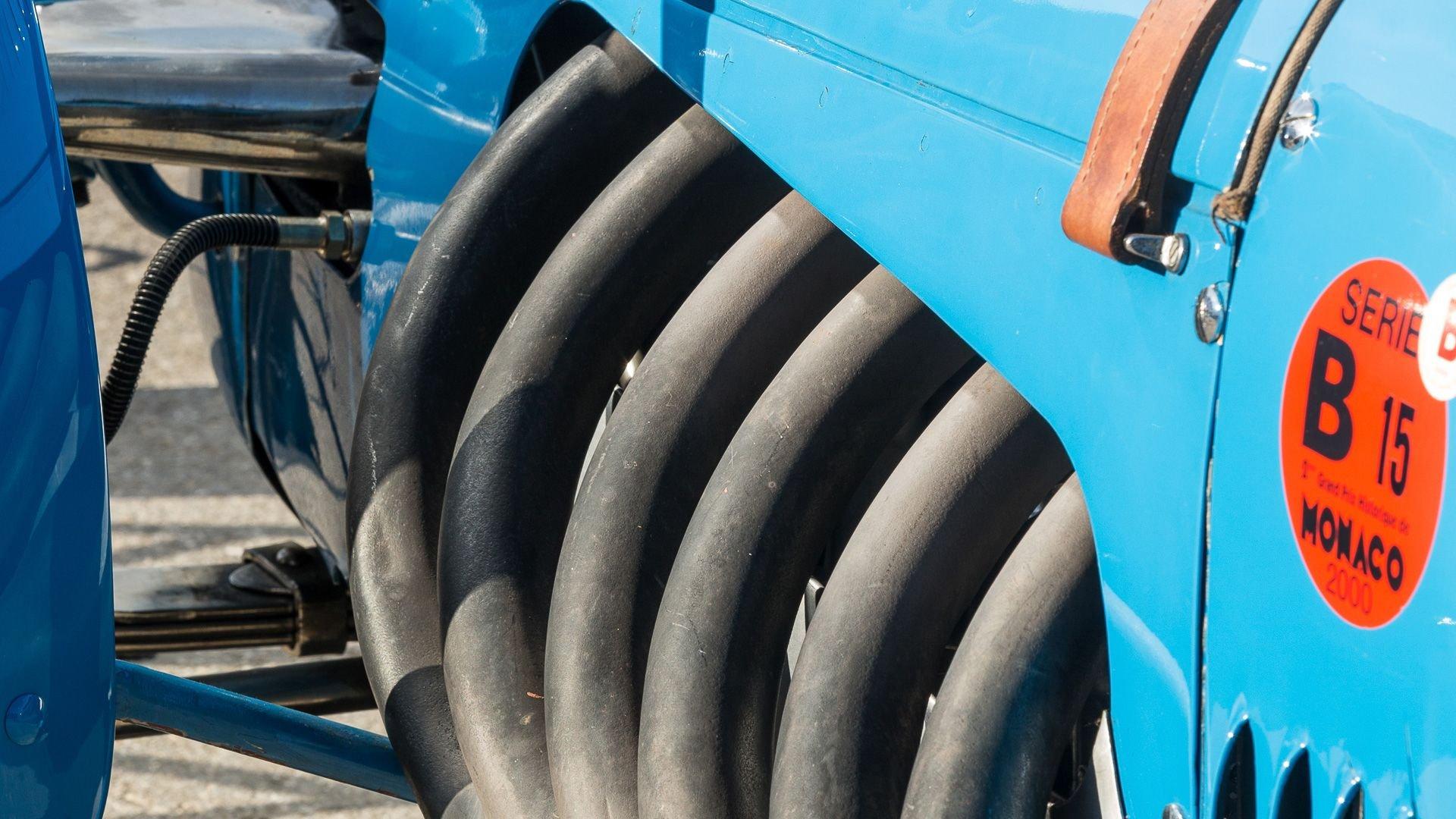
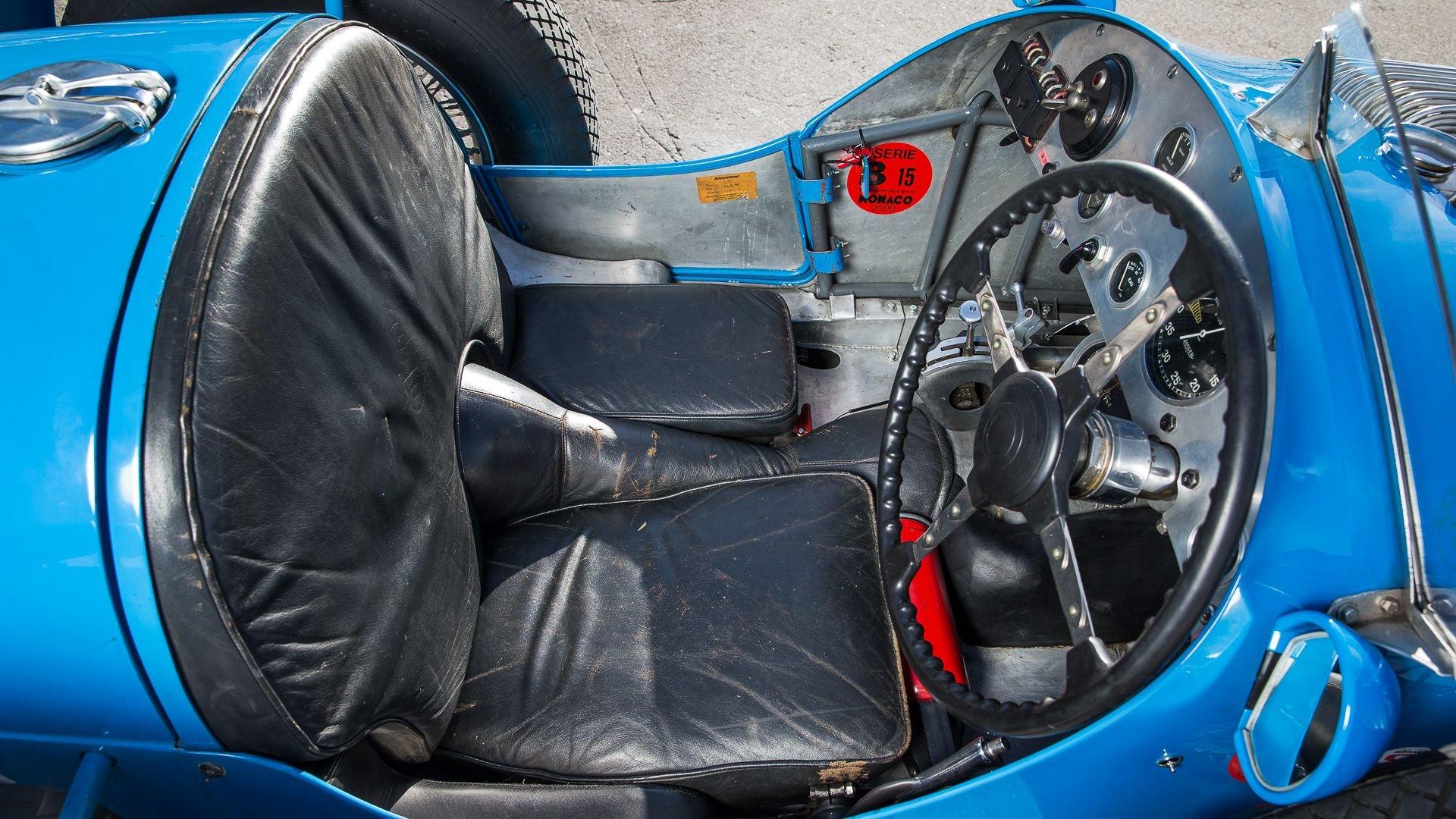

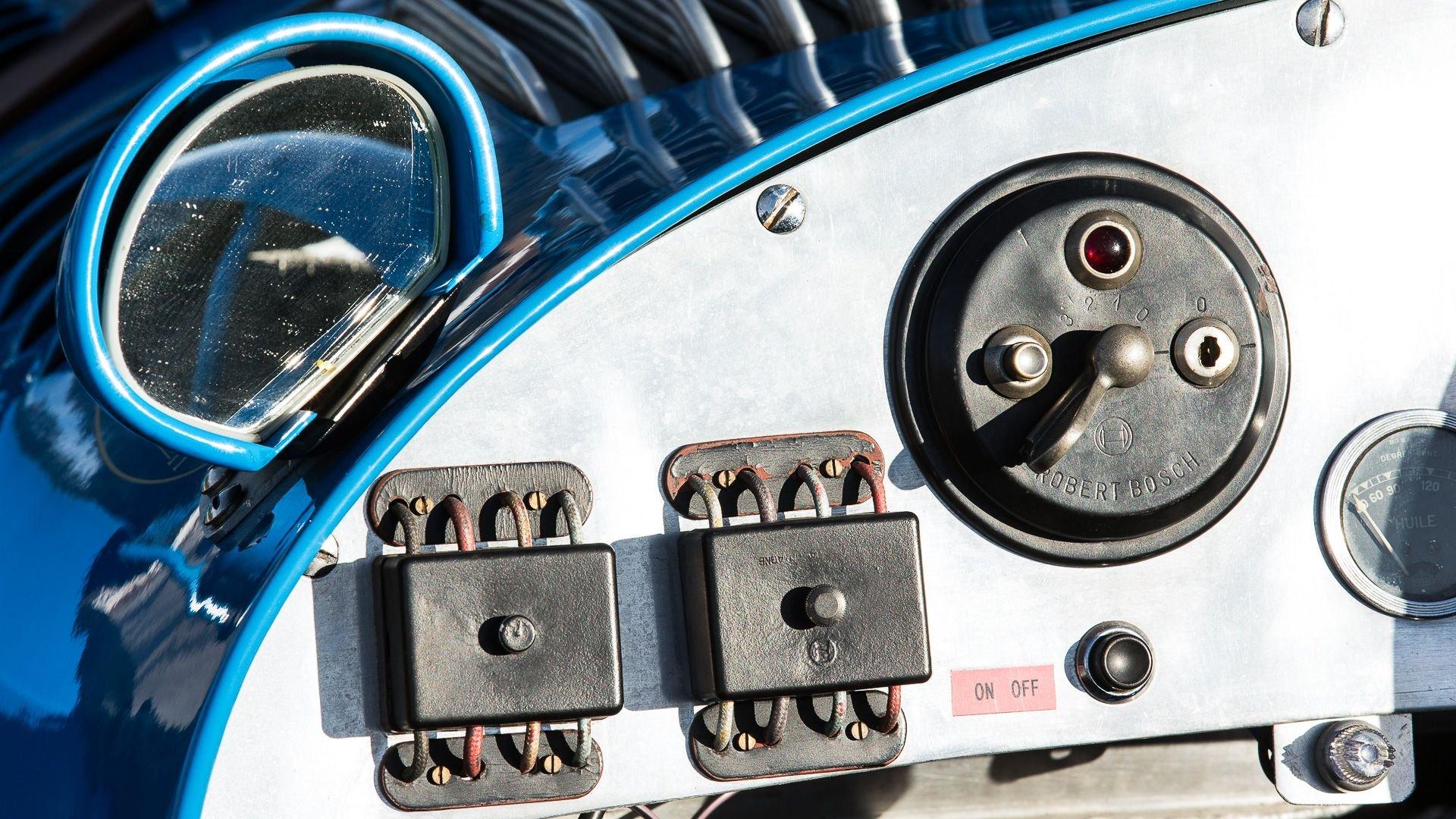
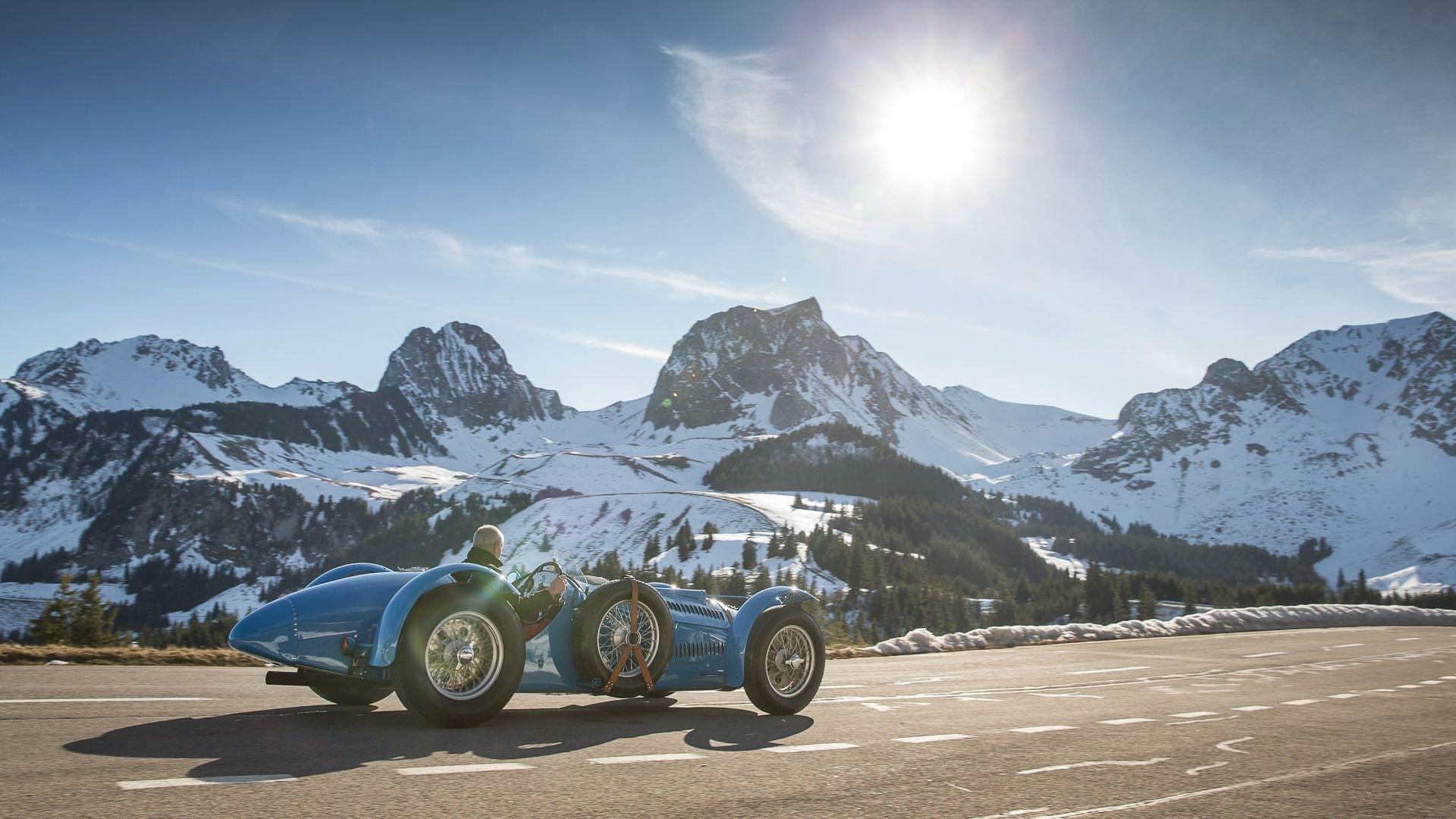
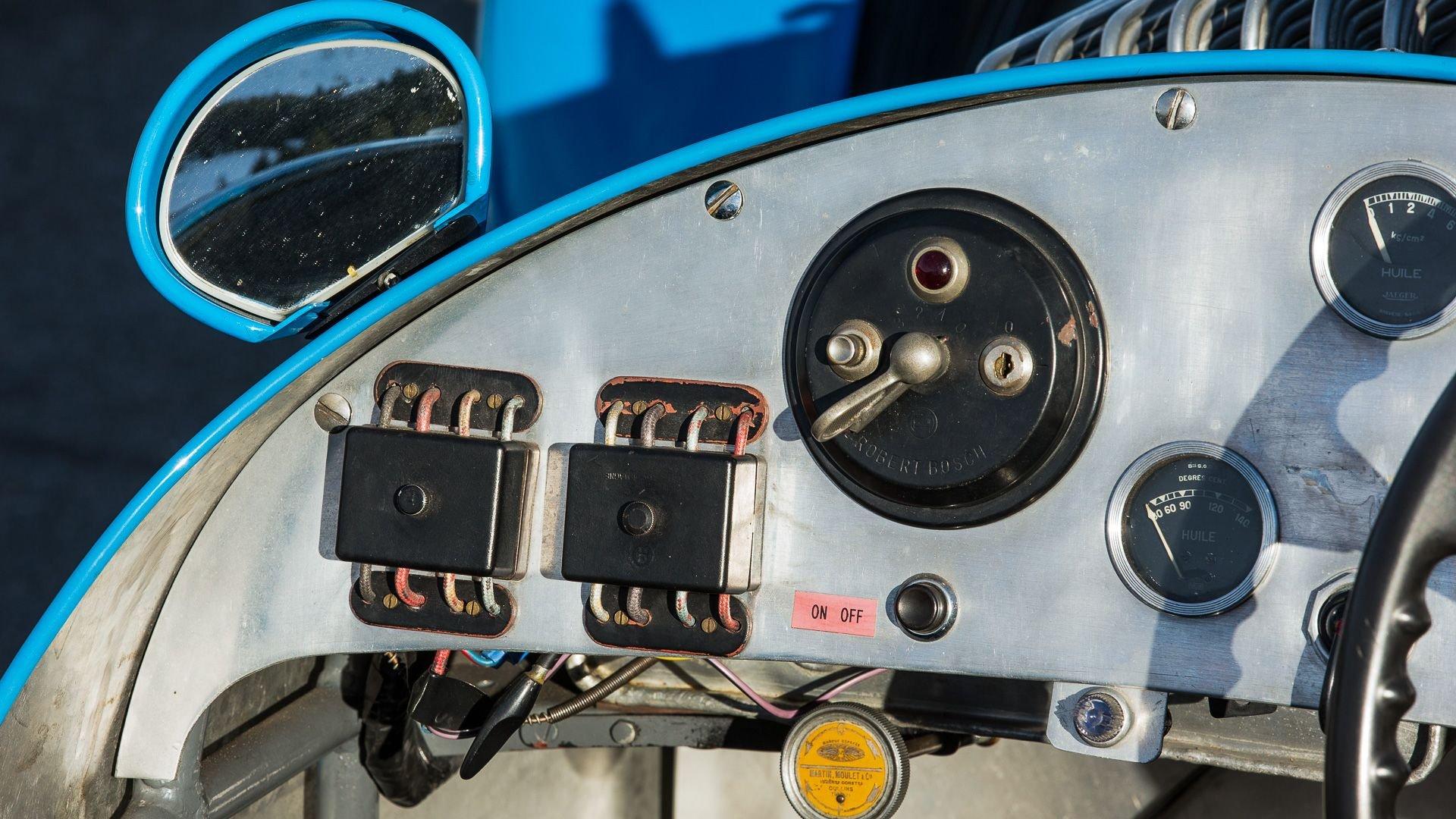
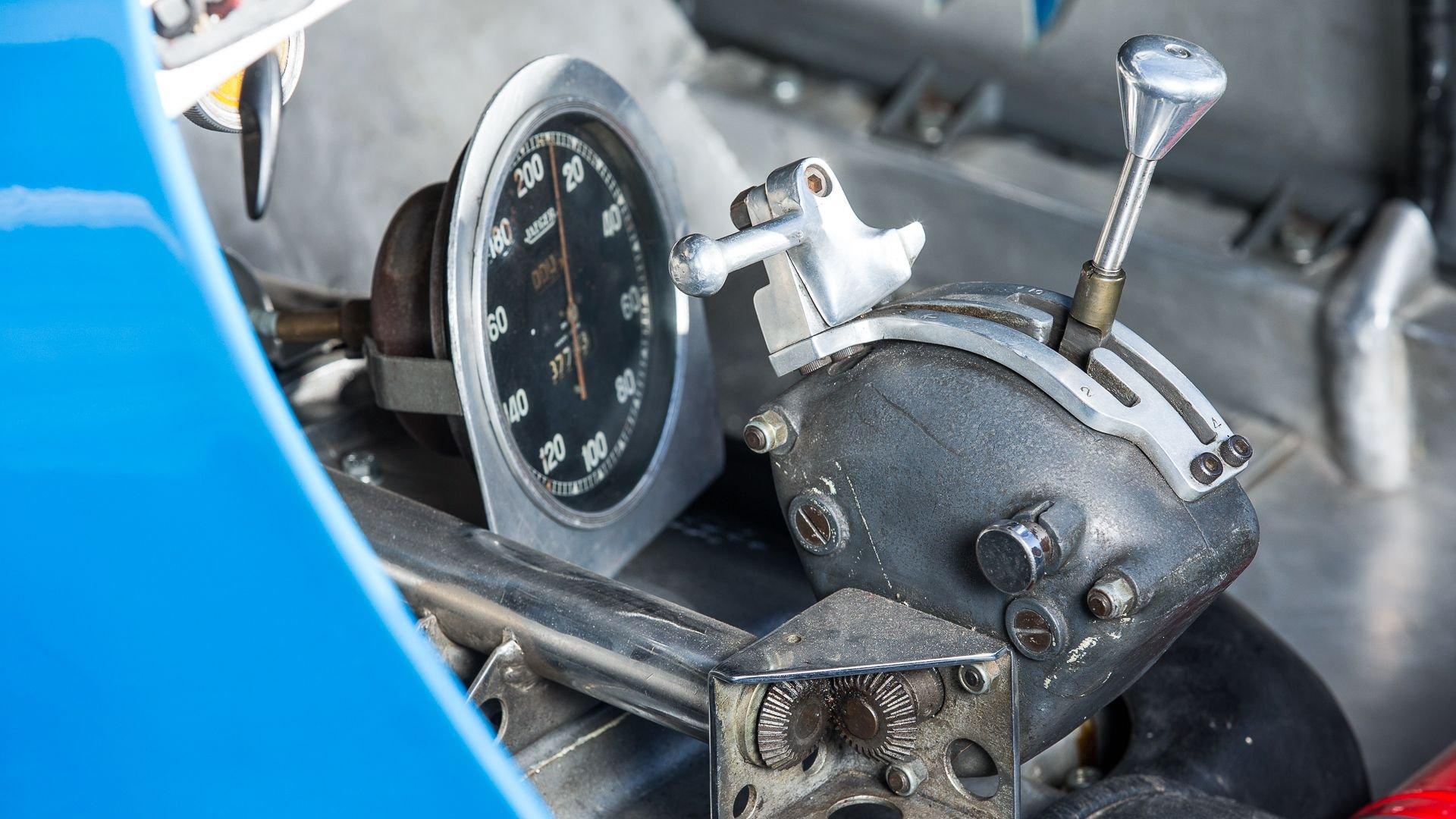
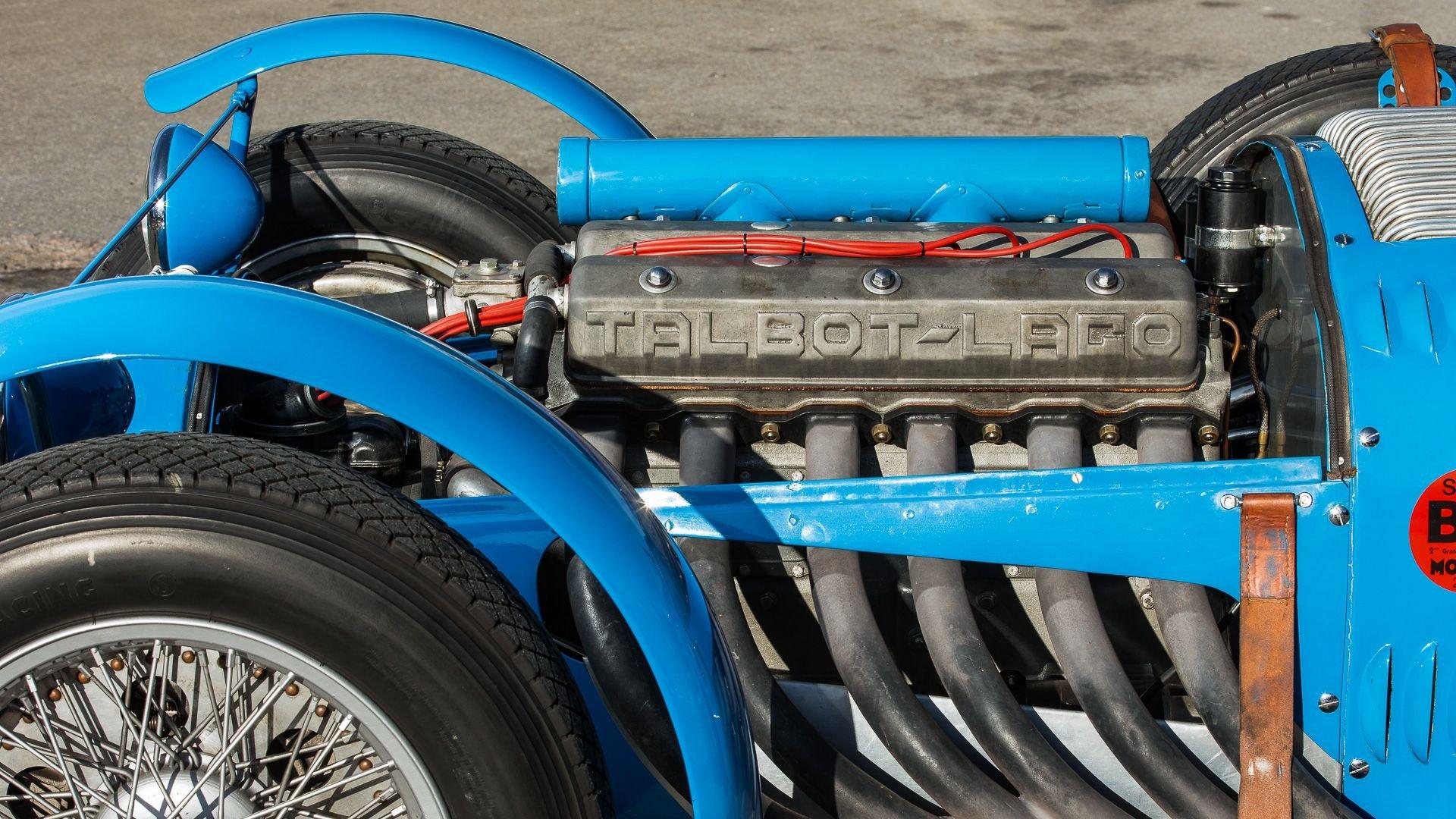
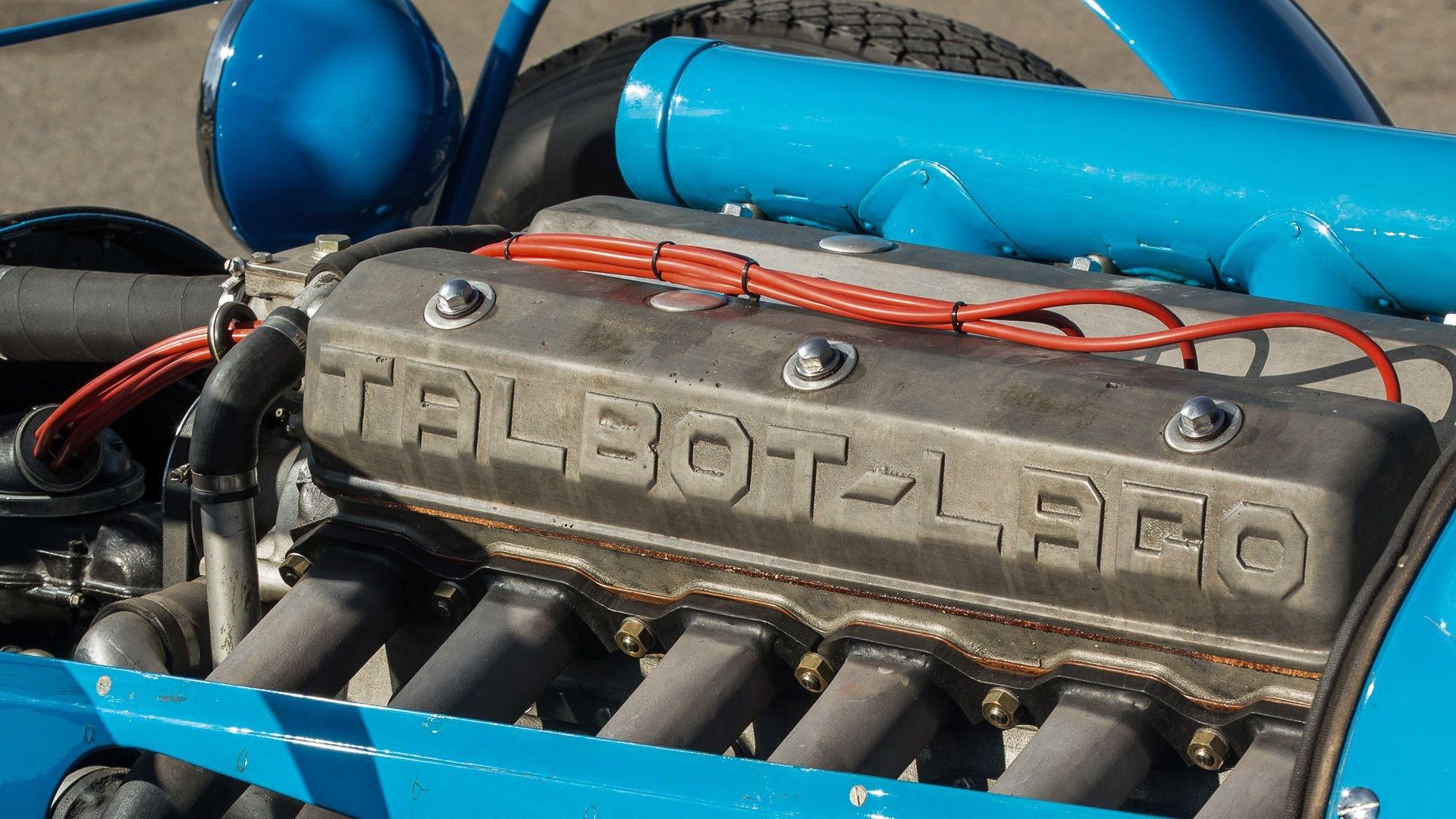

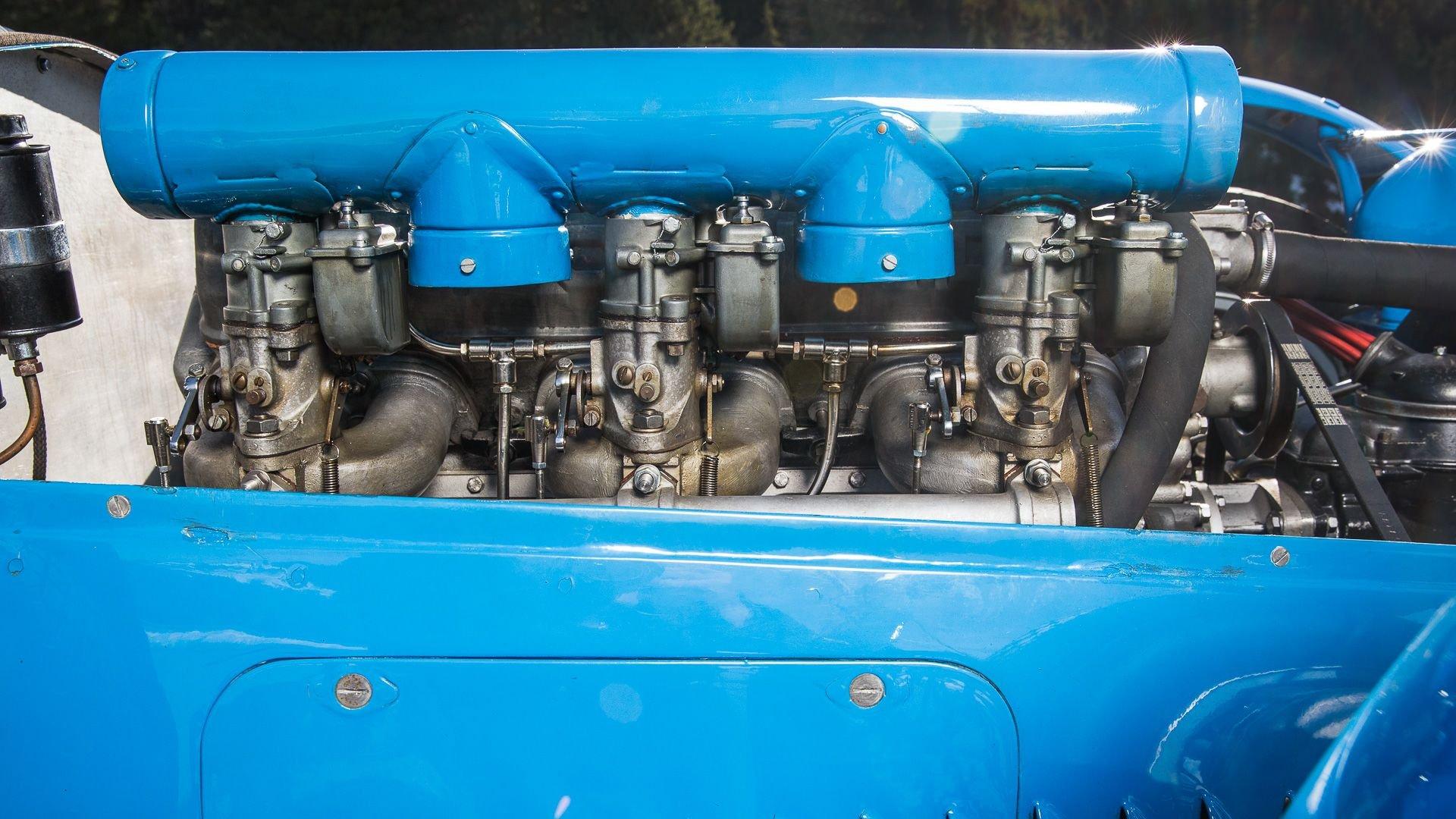
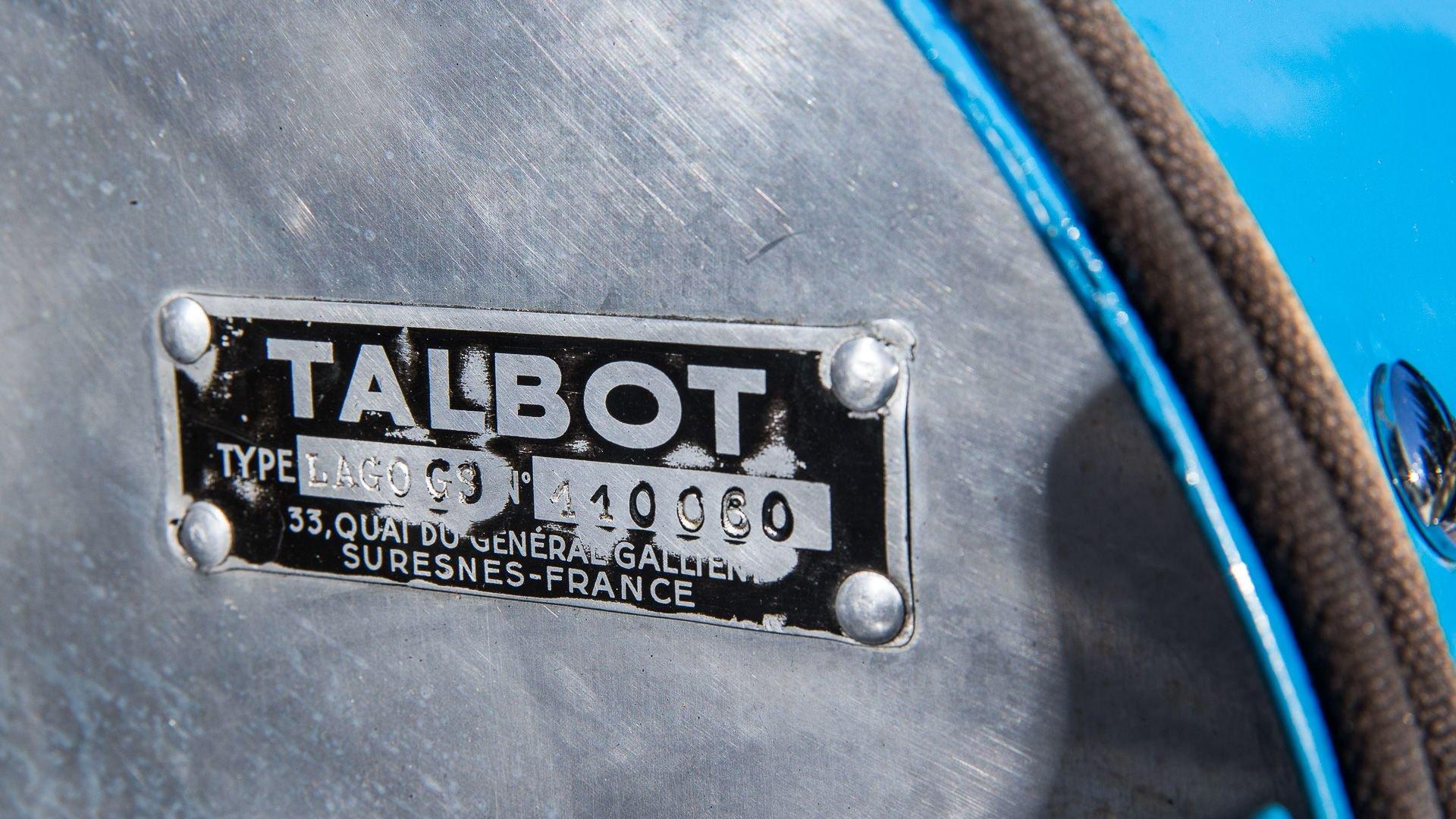
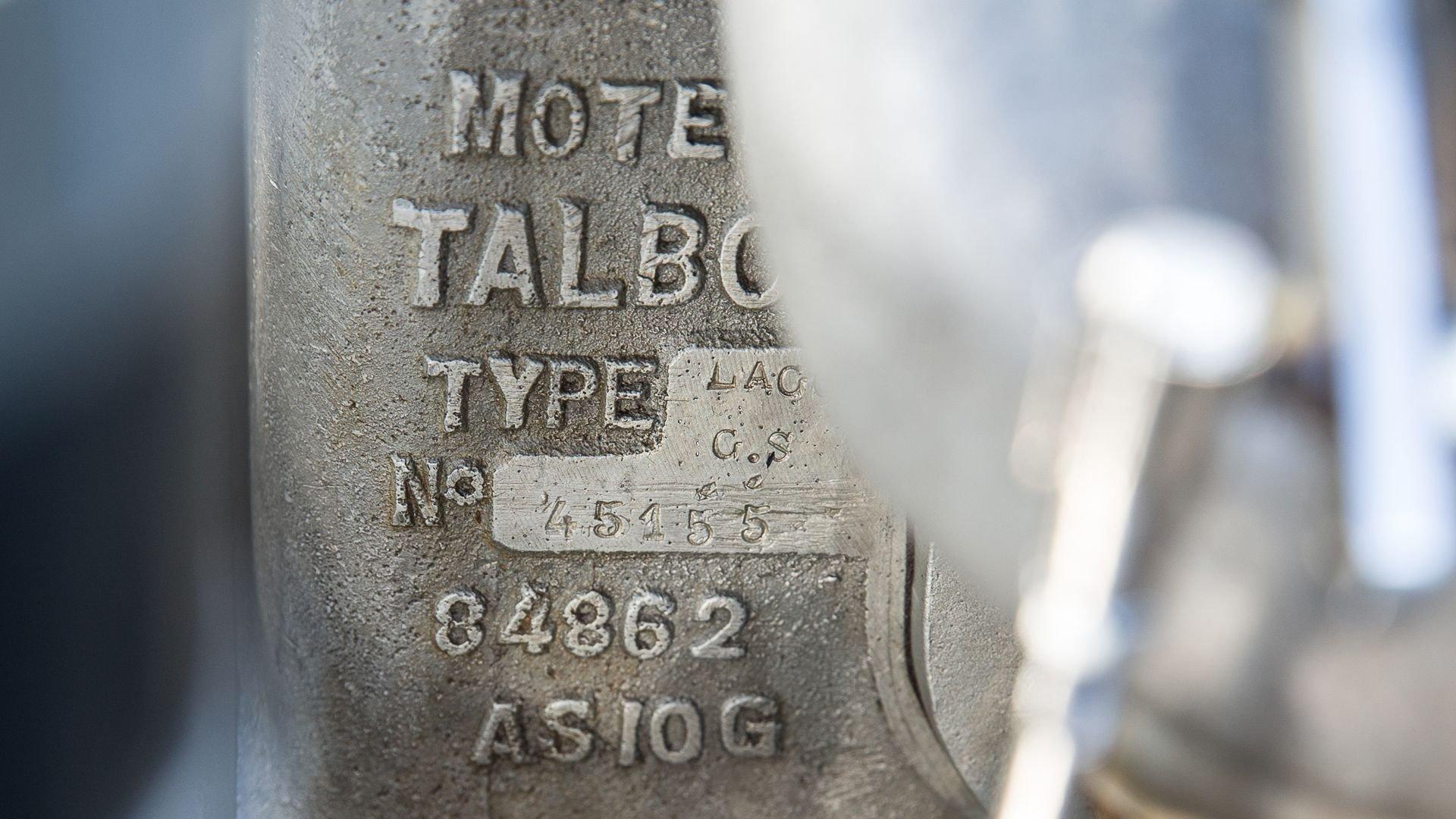
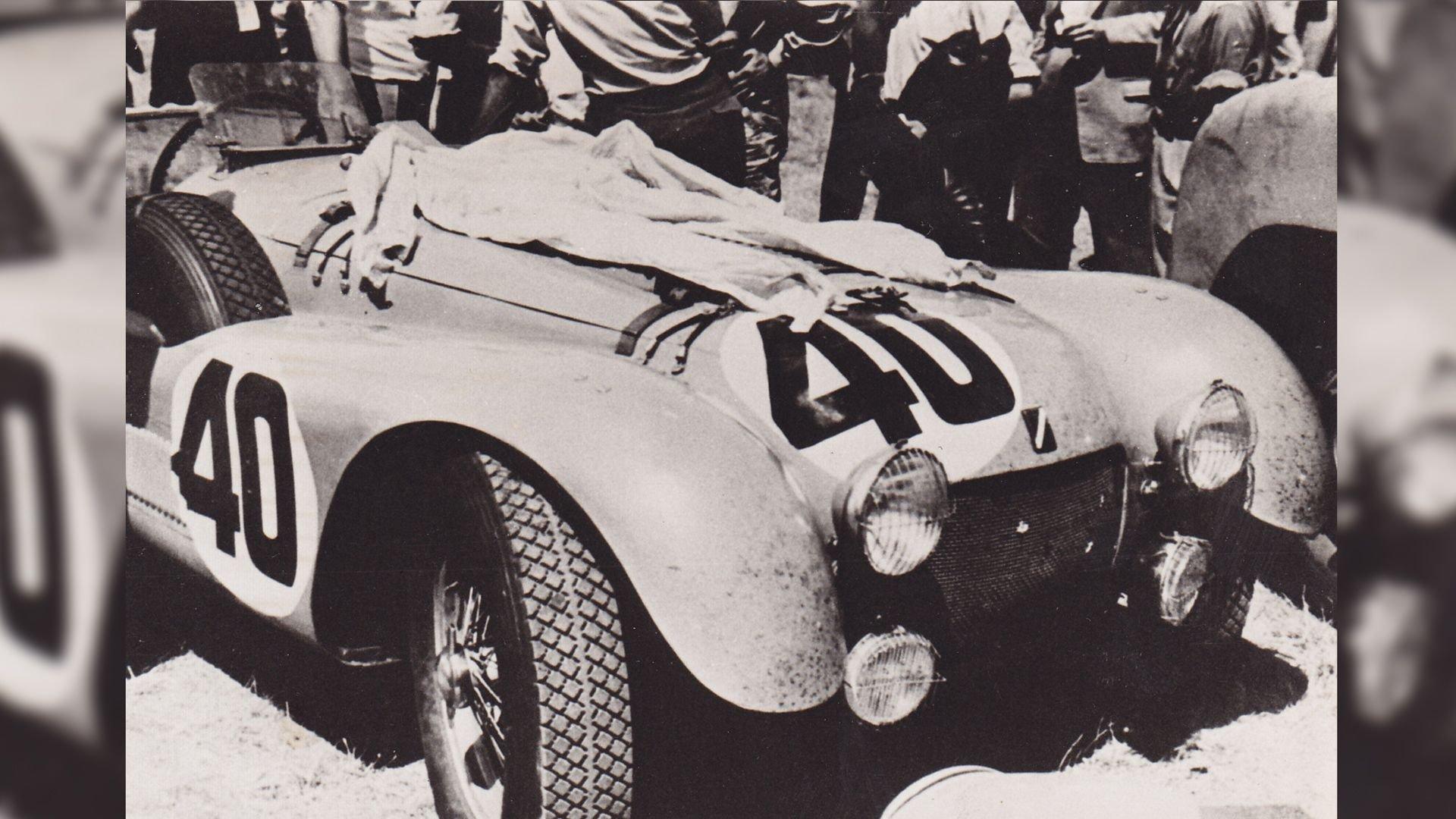
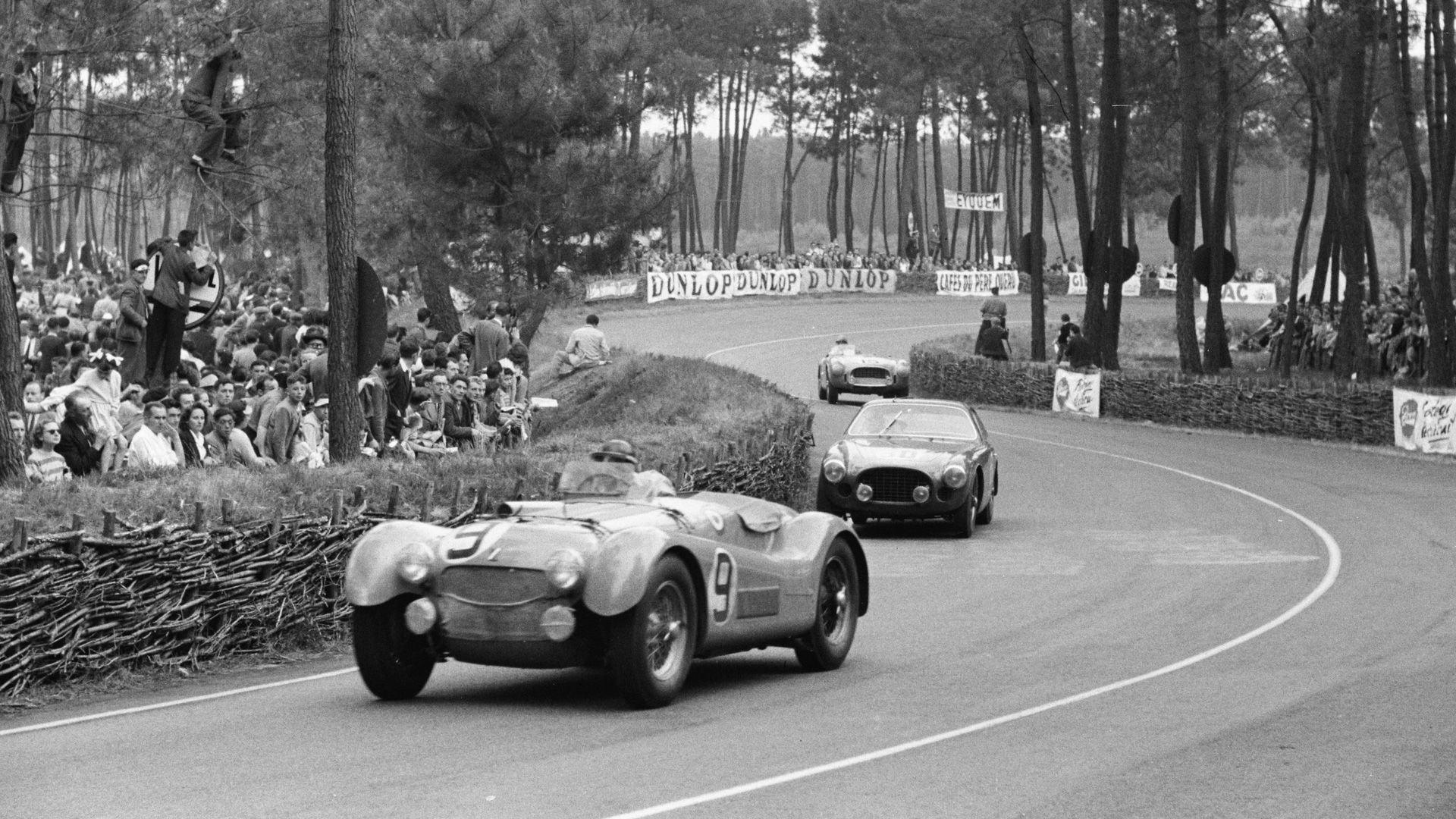
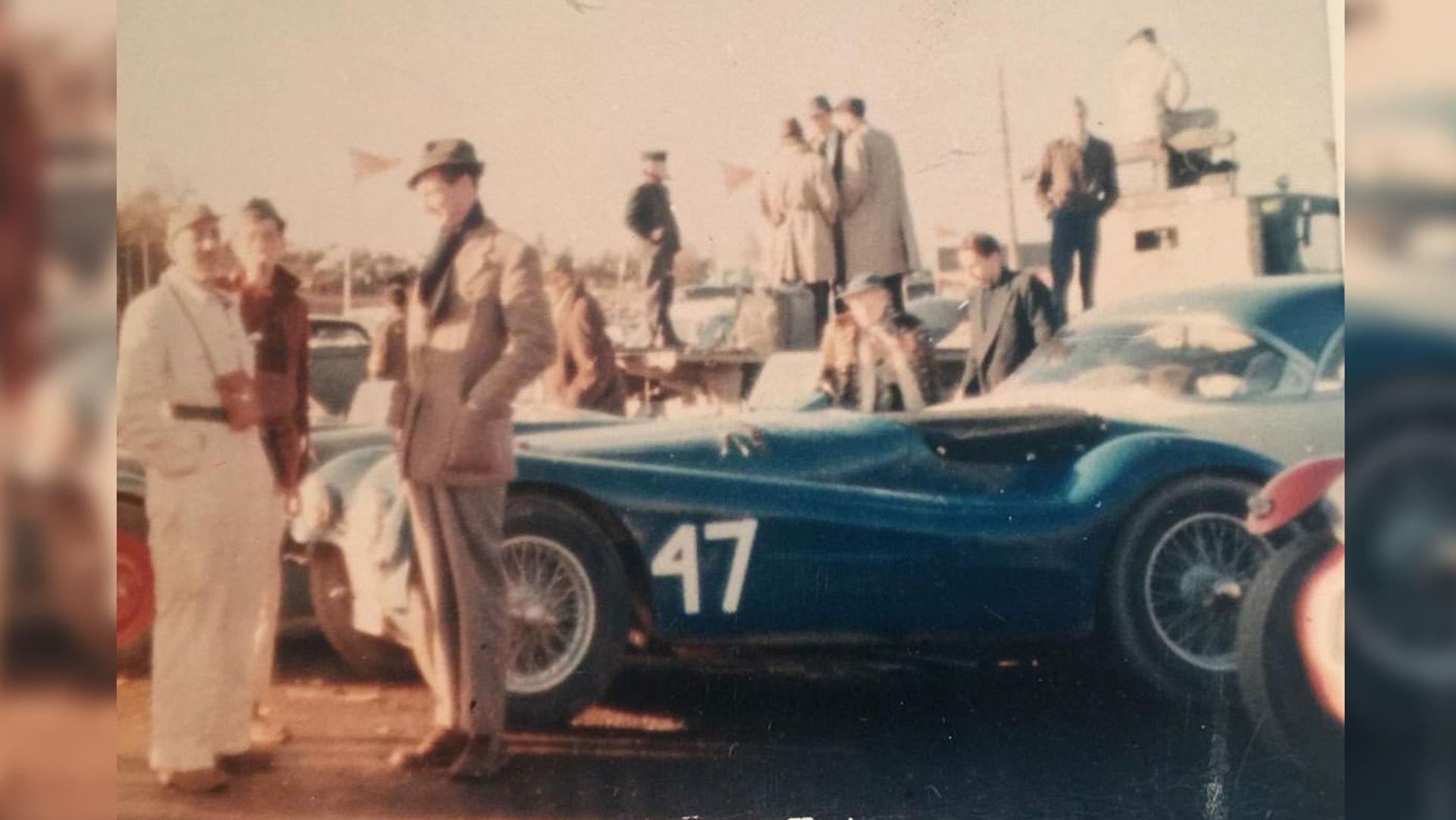
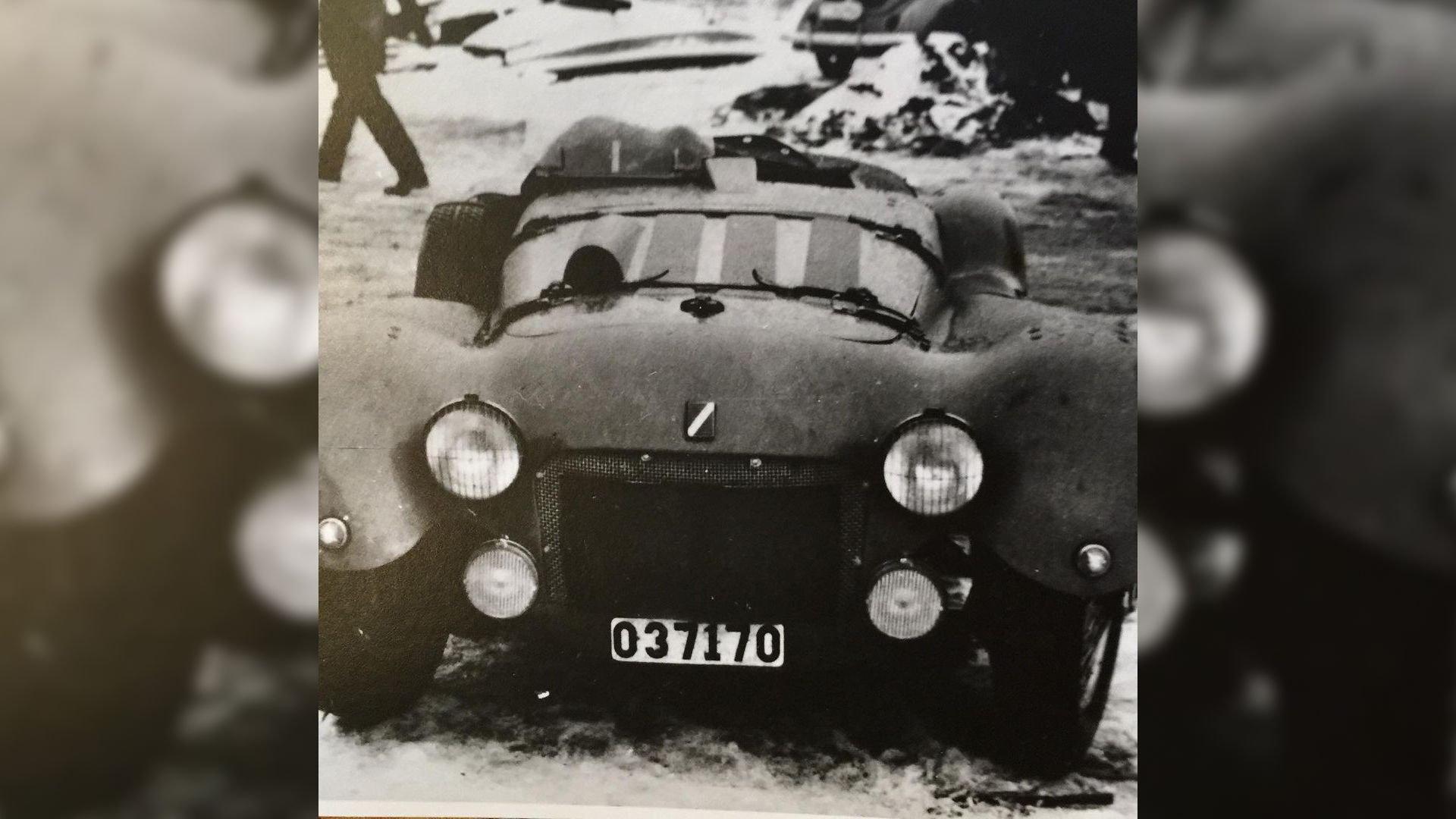
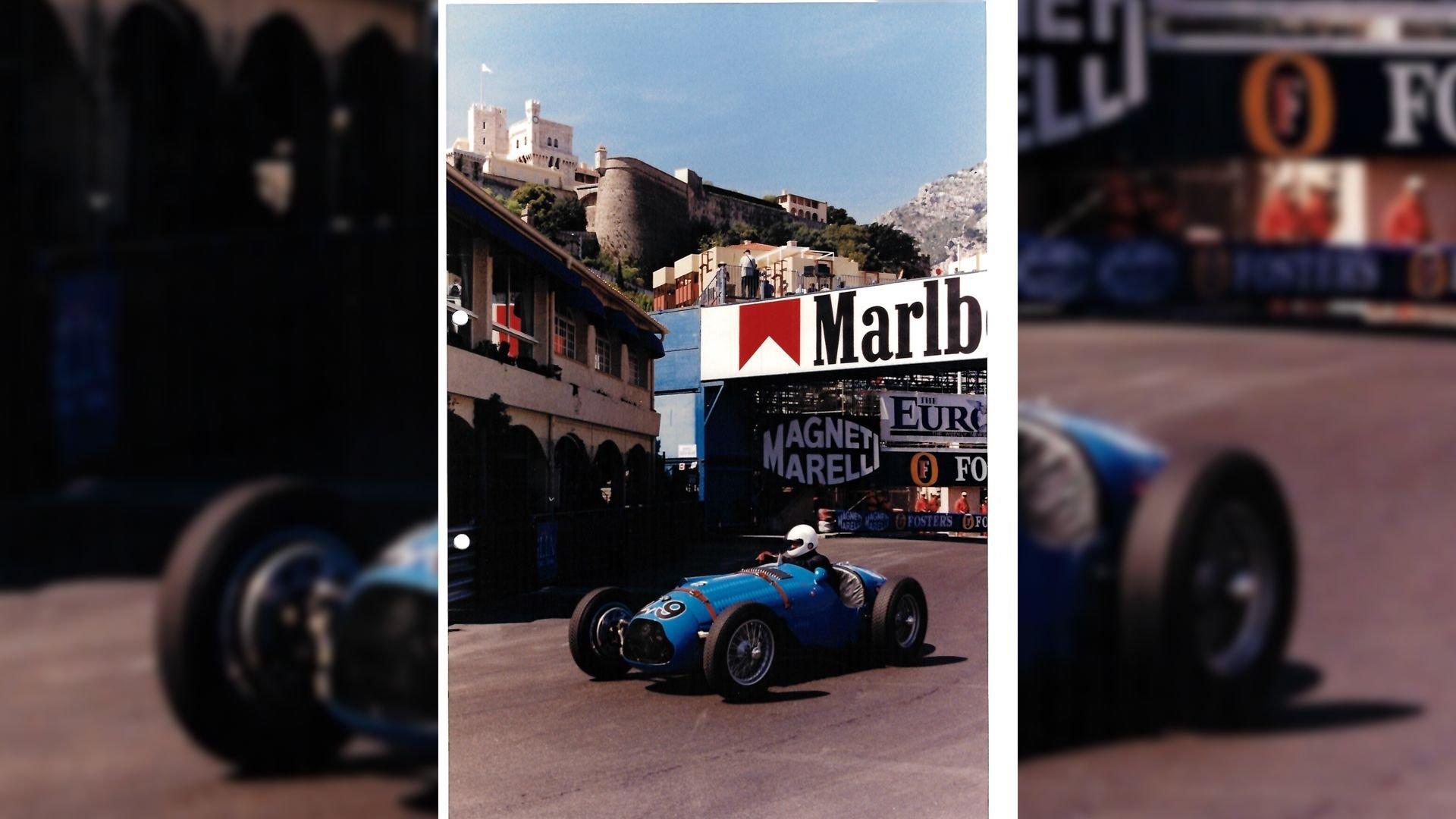
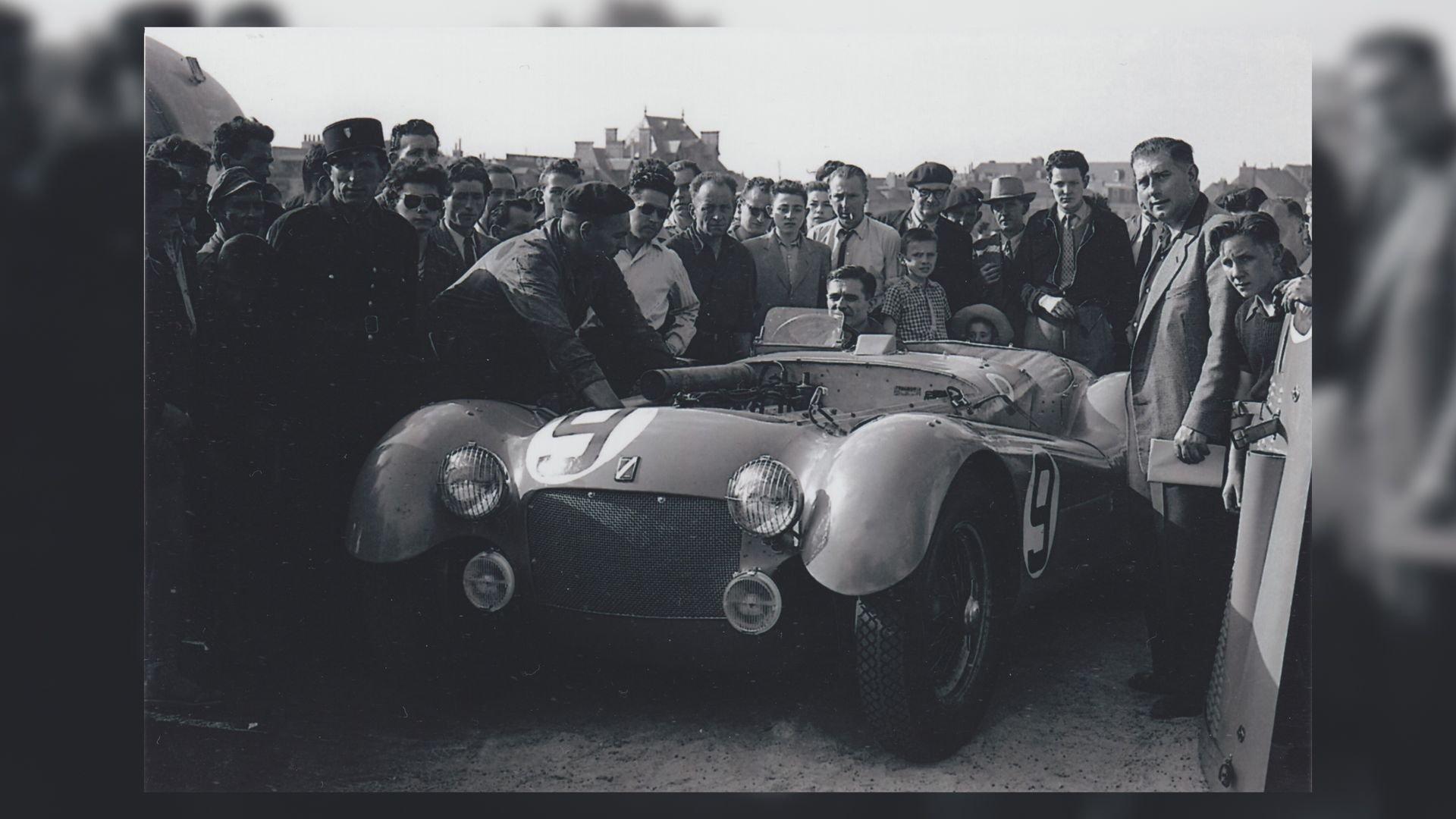
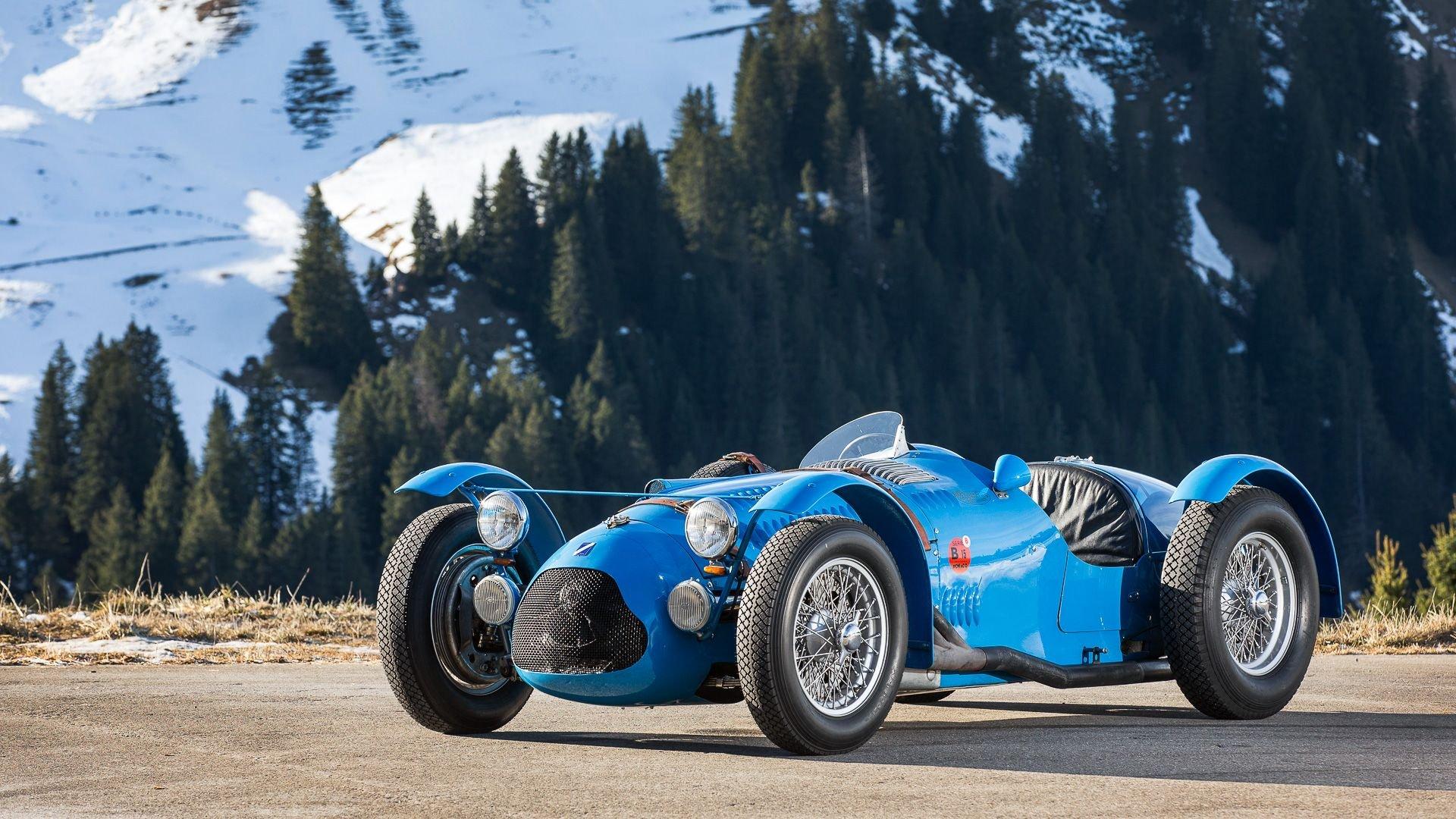
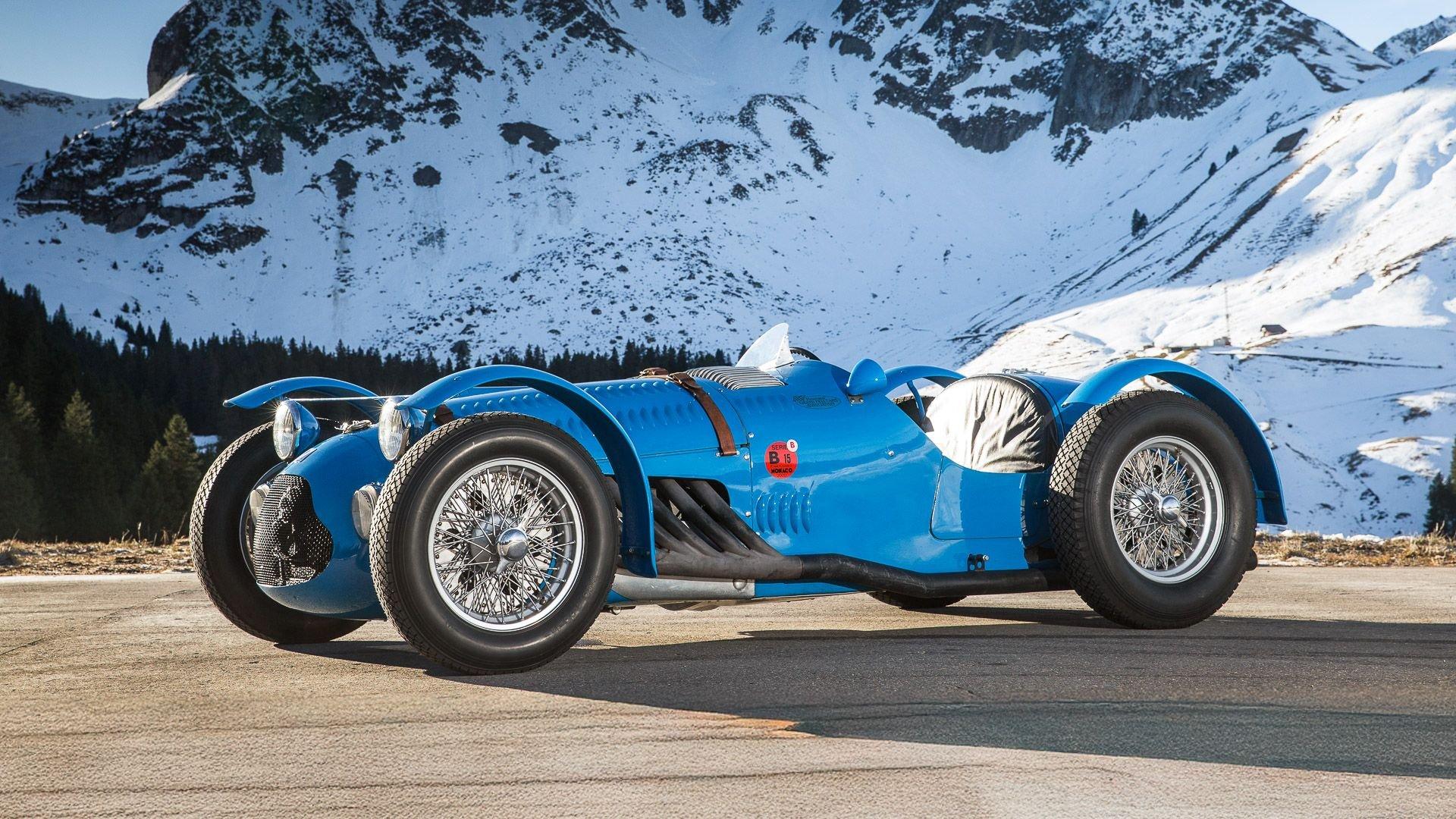
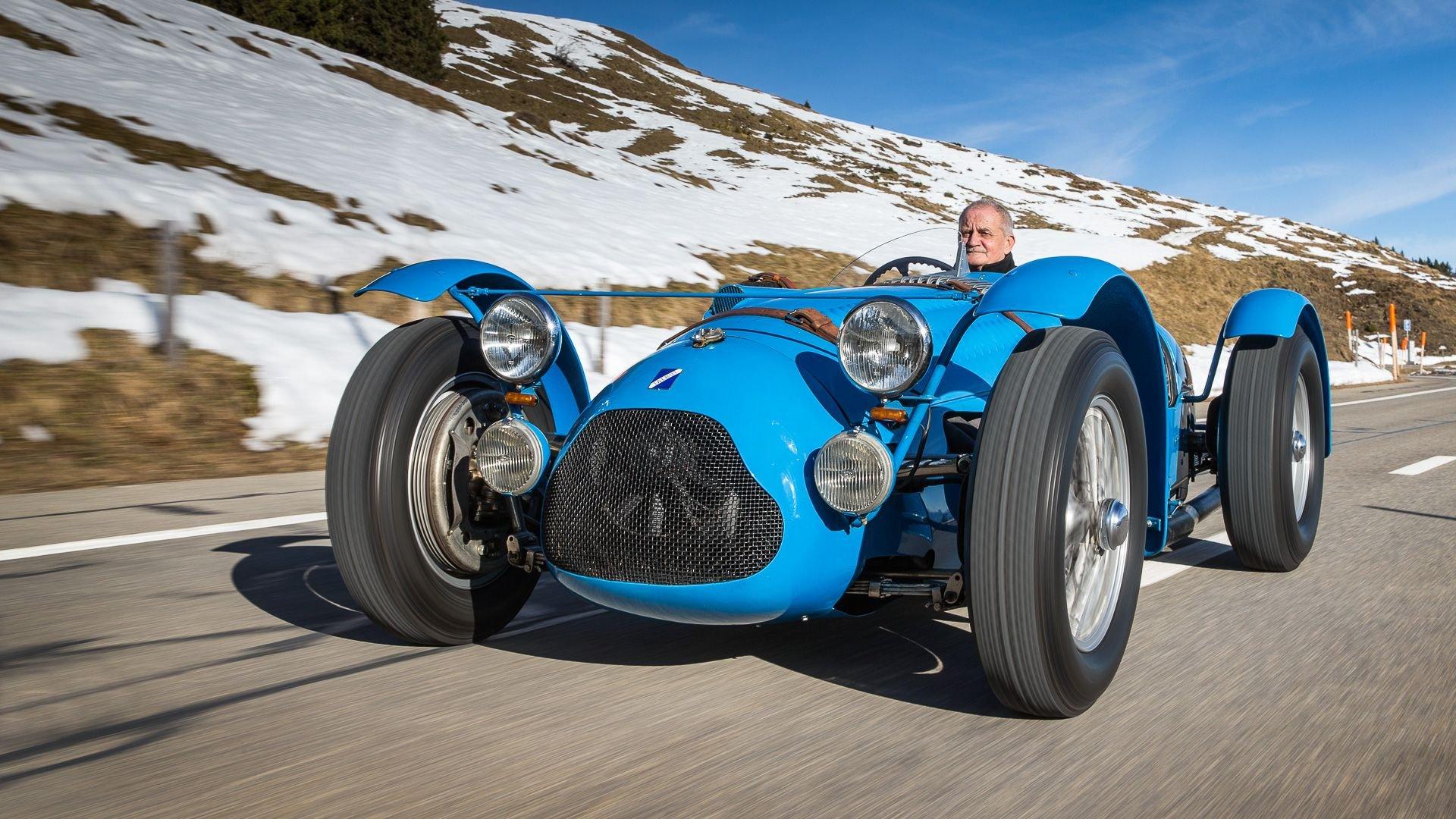
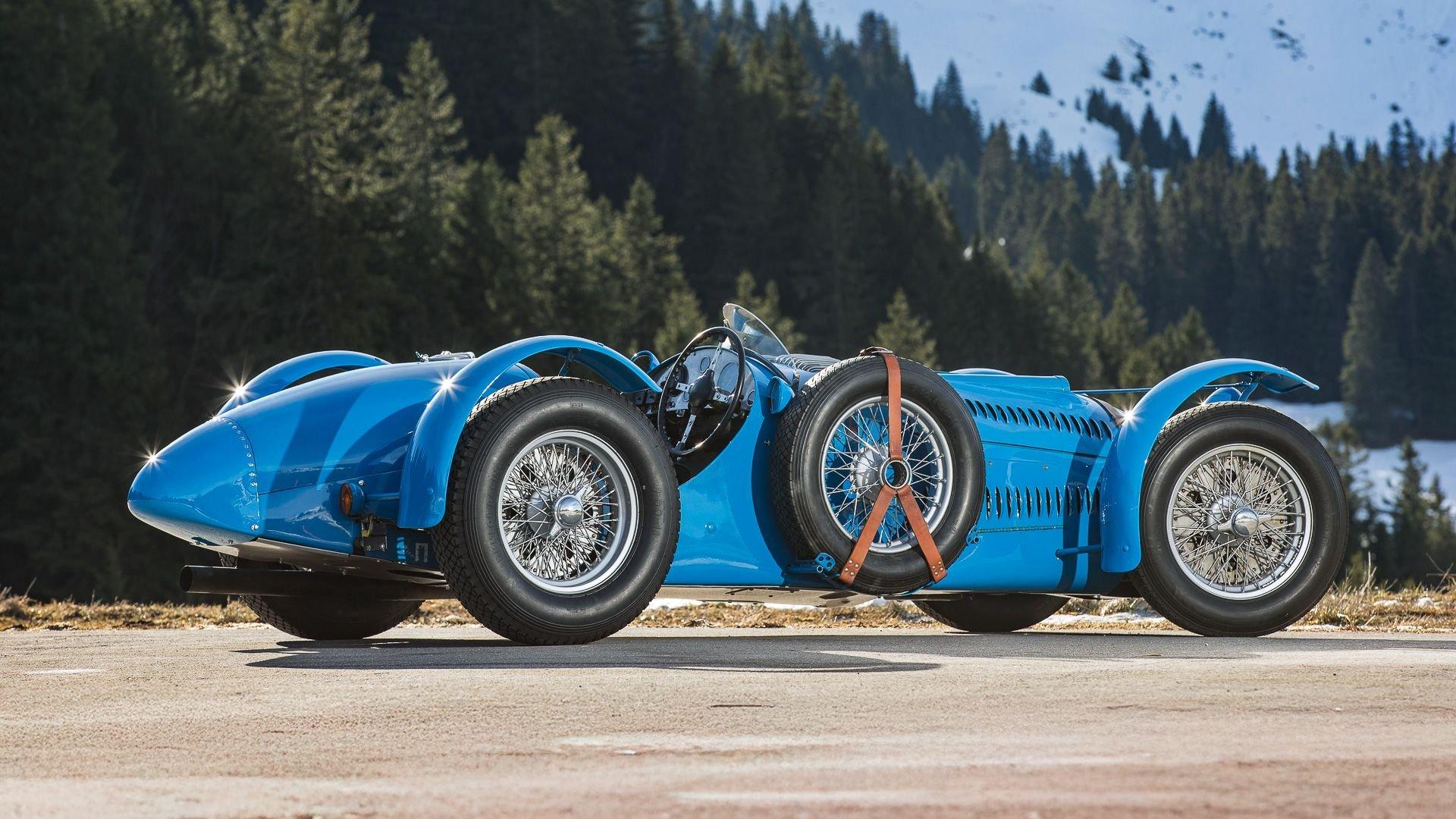
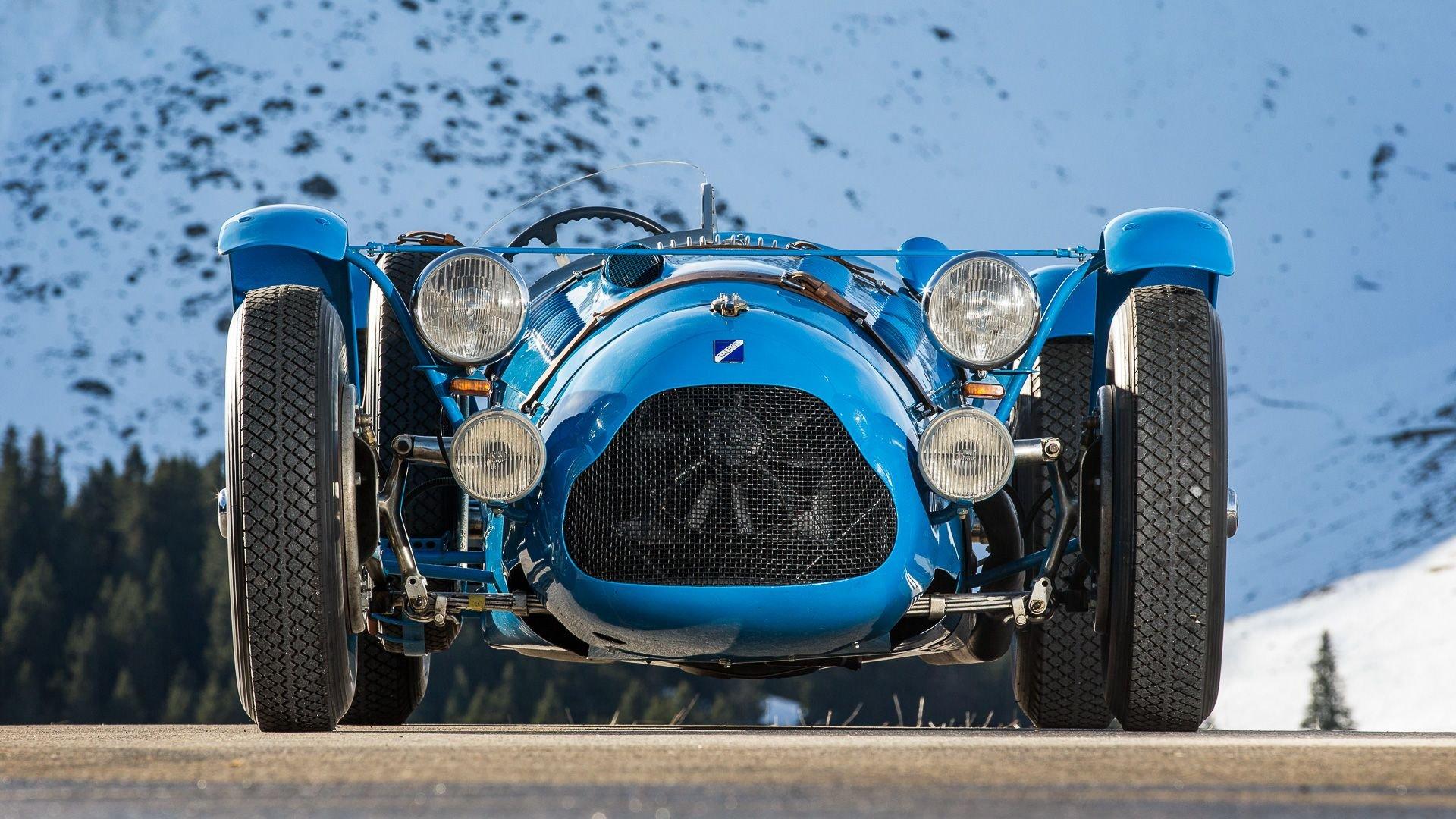
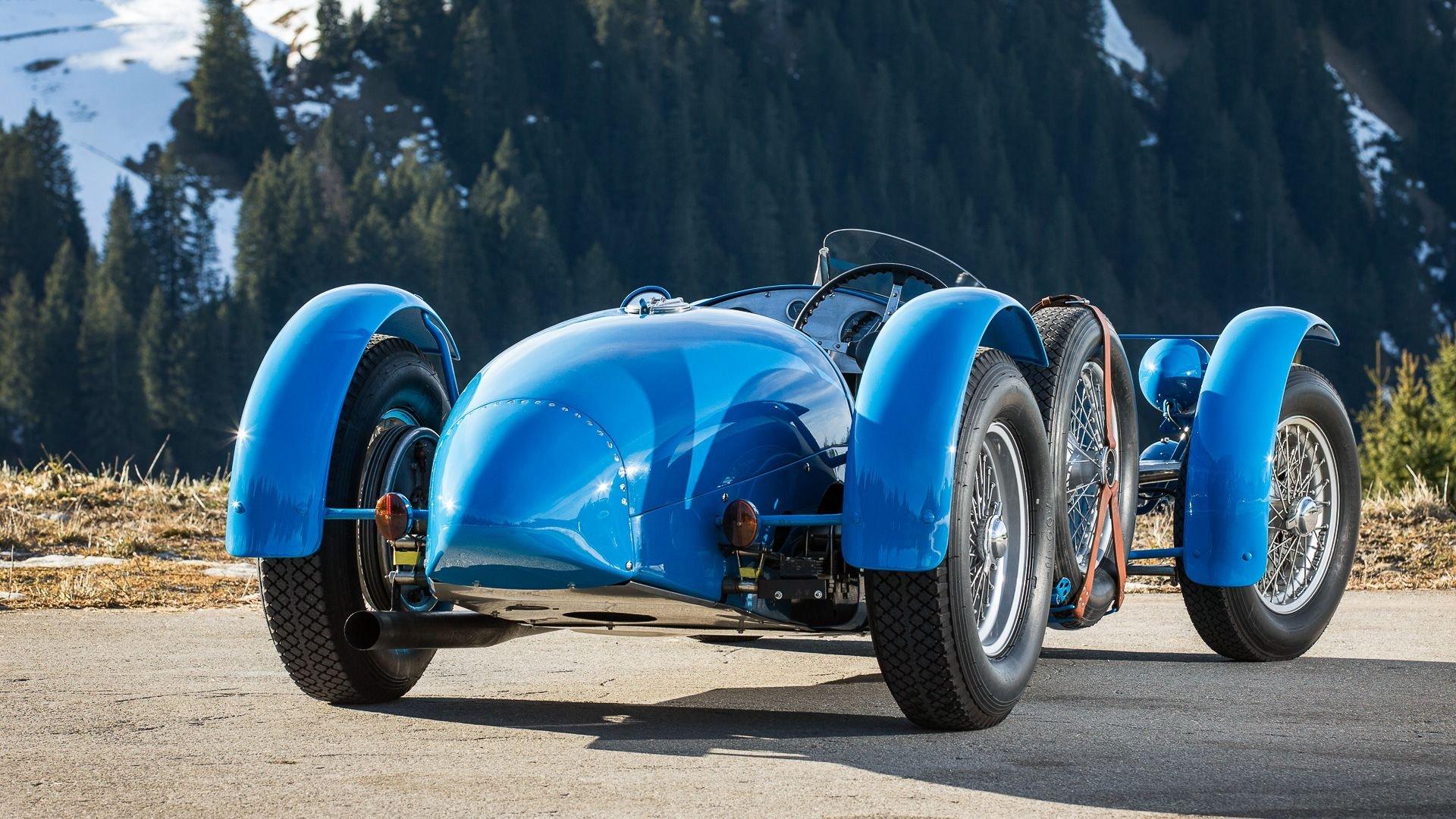
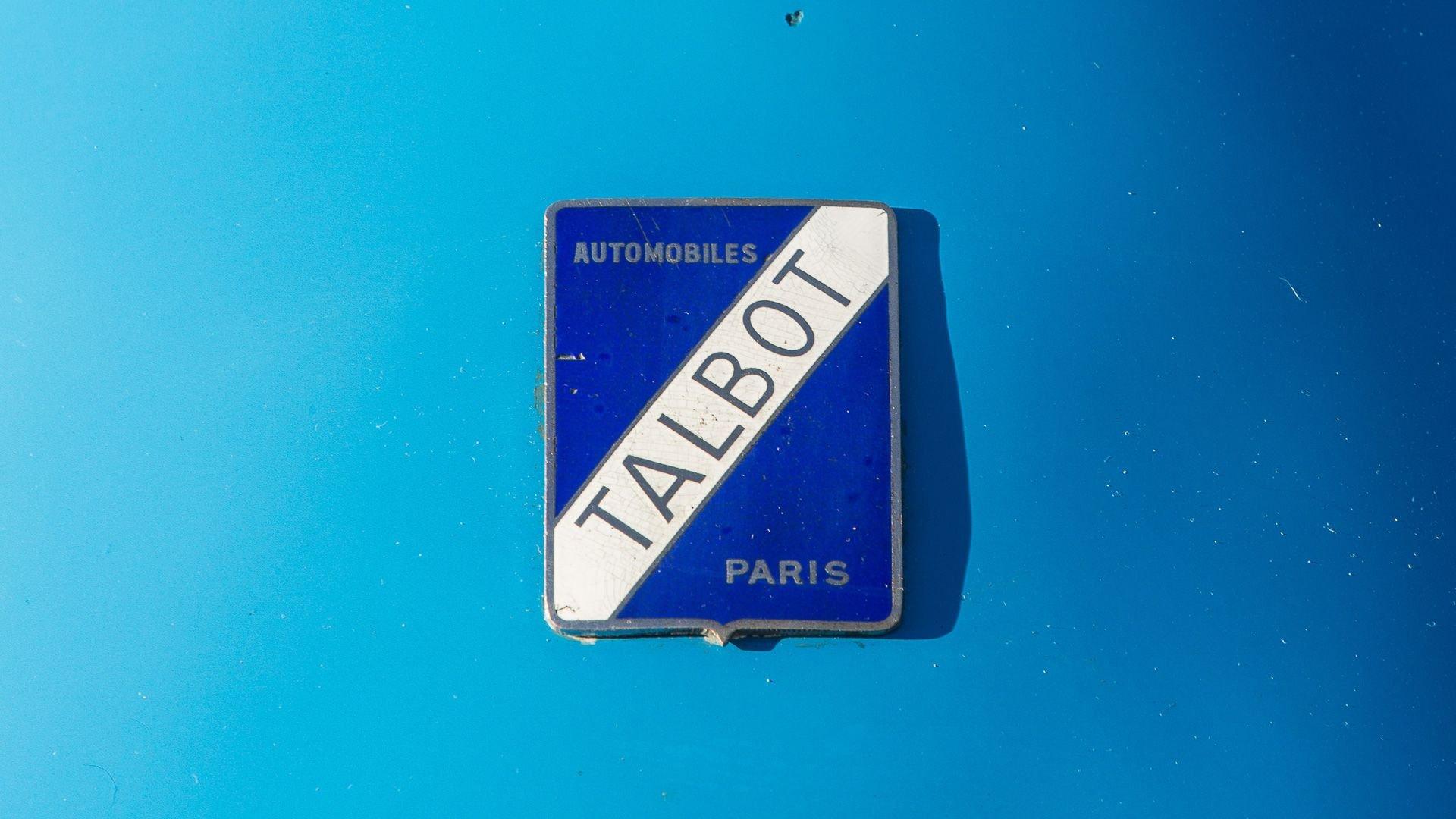
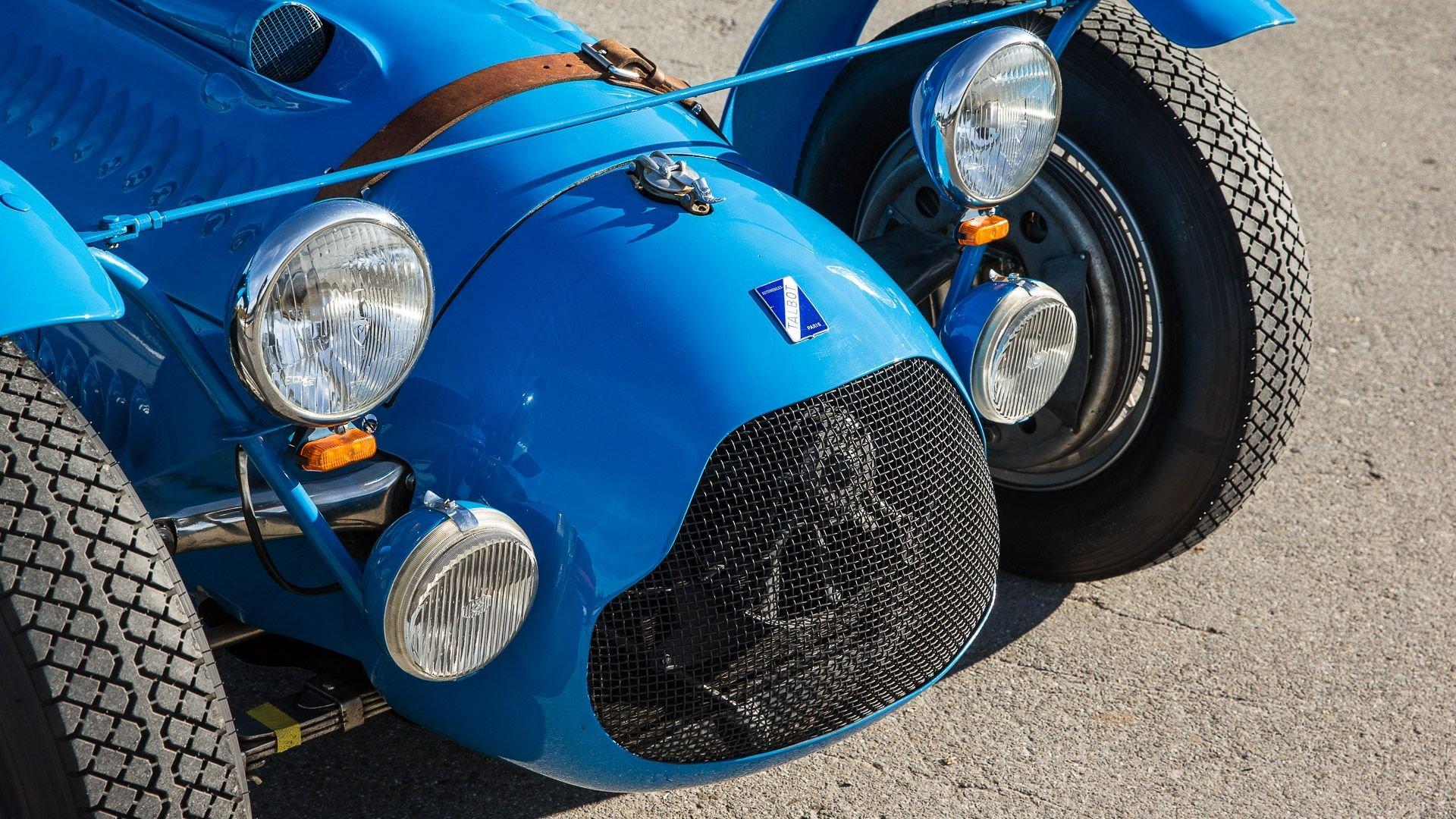
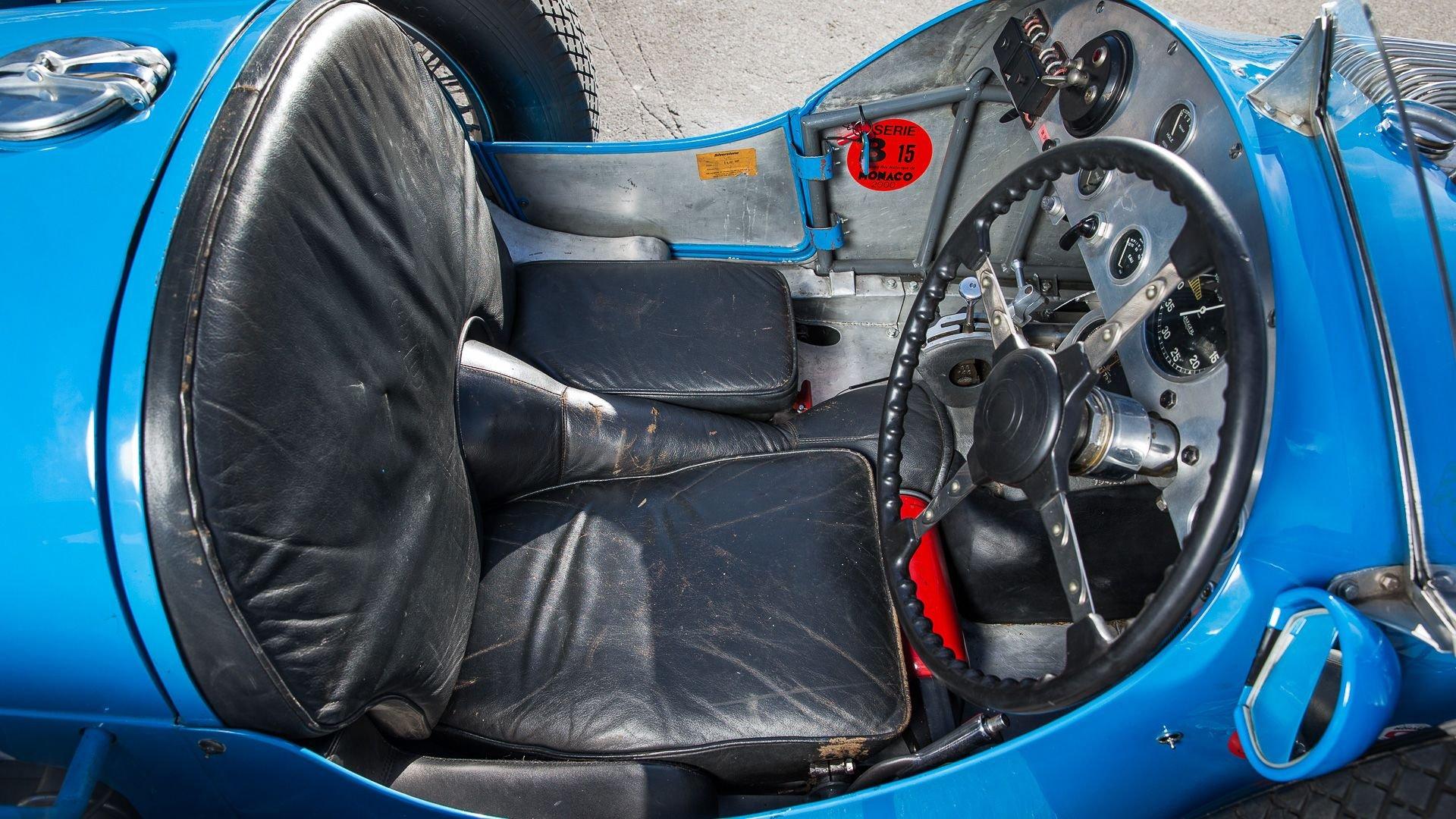
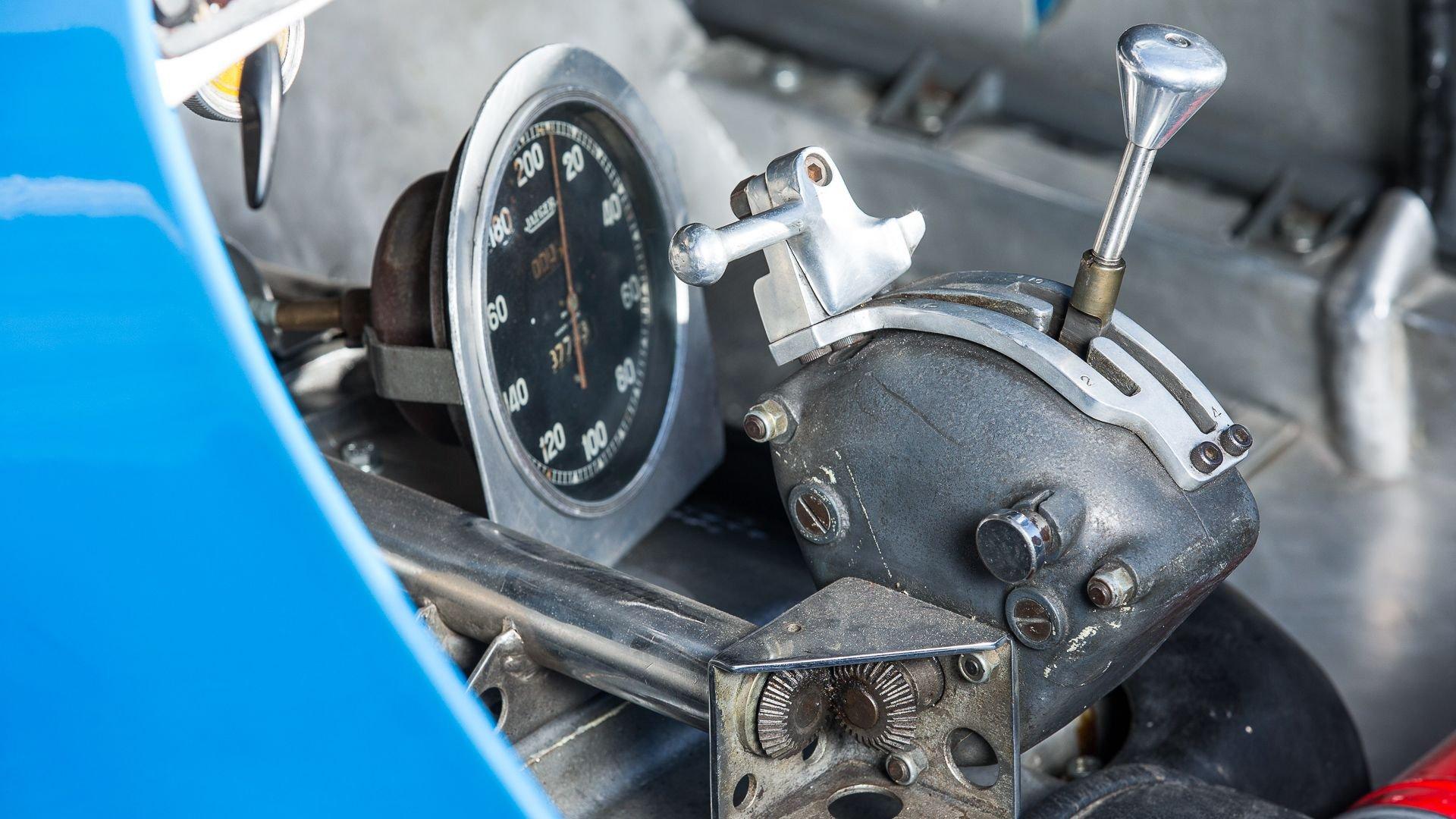
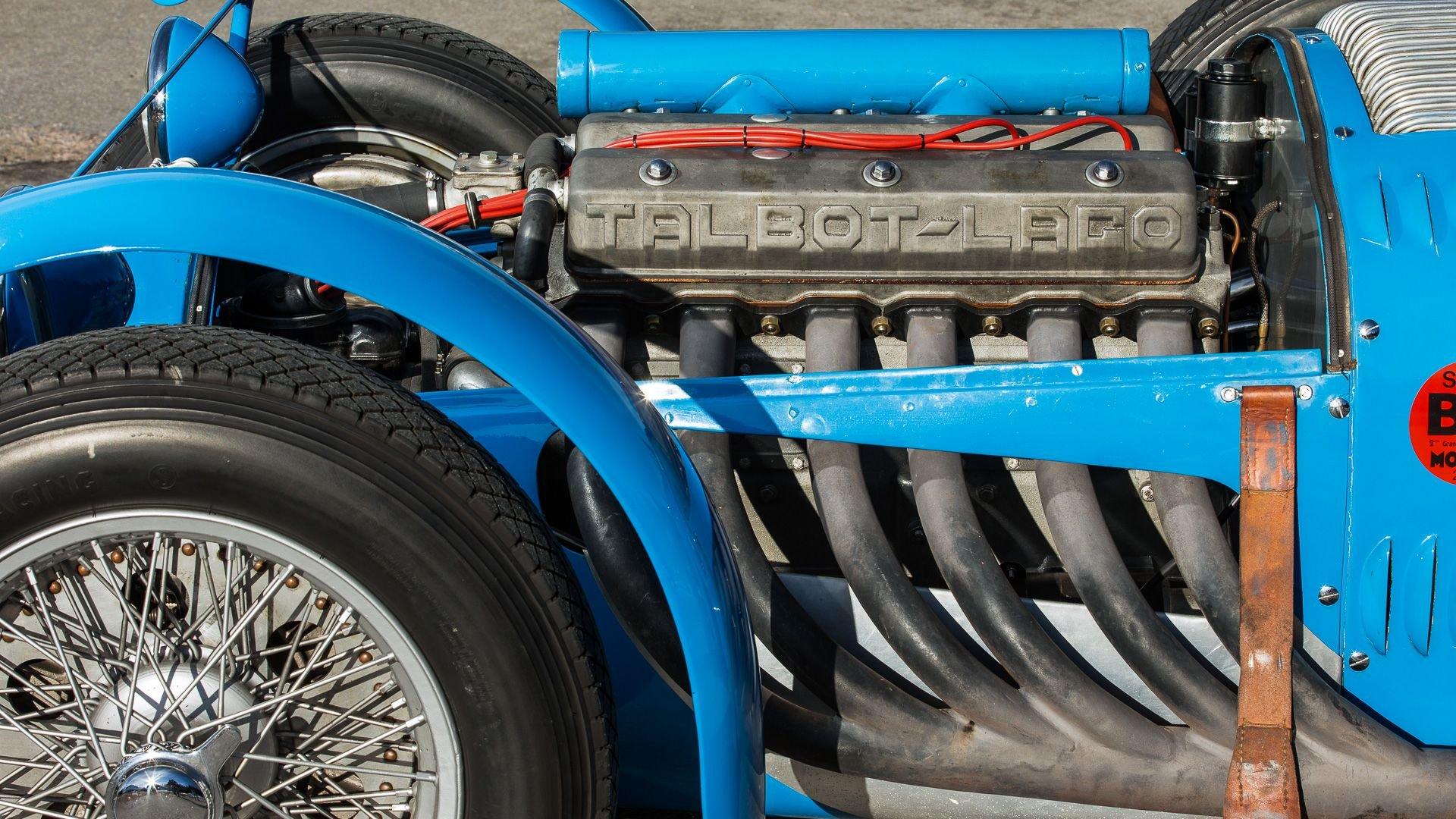

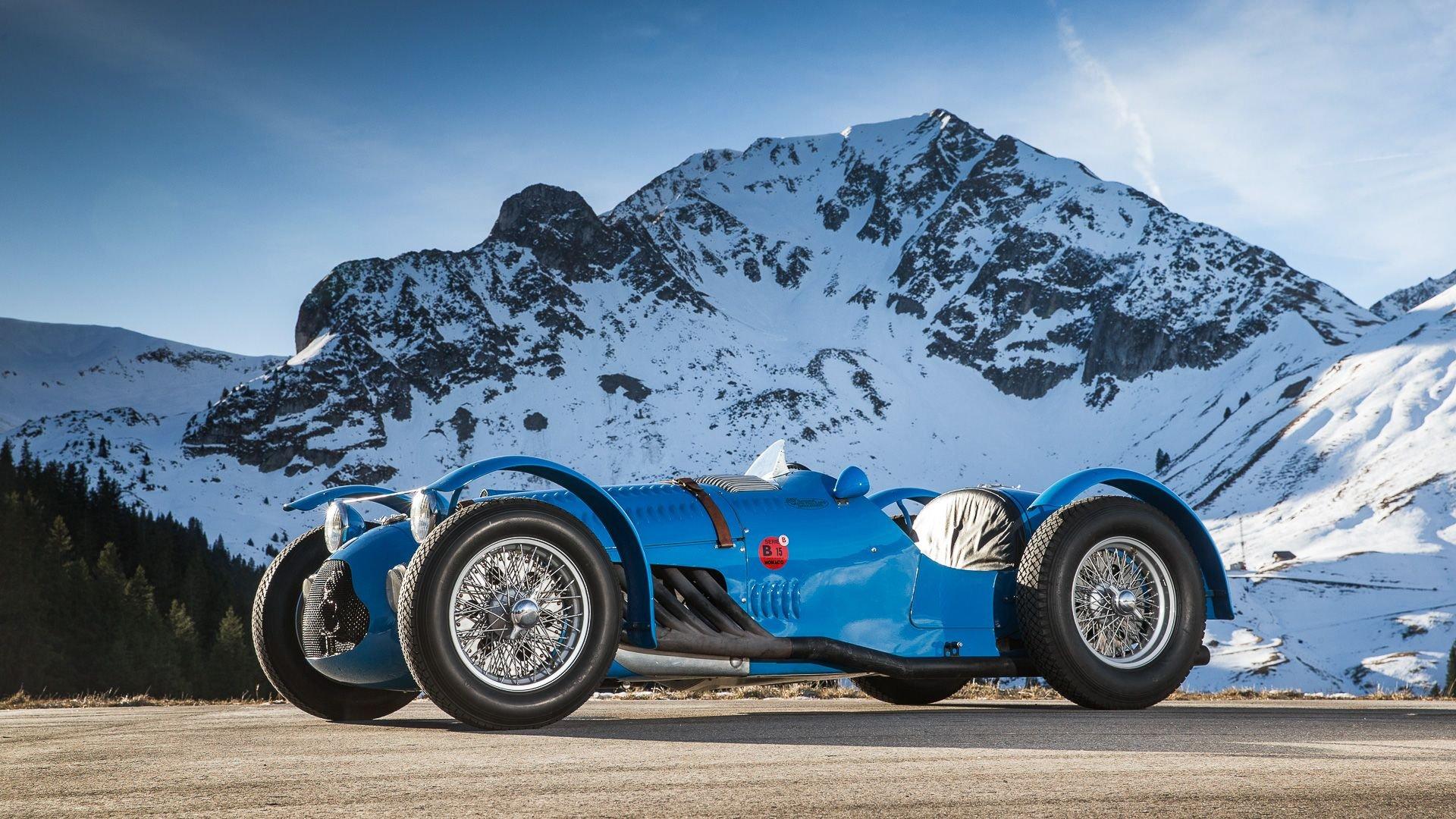

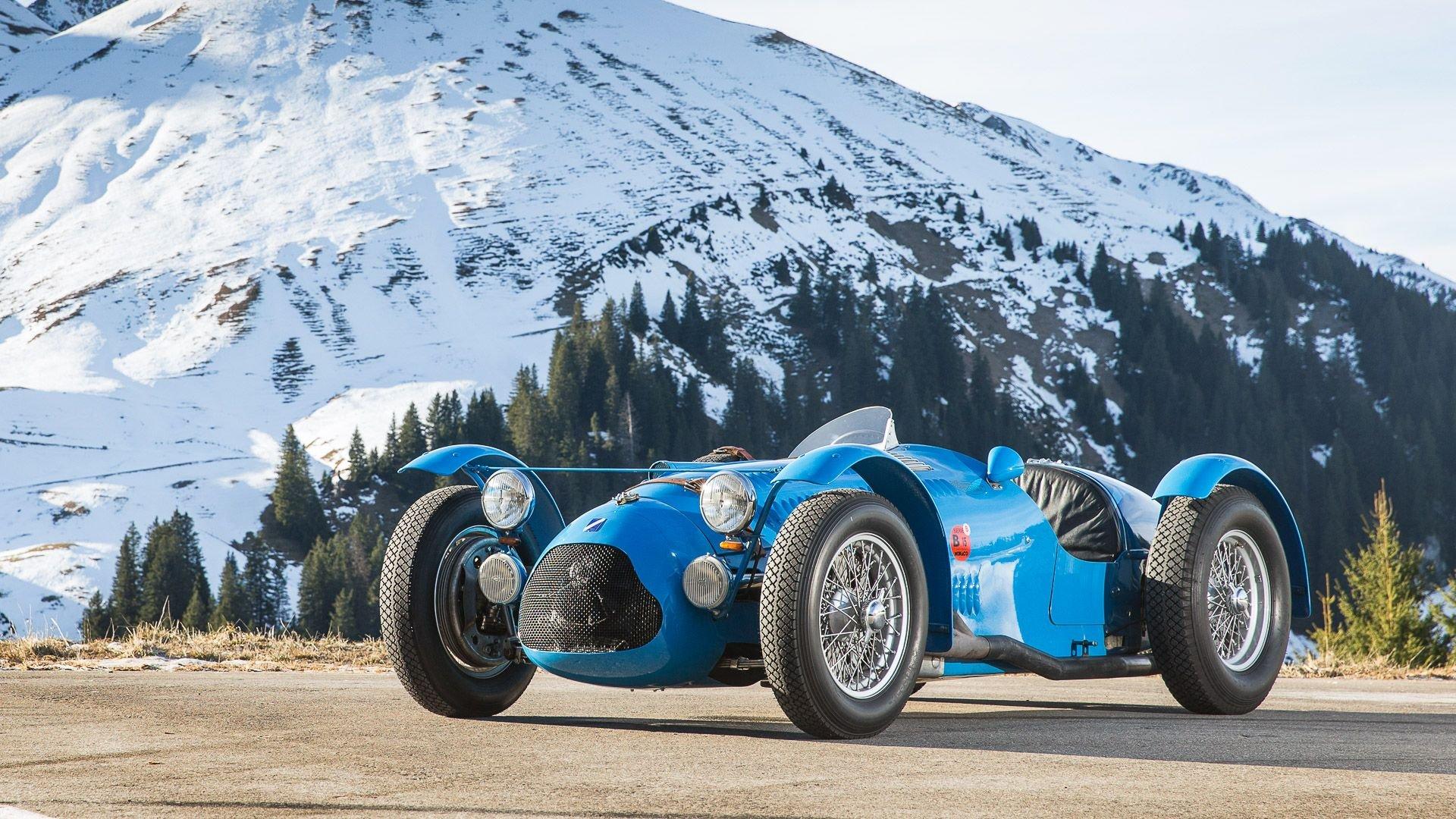
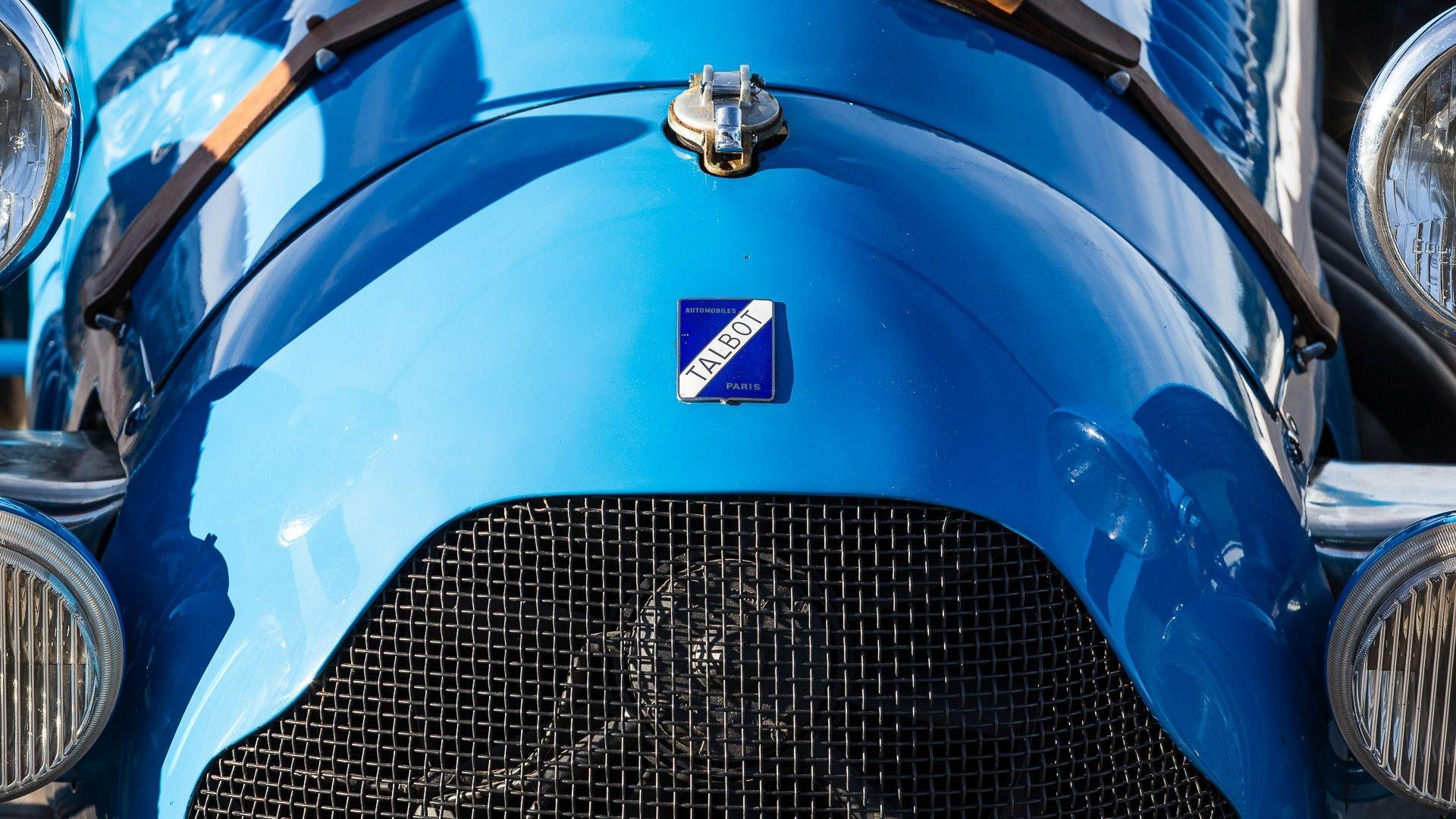
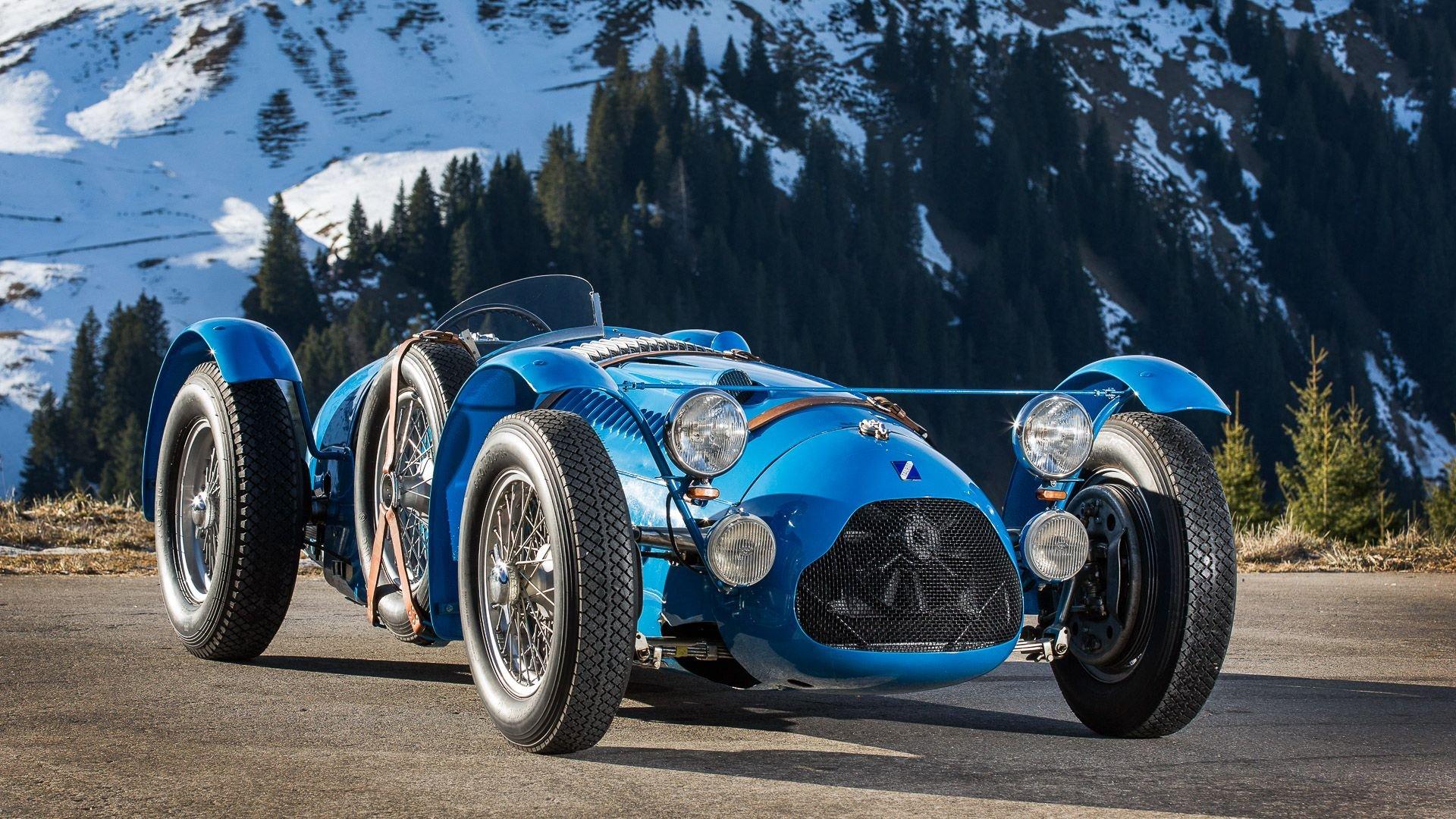
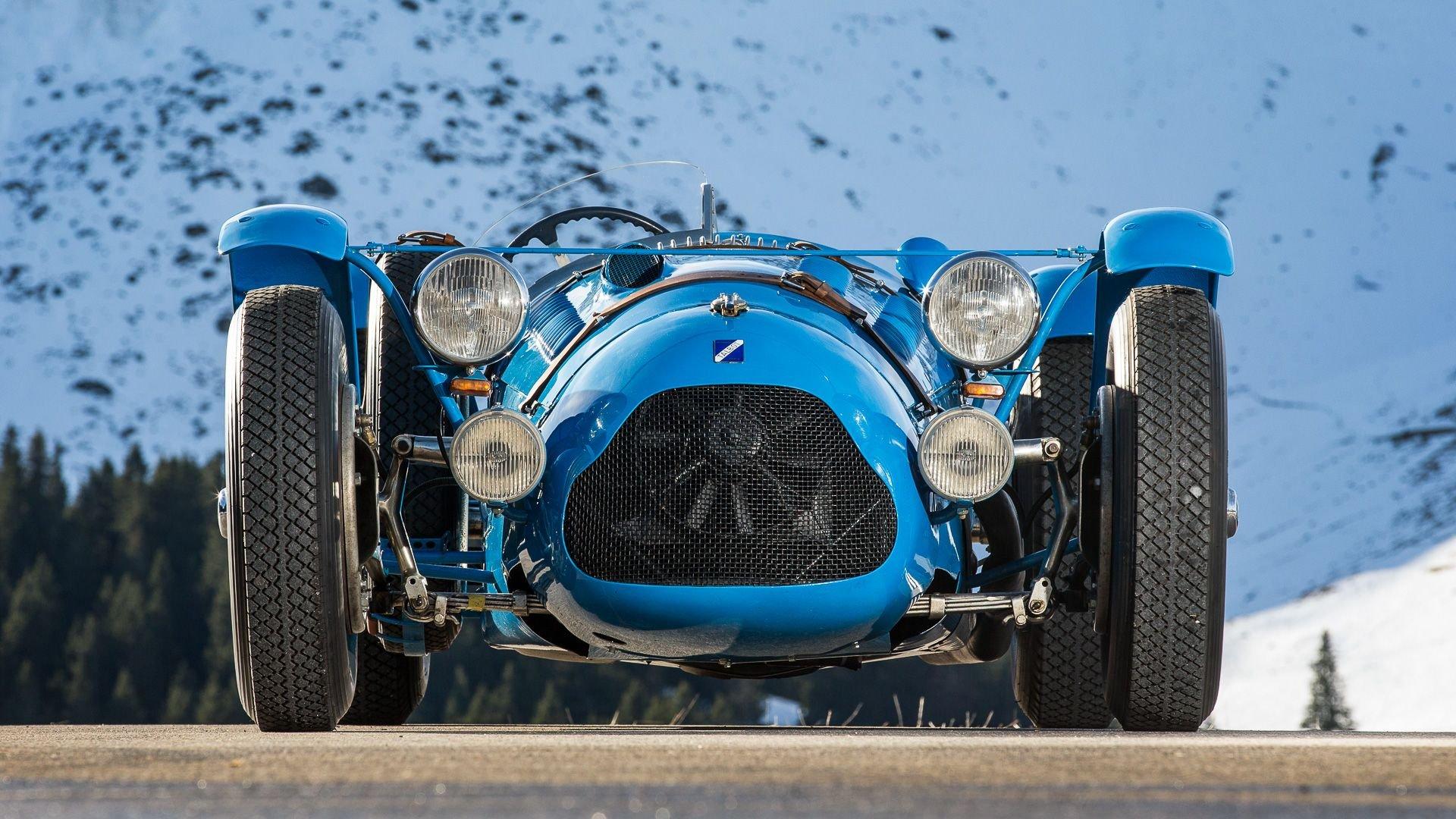
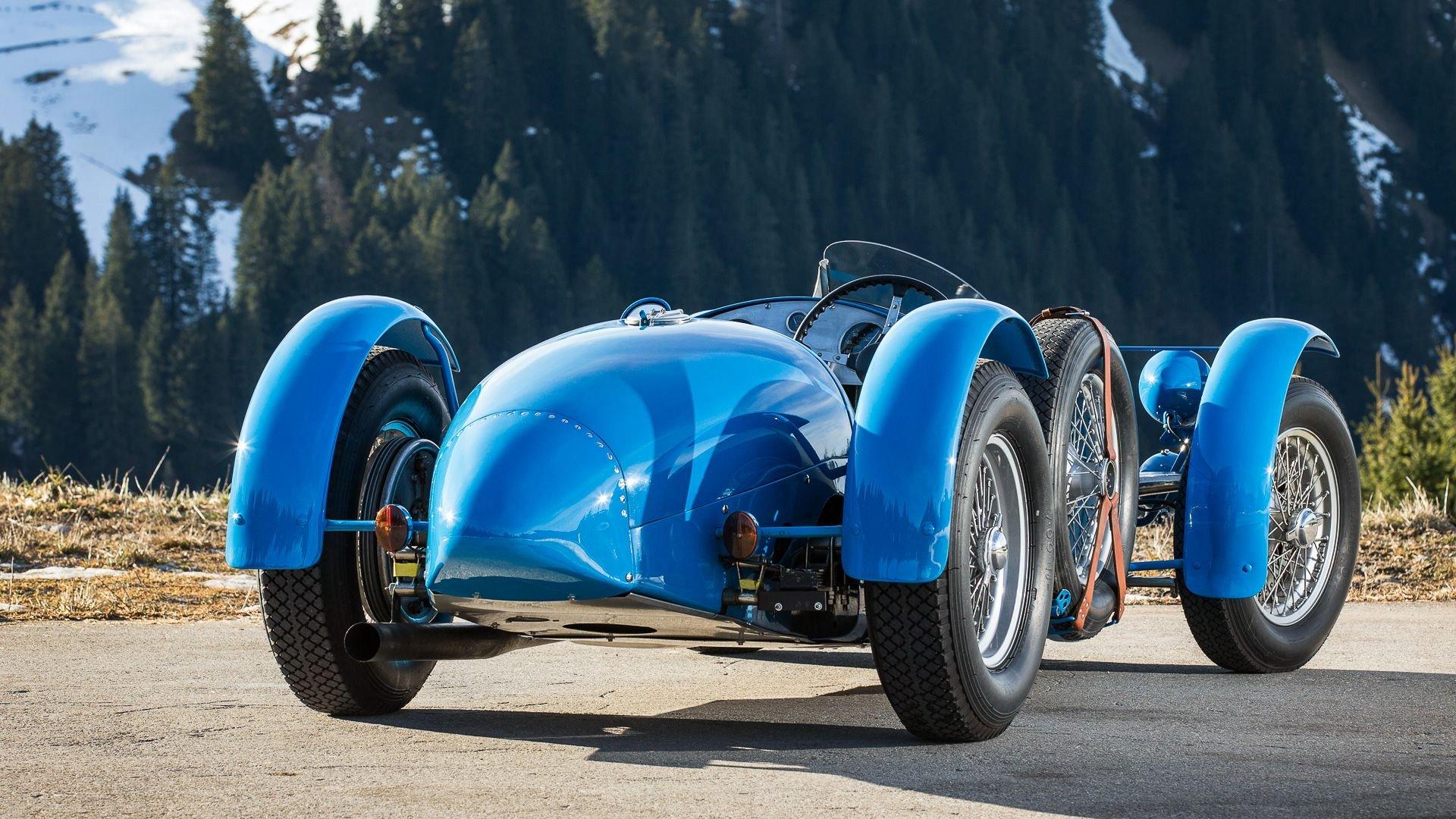
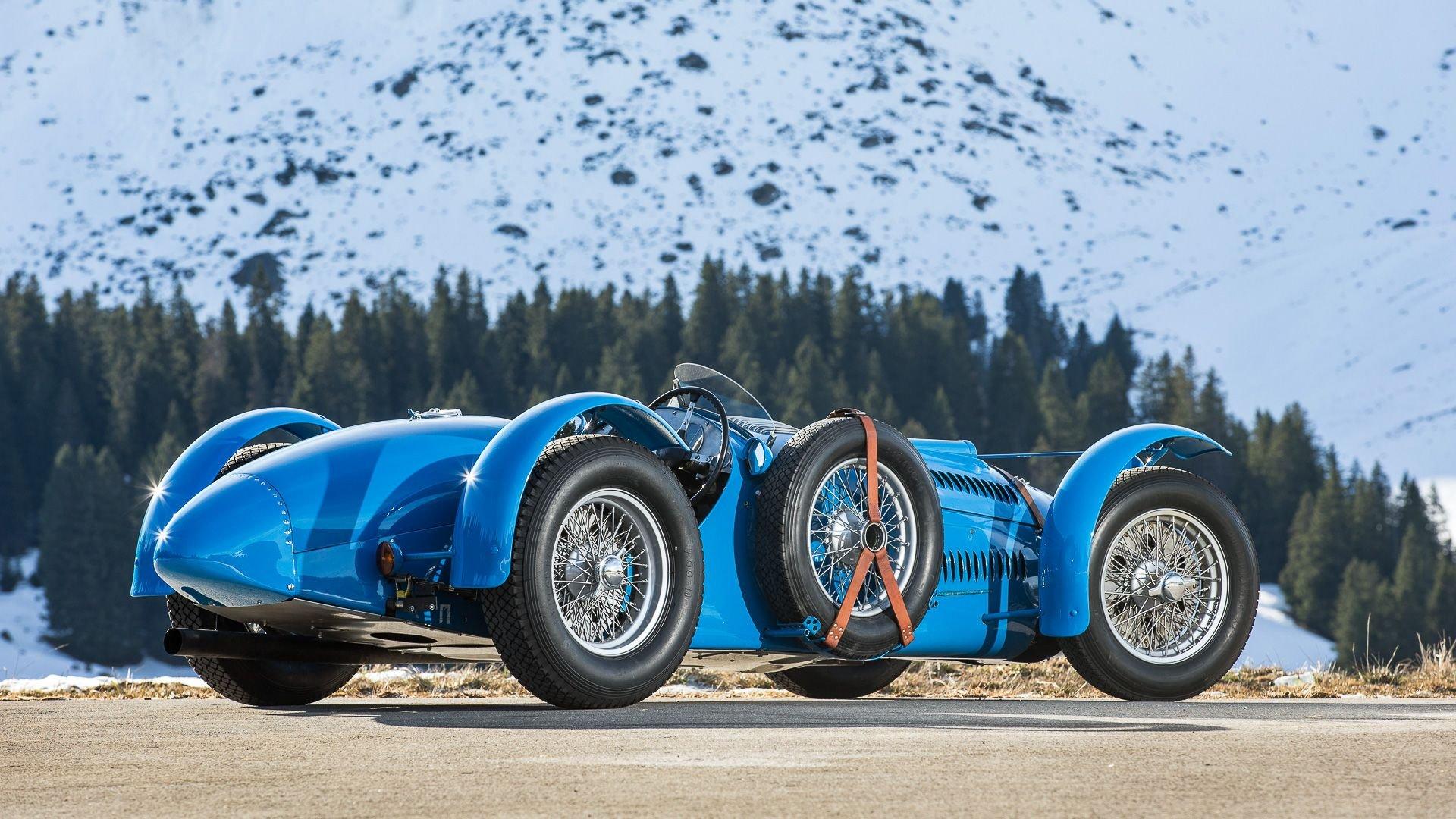

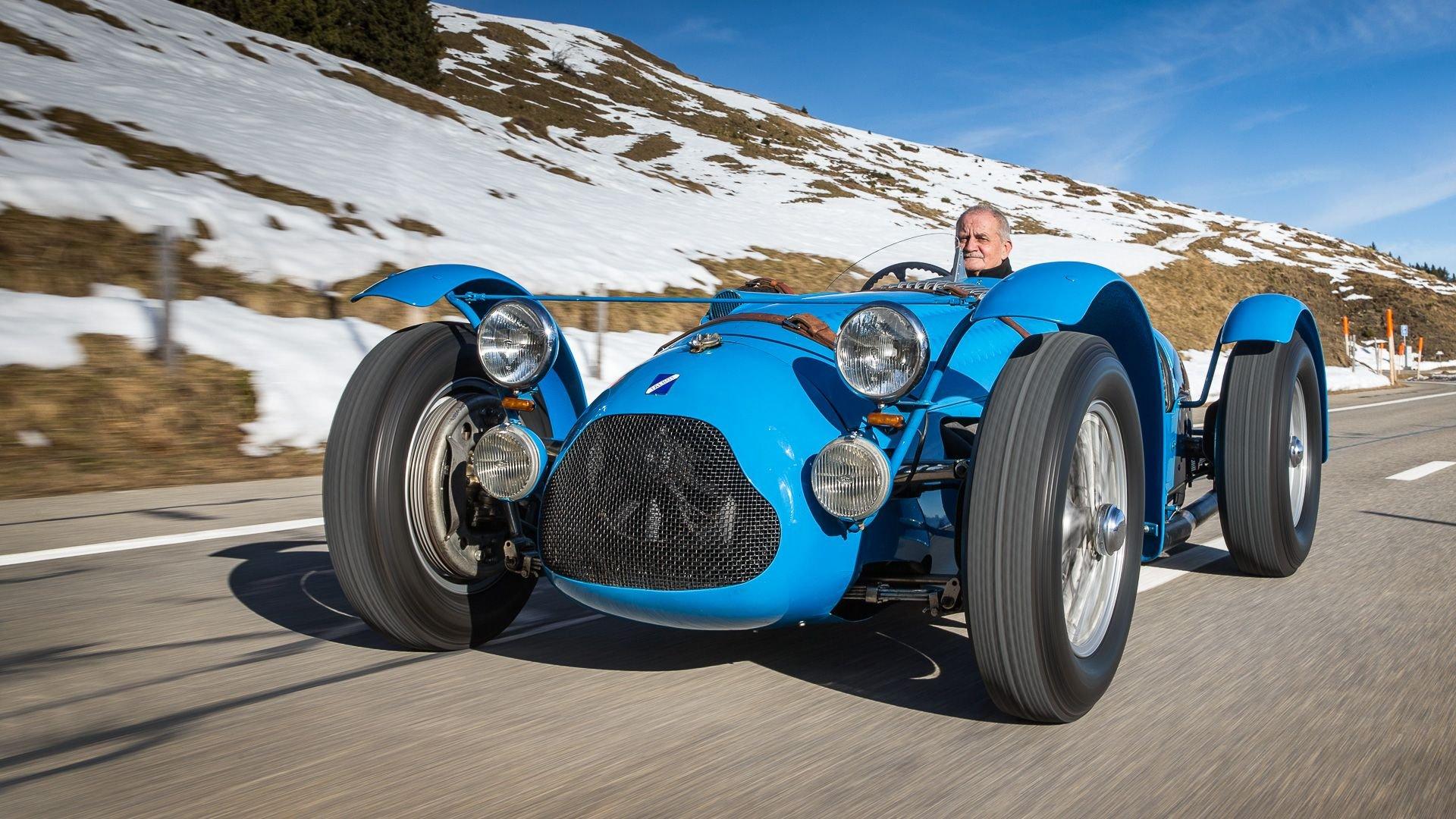
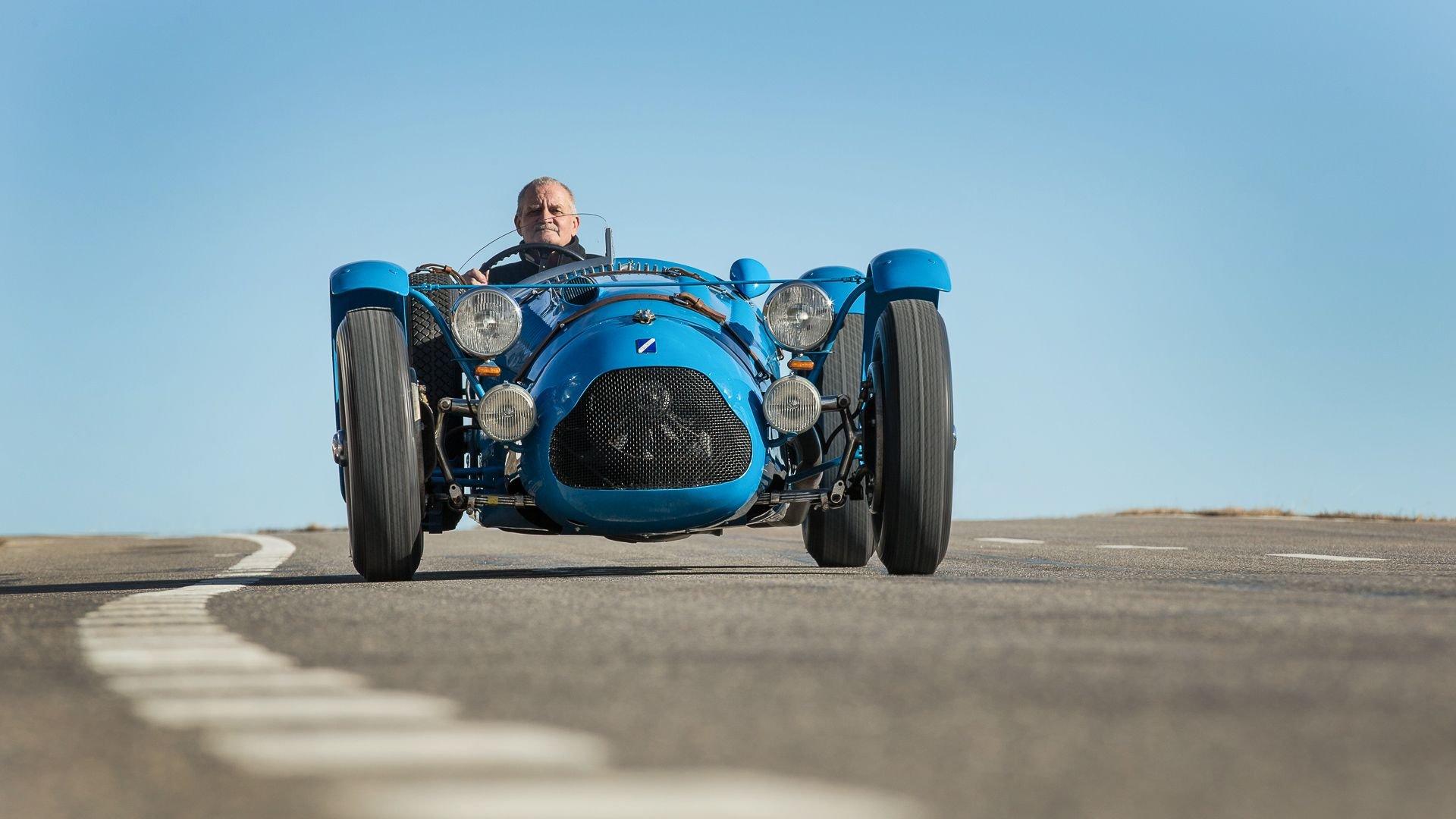
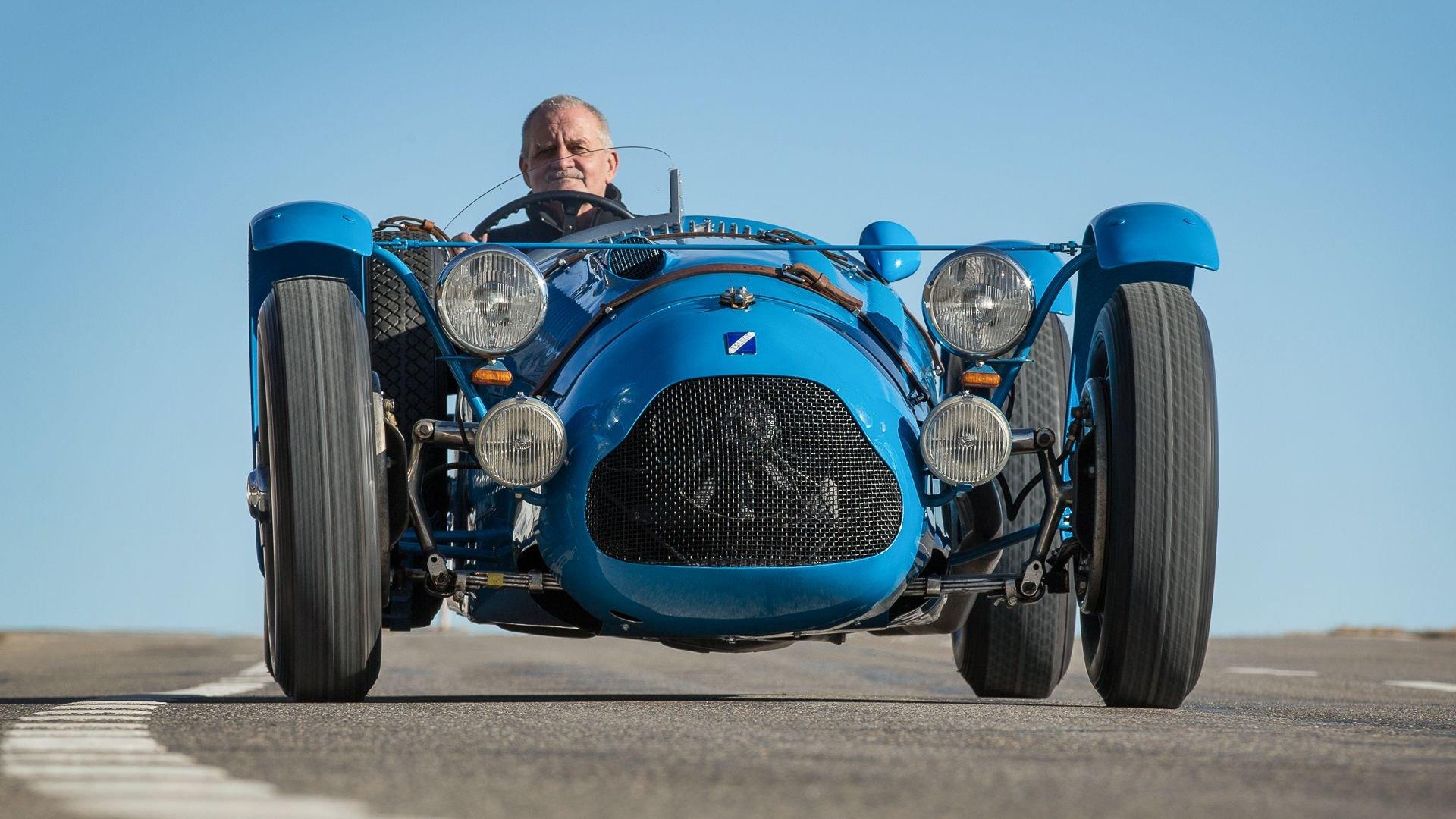
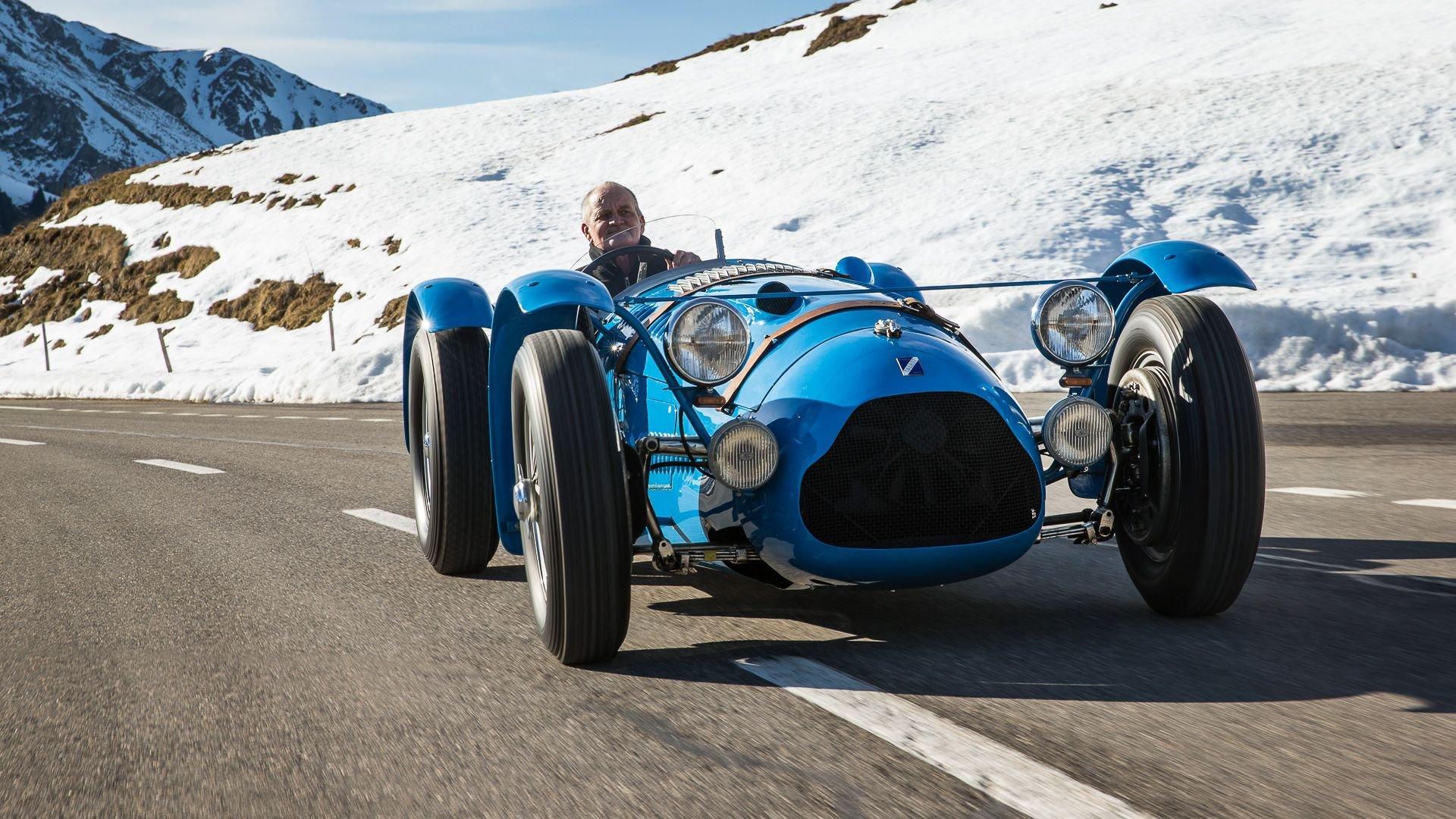
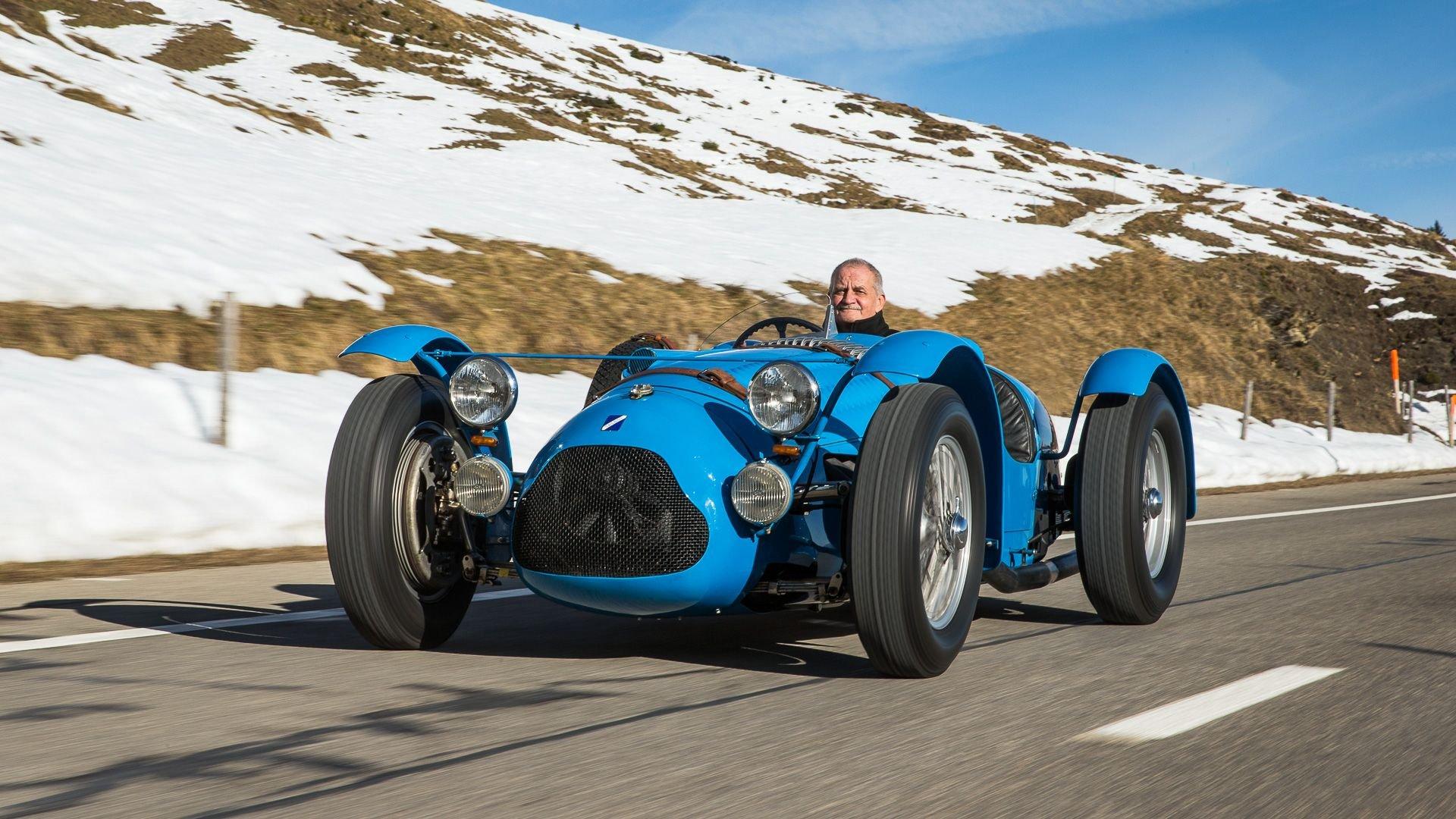

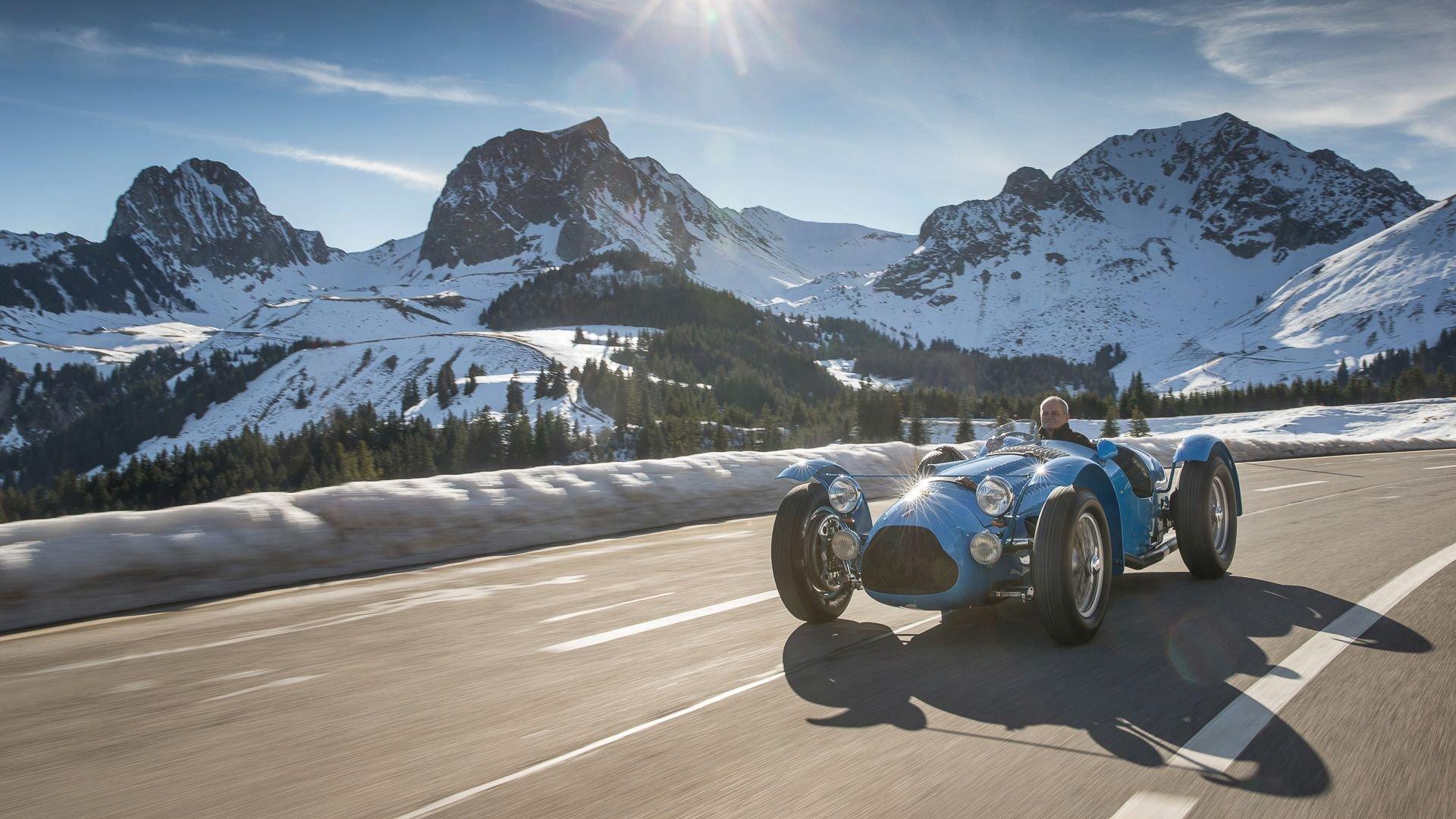


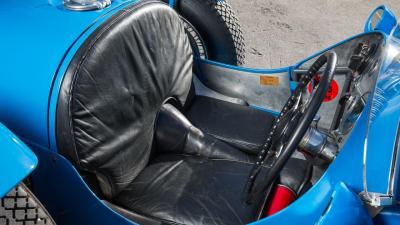
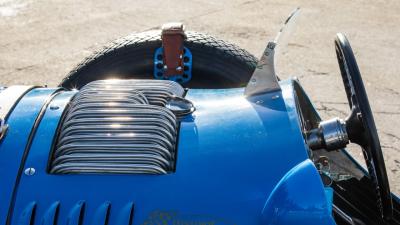
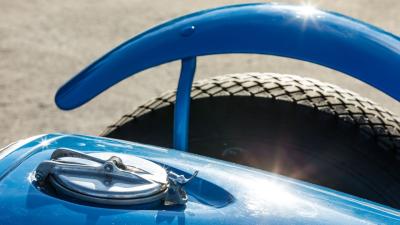
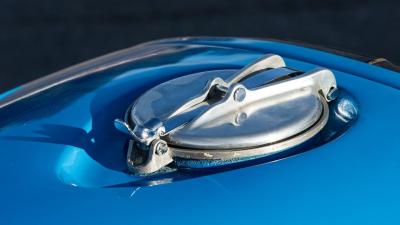

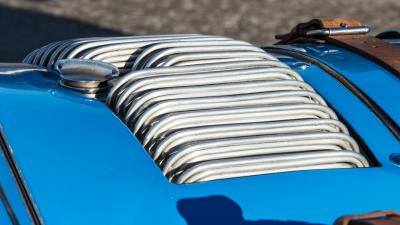
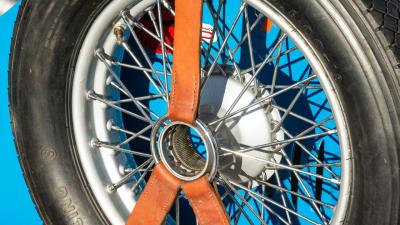




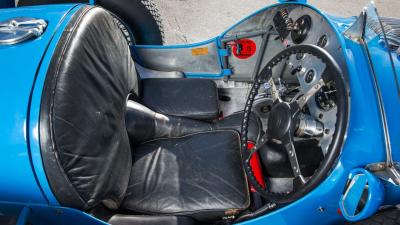
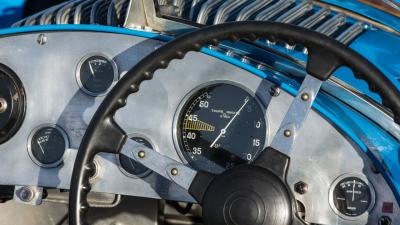
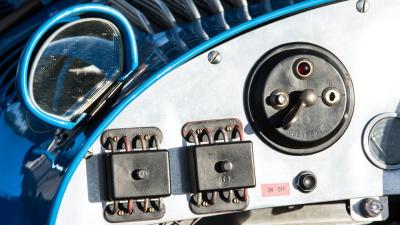

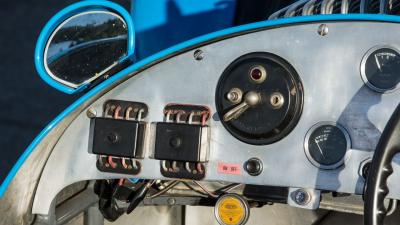
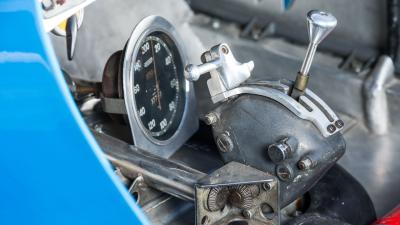
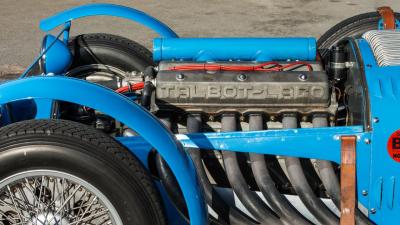
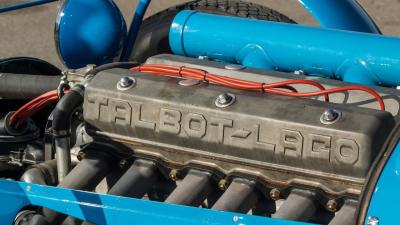
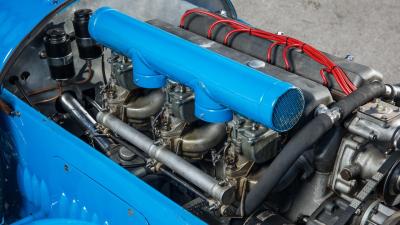
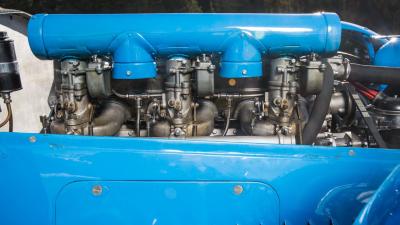
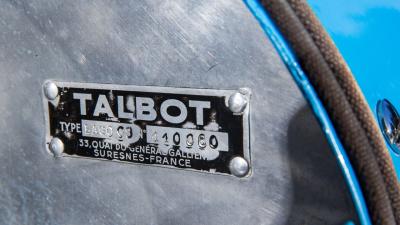
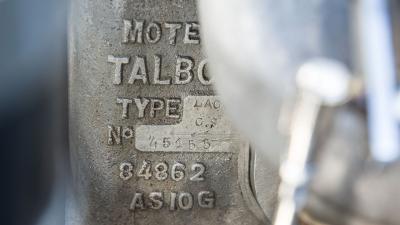
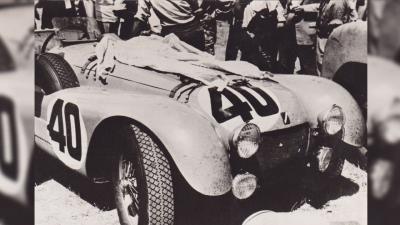
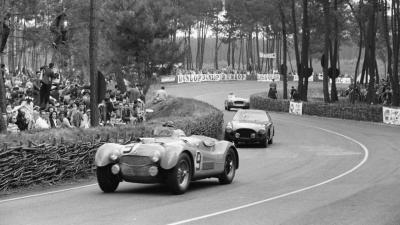
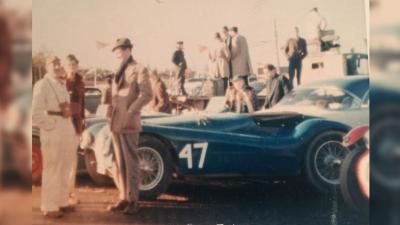
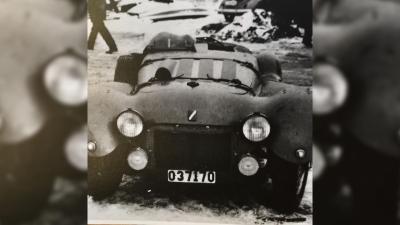
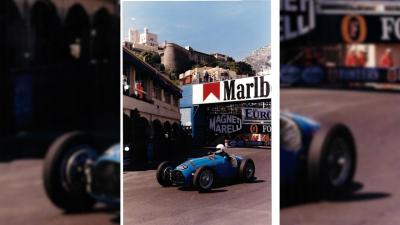
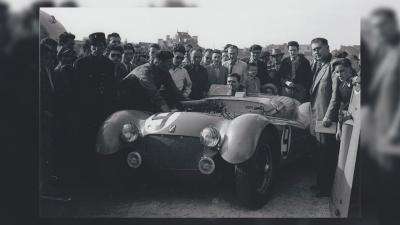








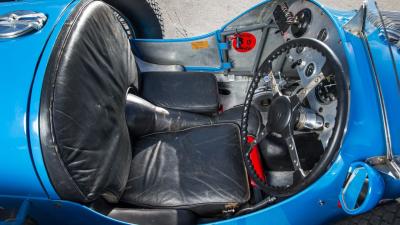
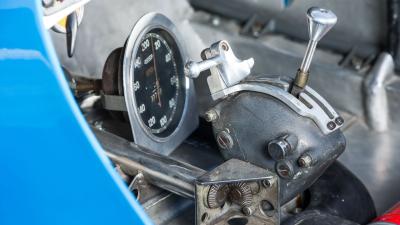
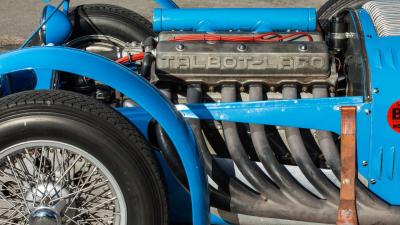








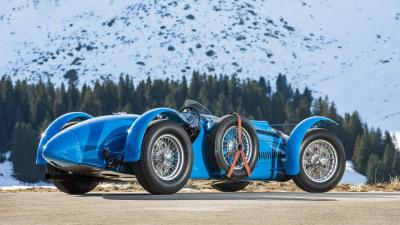









Chassis No. 110060 Engine No. 45155 Talbot Lago T26 Grand Sport The ultimate racing model signed by Talbot-Lago, four examples of the T26 Grand Sport were begun at the start of 1950. Only one of them was completed in time to take the start of the most famous endurance race in the world: chassis 110055. Entrusted to Louis Rosier, this car entered legend by winning the 1950 24 Hours of Le Mans. The three other examples followed a different path and were entered in customer racing starting the following season. In 1952, when the Commission Sportive Internationale banned single-seaters at Le Mans, Talbot-Lago adapted accordingly: thus, the T26 Grand Sport bearing chassis number 110060 was the only one to leave the factory in the form of a two-seat barchetta. Built from a Grand Sport whose wheelbase was shortened from 2,800 mm to 2,500 mm in order to adopt a more sporting character, it is the last car to receive the famous 4.5-liter inline six-cylinder engine with dual overhead camshafts. Developing 240 horsepower, this engine is paired with a four-speed Wilson preselector gearbox, but in a configuration rarely—if ever—seen: gear changes are not made via the steering wheel as on its cousins; instead, the control is mounted directly on the gearbox, positioned to the driver’s left hand in an H-pattern configuration. This brings the advantage that in the heat of racing, one cannot accidentally skip a gear on downshifts causing the engine to over-rev. 1952 24 Hours of Le Mans On 15 June 1952, the Talbot-Lago T26 Grand Sport, chassis number 110060, entered under race number 9, took the start of the 24 Hours of Le Mans, driven by teammates Pierre Meyrat and Guy Mairesse. Meyrat took the first stint, completing thirty laps before handing over to Mairesse, who in turn completed thirty laps. At 10:00 p.m., the car was running in 10th place, six laps behind the leading Gordini of Jean Behra, a position it still held at midnight. But around 3:00 a.m., the team was forced to retire due to a lubrication problem. Chassis 110060 withdrew from the race, victim of an oil pump failure. 2nd Grand Prix of Reims 1952 Barely two weeks later, on the Reims-Gueux circuit, the start was given at 11:00 a.m. under oppressive heat. Robert Manzon, leading at the wheel of his Gordini, set the fastest lap at 166.63 km/h before being forced to retire from the race, leaving first place to Stirling Moss in his Jaguar Type C. Starting only from 10th position, the T26 Grand Sport overtook its competitors one by one and finished the race in a remarkable second place, securing a podium finish for Mairesse. Its Swedish Years Talbot-Lago T26 Grand Sport, chassis number 110060, is accompanied by an extremely impressive historical file, notably enriched by Nicolas Maier. It includes numerous photographs spanning the decades, articles devoted to the car, sales advertisements, invoices, correspondence, and—among these—the personal recollection of one of its owners, Magnus Gyllenspetz. During the winter of 1968, this young enthusiast, still a student, noticed an advertisement in the Swedish press offering a racing Talbot-Lago for sale. It was being offered by Lennart Holmström, a distinguished professor in Stockholm, who had discovered it by chance in a scrapyard in Luleå, in northern Sweden, not far from the Arctic Circle, and had saved it from certain destruction. Drawn by the advertisement, the student traveled to Stockholm to see it. Although it required care, he immediately fell under its “brutal” or raw charm and purchased it. He then drove it home, braving 70 kilometers in the harsh Swedish winter at the wheel of his newly acquired barchetta. After some time in use, the clutch disc failed, and he decided to undertake a complete restoration. As his research and work progressed, and after several visits to Georges Grignard, former T26C driver, he realized that his modest student means would not be sufficient to restore his Talbot-Lago to the full splendor it deserved. He therefore made the decision to sell it. Yet how had this rare French racing car first made its way to the far north in the first place? Gunnar Bengtsson, a Swedish engineer and rally driver, owner of a Talbot-Lago Grand Sport with which he won the 1951 Swedish Rally and the Midnight Sun Rally alongside his co-driver Sven Zetterberg, was also a friend of Anthony Lago. During a visit to the factory, he noticed chassis 110060 under a tarp. The car, having completed its factory career, was sold to him at a favorable price. Bengtsson made no modifications to the car except for the transmission ratios, adapted for better response on ice, and entered two Swedish races in February 1954, finishing second and then first. The following year, Bengtsson sold the T26 Grand Sport to Eric Carlsson, also a racing driver. Carlsson entered it in numerous races during the 1955 and 1956 seasons in Sweden and Finland, regularly reaching the podium behind the wheel. It was subsequently sold to Tore Bjurström, Bo Rapp, and Magnus Gustavsson, before being deposited in that northern scrapyard, and finally rescued by the professor and acquired by our student in 1968. Across Seas and Oceans Hoping the car would be acquired by an enthusiast capable of restoring its former glory, Gyllenspetz published an article in the British specialist magazine Motor Sport. Anthony Blight, a lawyer in Cornwall, England, read it on New Year’s Eve 1971, according to his recollection reported in Pierre Abeillon’s Talbot-Lago de Course. Without ever having seen it, and even though it was dismantled, he decided to purchase it and came to collect it in May of the same year, transported on his trailer. Convinced that it was the T26 Grand Sport—actually chassis 110059—that finished second at the 1951 24 Hours of Le Mans, driven by the same Meyrat-Mairesse team and supposedly having simply changed bodywork from one year to the next, he undertook a restoration detailed in Abeillon’s work and kept the car until 1982, when Paul Grist and Keith Duly acquired it. Paul Grist, still convinced that it was chassis 110059, had the bodywork replicated as it appeared on the T26 GS at the 1951 24 Hours of Le Mans, prior to the regulation changes of the 1952 season, of the same type as that worn by the victorious Talbot-Lago T26 Grand Sport driven by Louis Rosier at Le Mans in 1950. The original barchetta body was then removed and sold later in the 1980s to Joseph Bruggemann, who had it fitted to his Talbot-Lago T14 America, a car that remains identified and tracked today. Subsequently, Duly bought out Grist’s share to become the sole owner of the car and entered it at the Monterey Historic Automobile Races at Laguna Seca in the United States in 1983, with the aim of promoting it for sale. It then crossed the Atlantic, becoming successively the property of Don Young and then Ron Kellogg, who himself placed an advertisement in Motor Sport in November 1986. The California garage Fine Car Store subsequently acquired it and resold it to the great Japanese collector Takeo Kato, across the Pacific. A new advertisement appeared in the United States in January 1989 in Hemmings Motor News. Return to Europe It was Eckart Berg, a German from Cologne, who acquired it before consigning it to a public sale shortly thereafter, in 1991. At this sale, the major collector Nicolas Seydoux added it to his collection. Faced with the opportunity to add to his collection the ultimate jewel—the T26 Grand Sport, chassis number 110055, victorious at Le Mans in 1950 in the hands of Louis Rosier—Nicolas Seydoux decided to part with chassis 110060. It then joined the remarkable collection of Hervé Charbonneaux. The latter registered the car in Haute-Marne on 24 February 1993; its registration document was subsequently canceled when, on 30 August 1993, the car crossed the Alps to join a Swiss collection in the canton of Bern, where it still remains today. The current owner, who has held it for more than thirty years, has fully restored it while preserving the choices made by its former owners, in the most prestigious configuration of the T26 Grand Sport. He has driven it in numerous international historic competitions, among the most renowned, for which it is eligible. Fully prepared and fitted with a “road” clutch which allows the car to be used both on road and track the car is ready to be enjoyed at driving or concours events. PREVIEW DETAILS: This lot will be available for viewing in person at Roland-Garros Stadium on Tuesday, 27th January 2026 and Wednesday, 28th January 2026. SALE LOCATION: Switzerland BUYER’S PREMIUM: 10% + VAT on the Hammer Price TITLE/REGISTRATION DOCUMENTS: Swiss Carte Grise with Veteran Status ADDITIONAL NOTES: N/A POST-AUCTION REMOVAL AND STORAGE: Following receipt of payment, collection can be arranged by appointment only from Toffen, Switzerland with 24 hours' notice. Storage charges of CHF 30.00 + VAT per lot per day will apply from Saturday, 31st January 2026.
Contact Us
