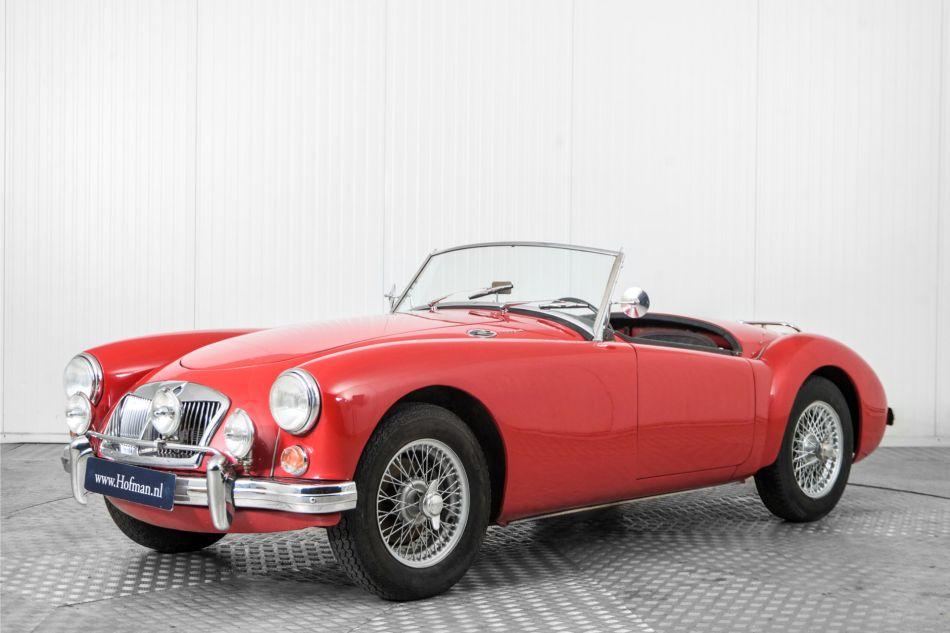
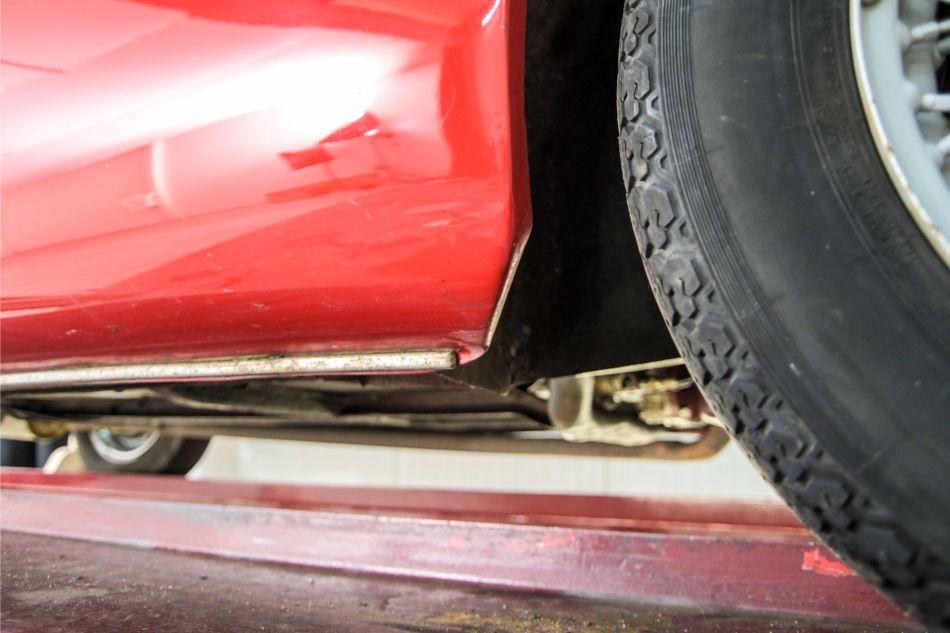
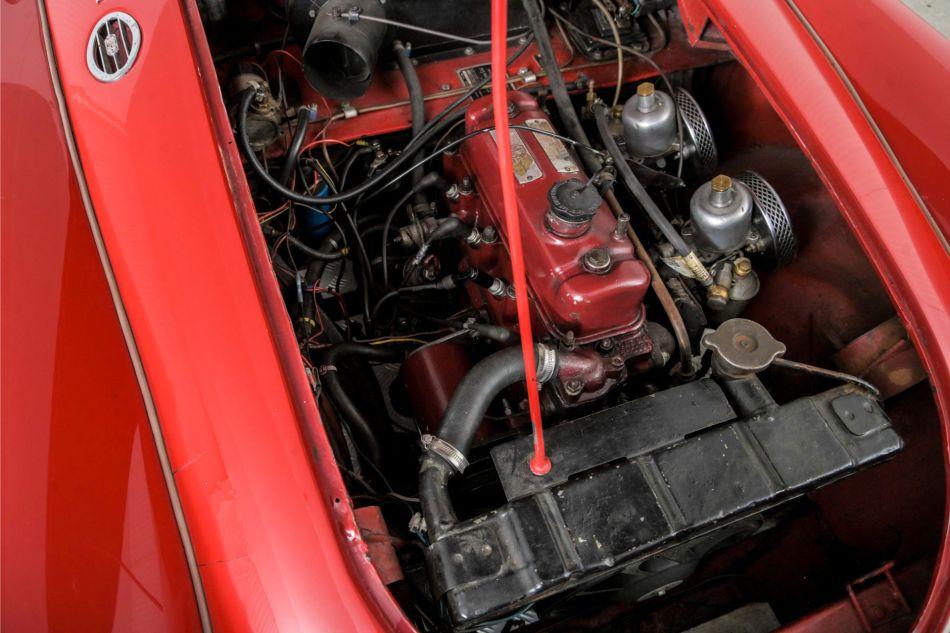
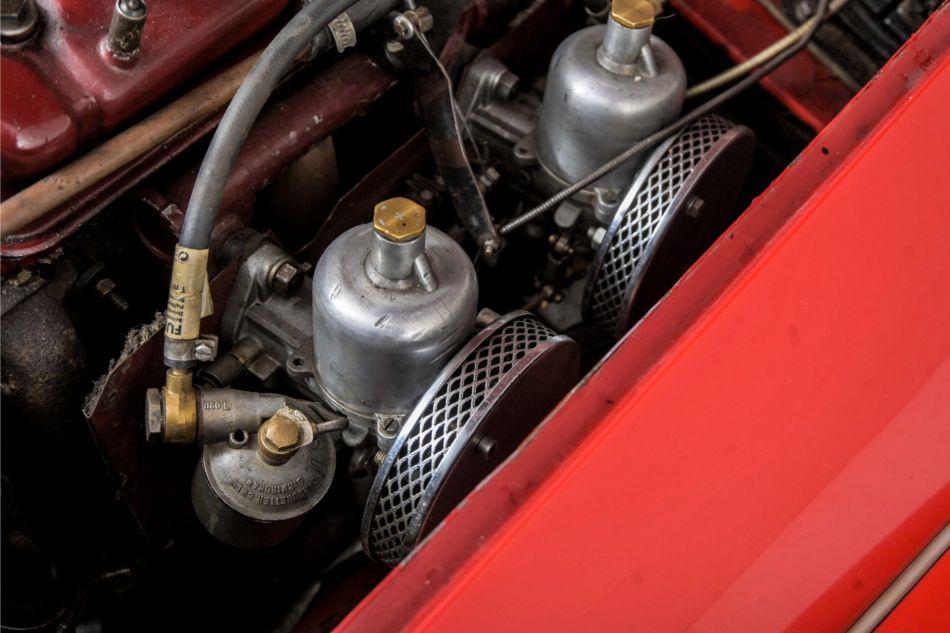
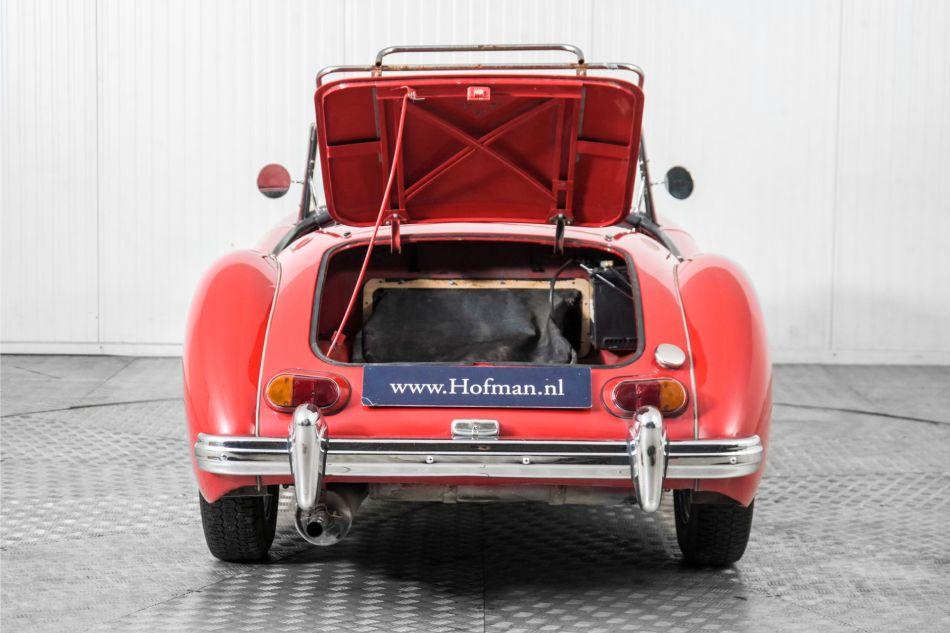
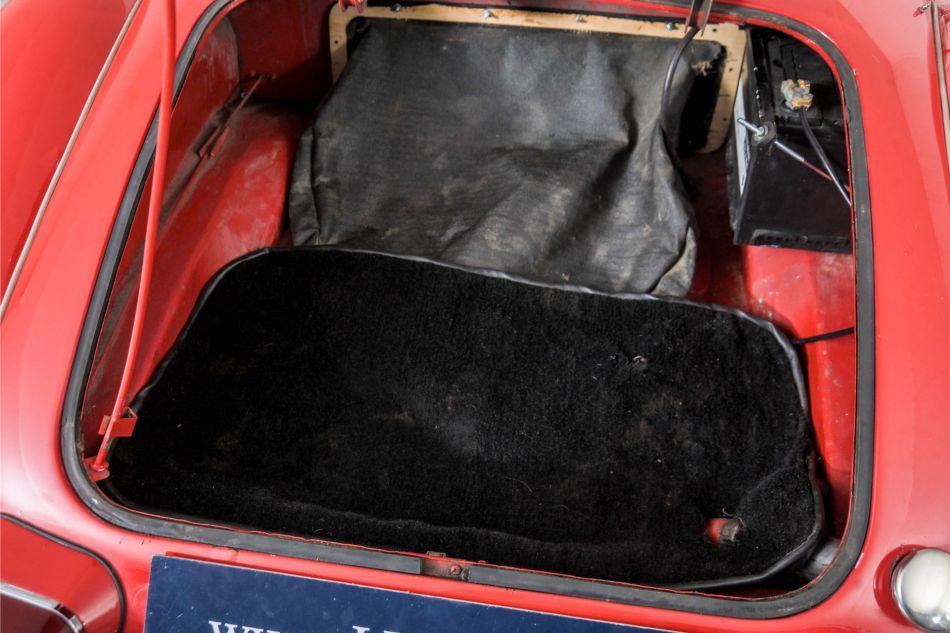
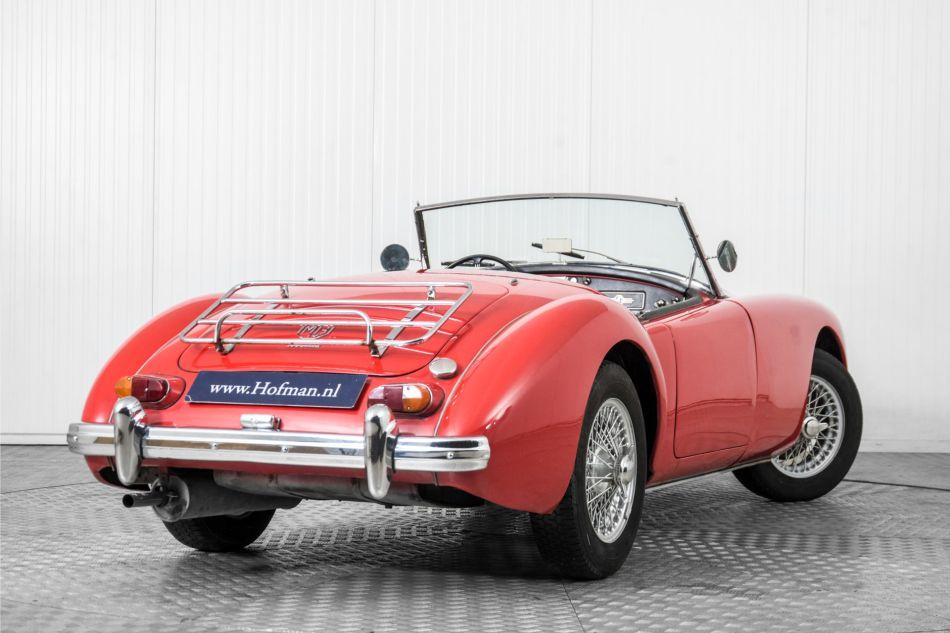
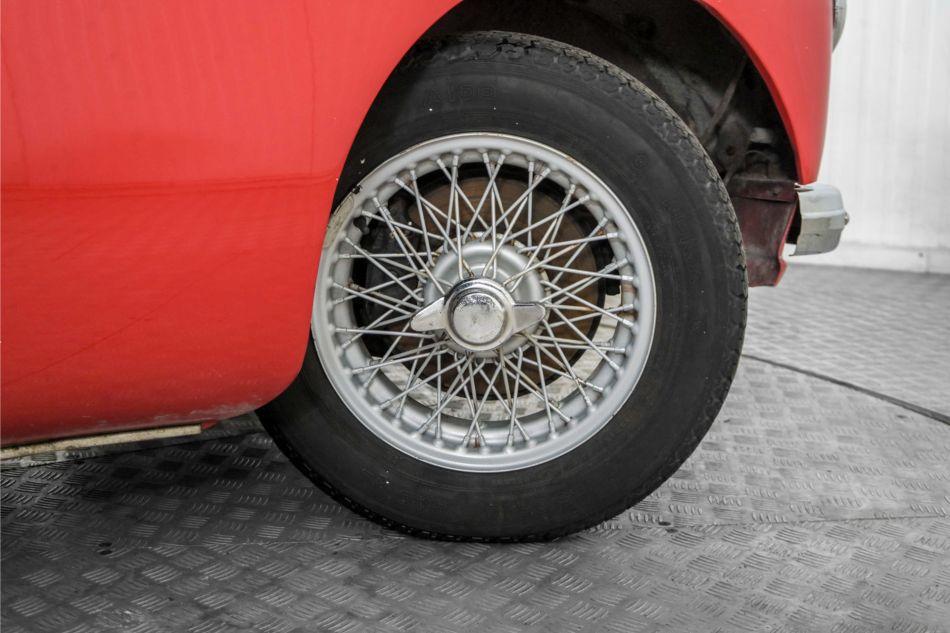
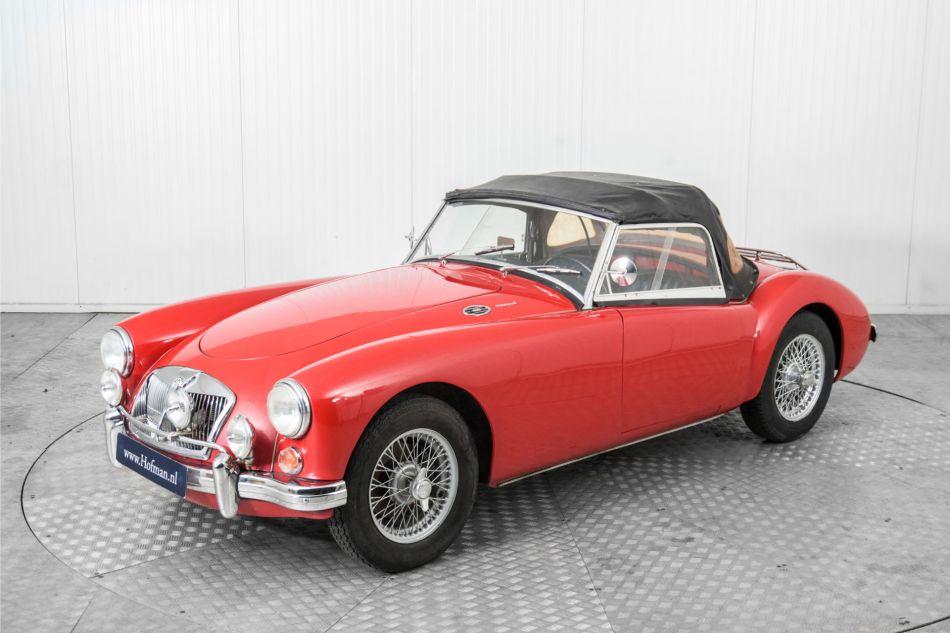
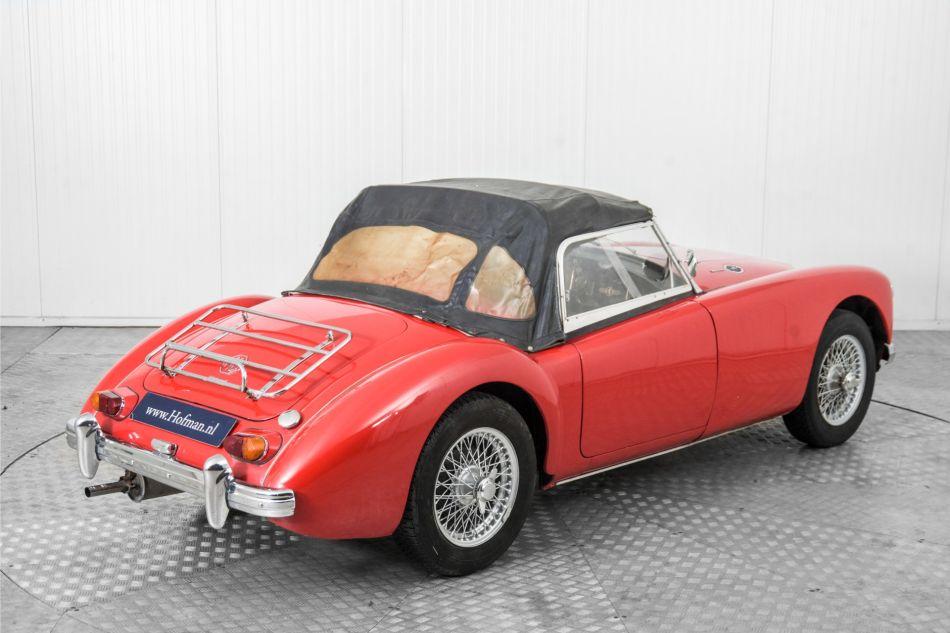
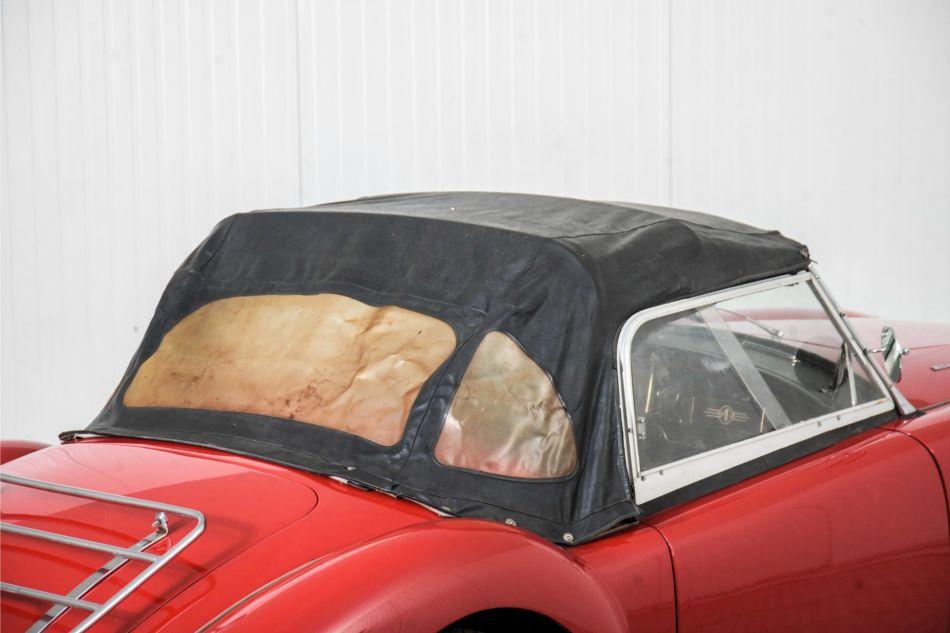
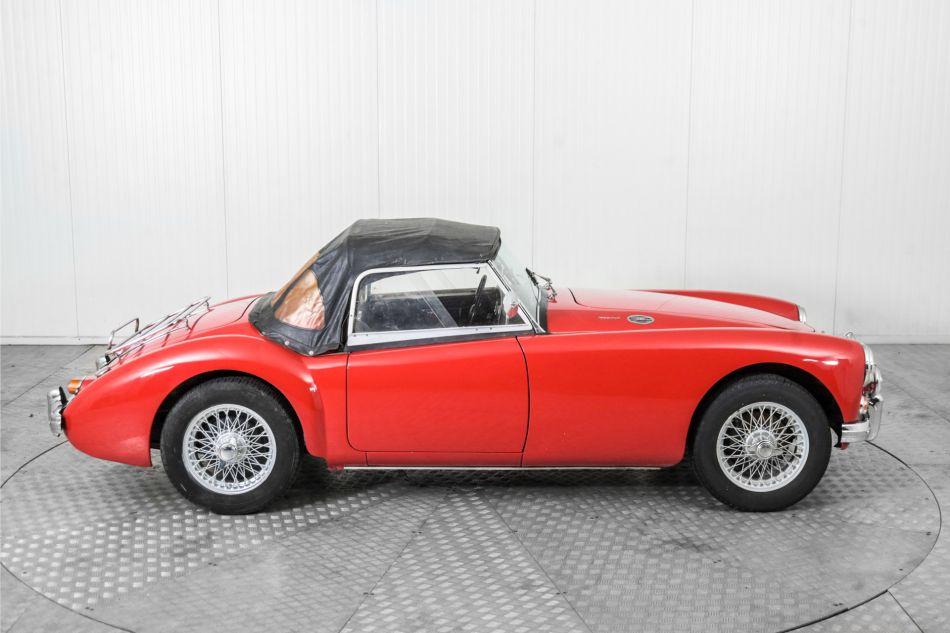
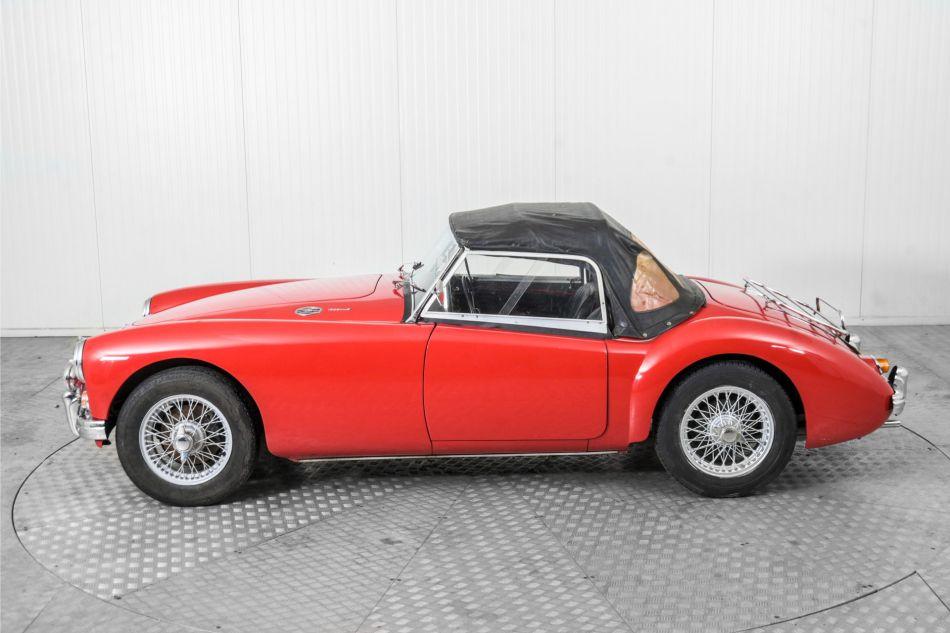
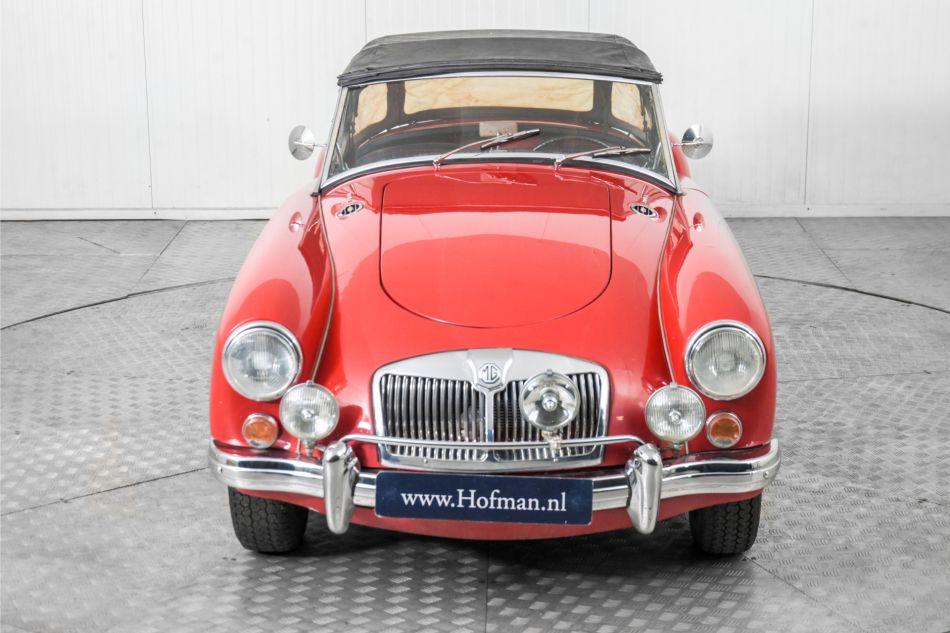
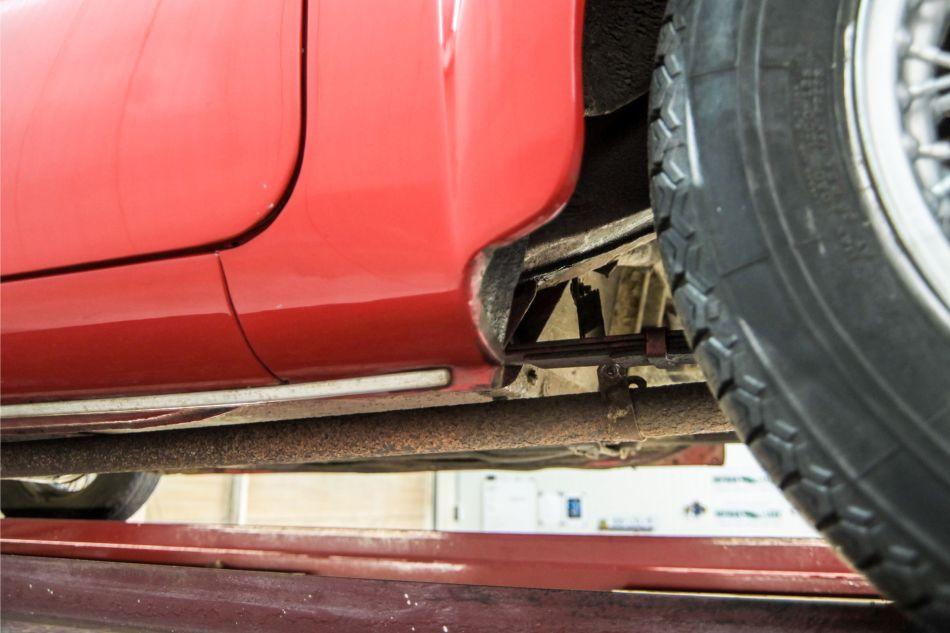
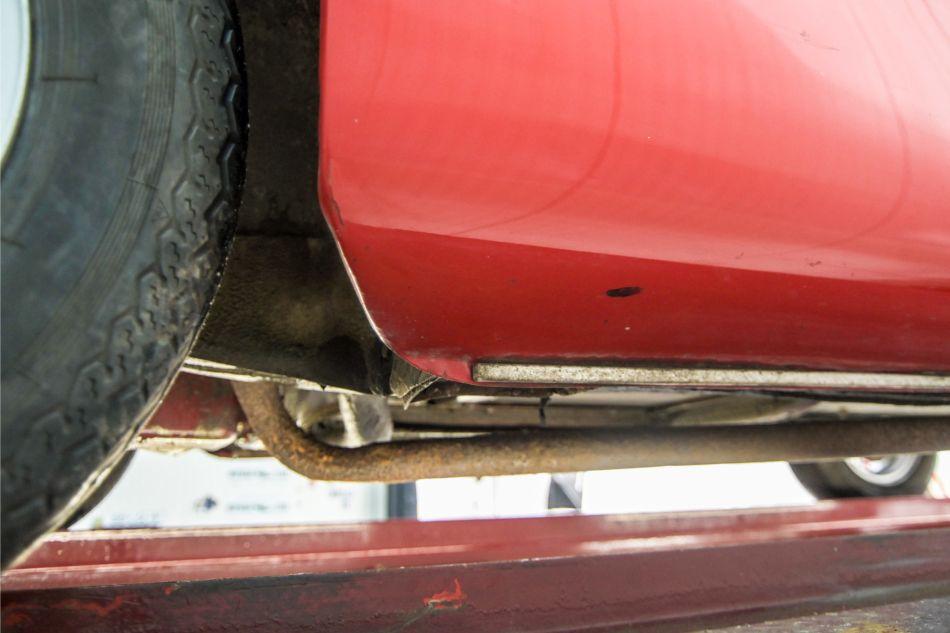
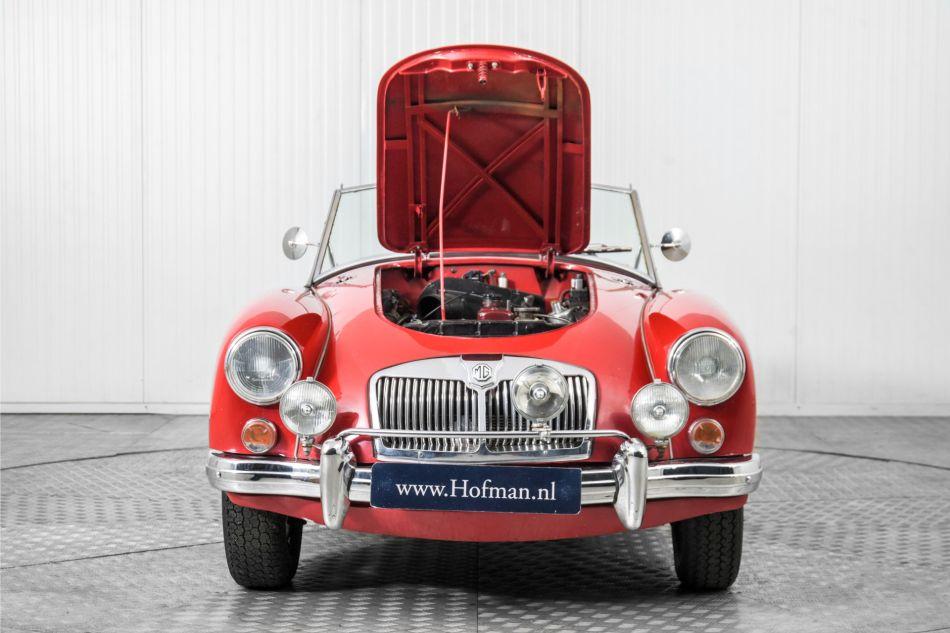
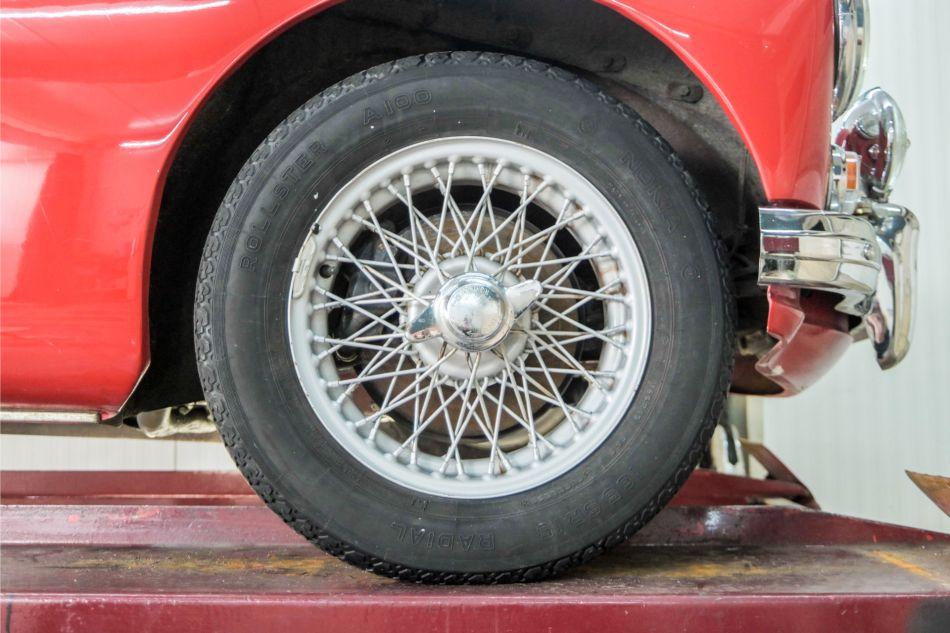
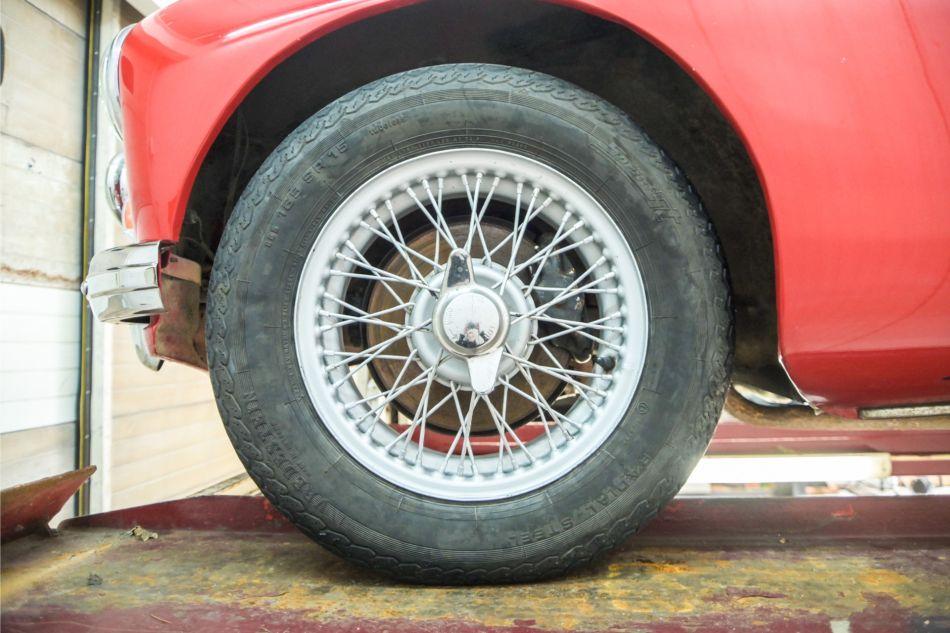
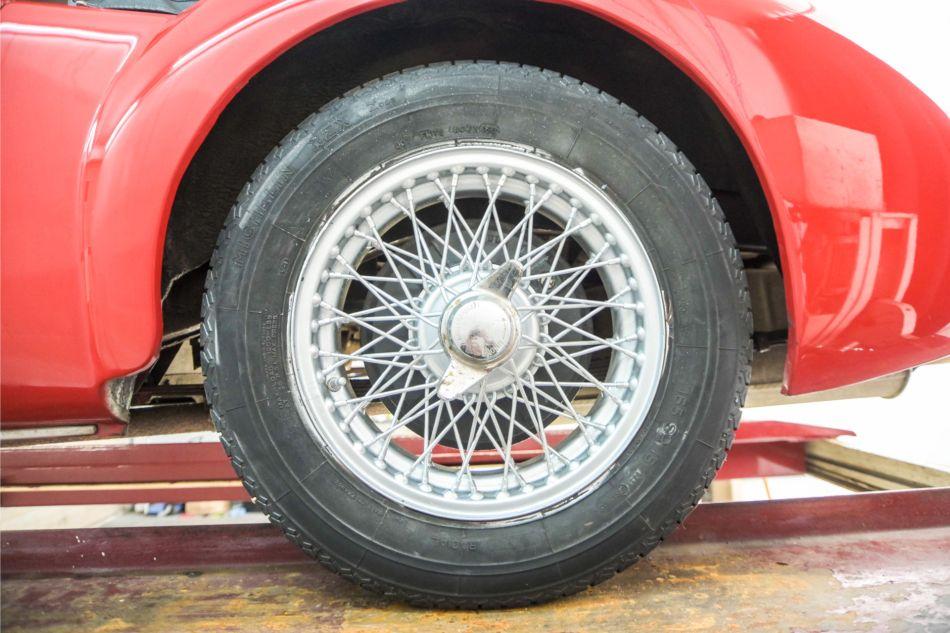
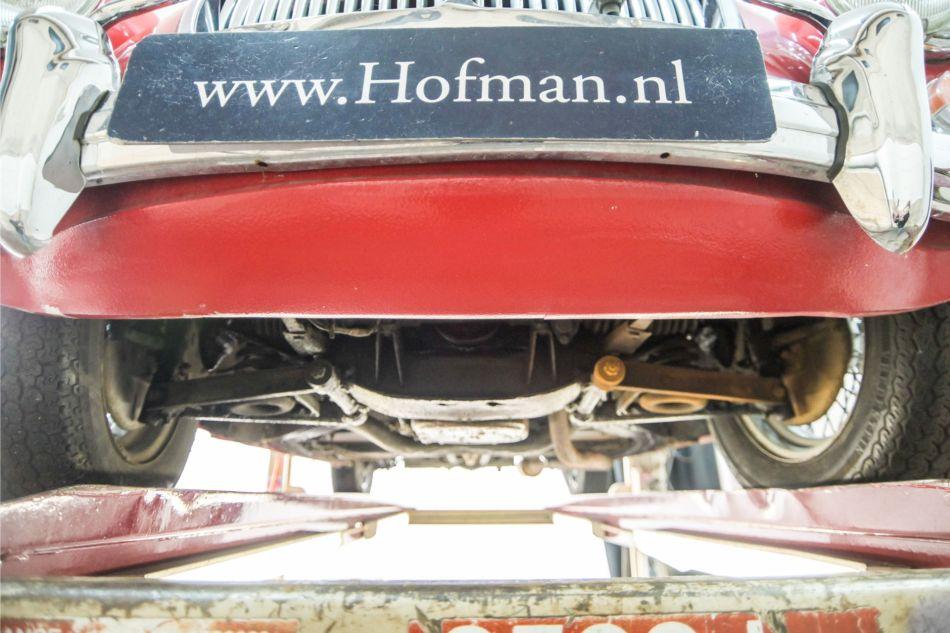
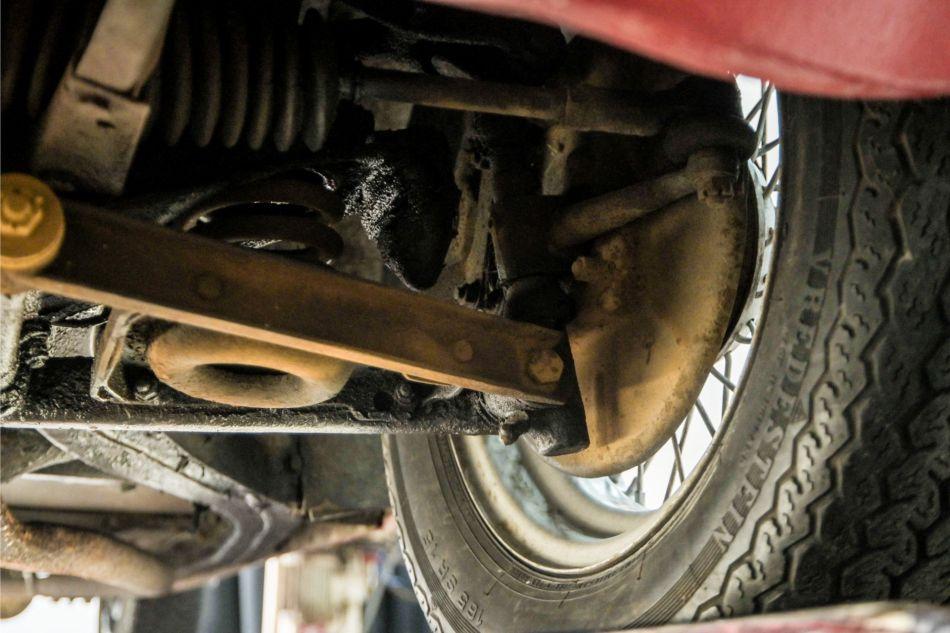
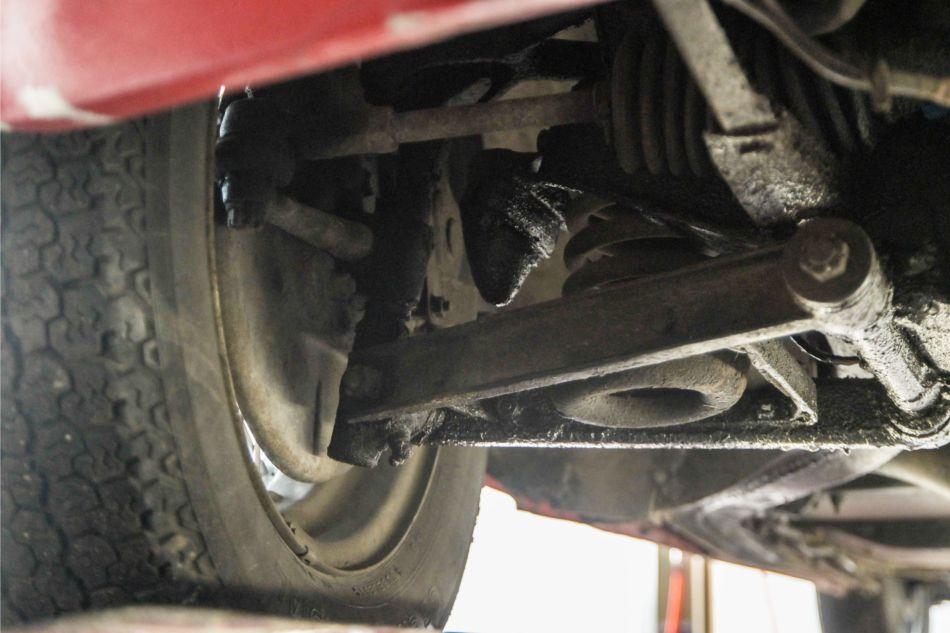
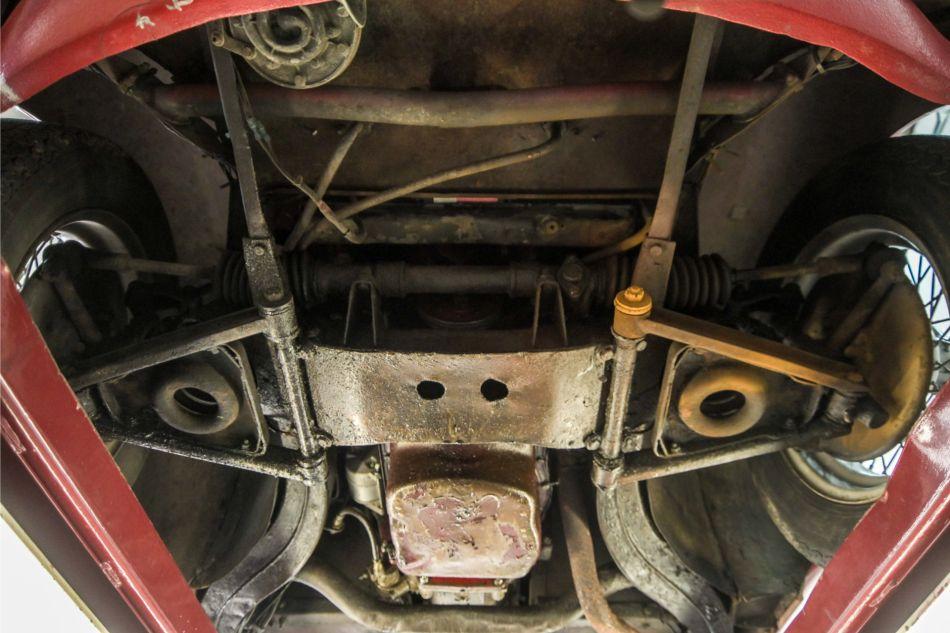
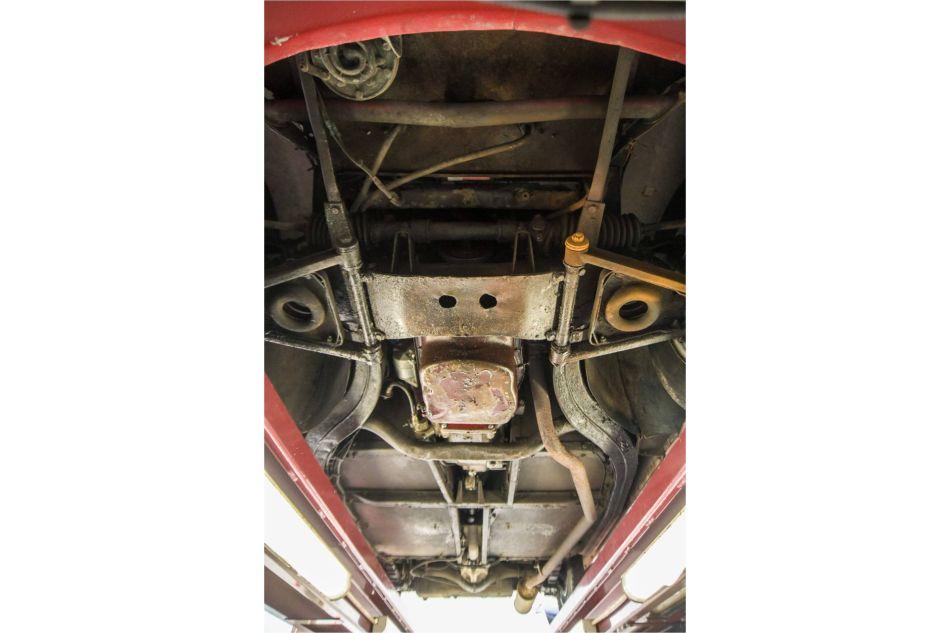
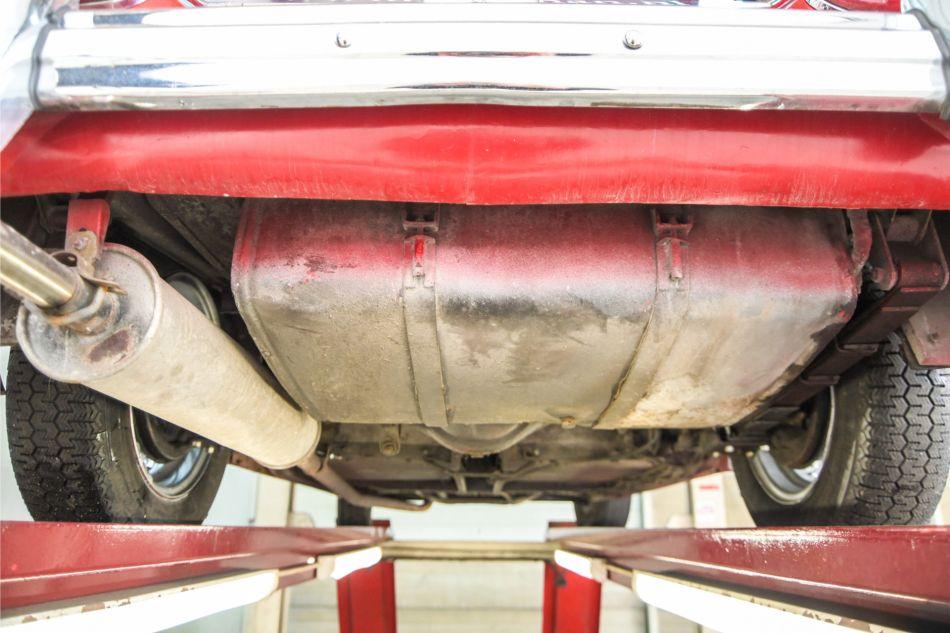
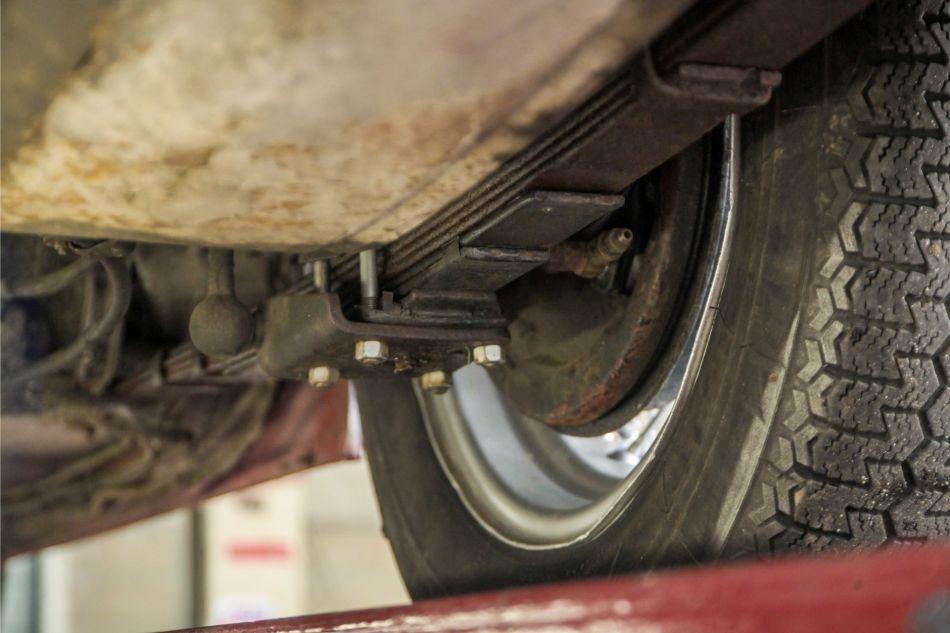
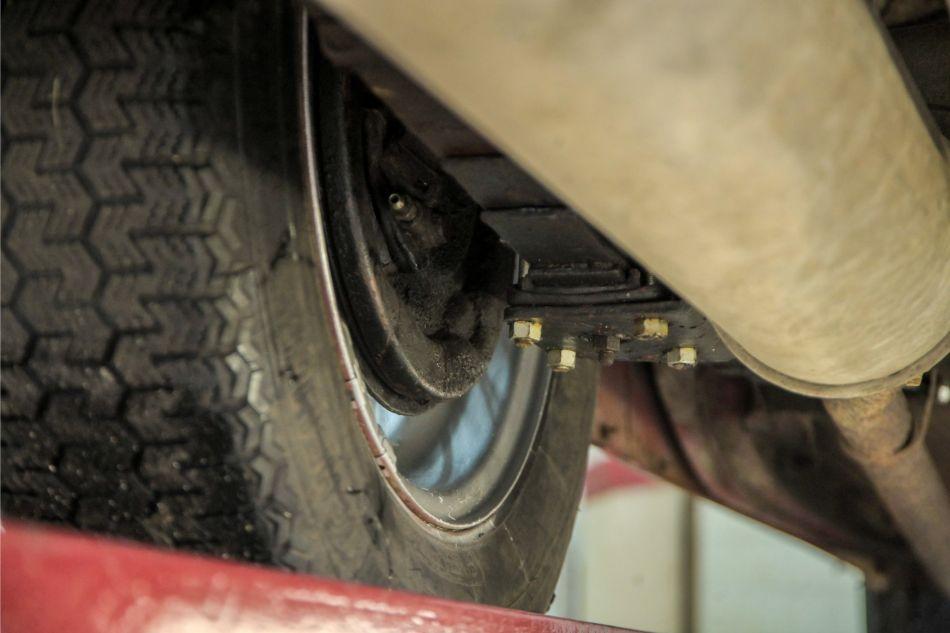
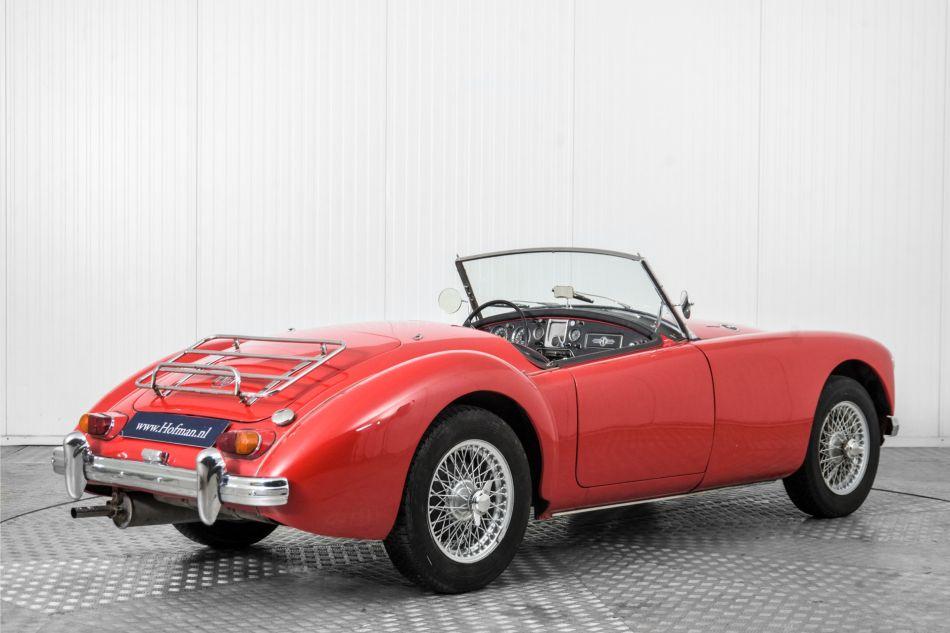
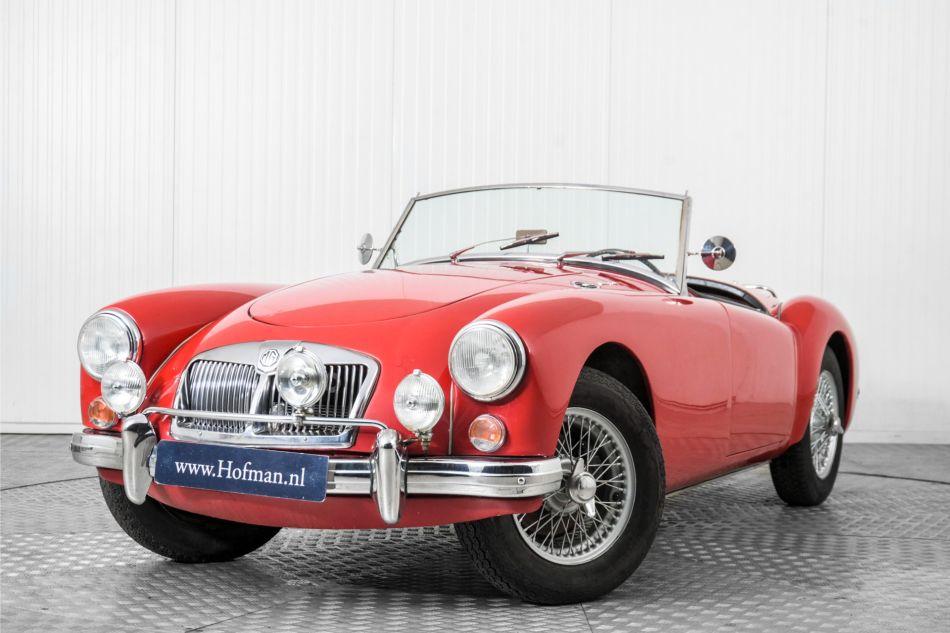
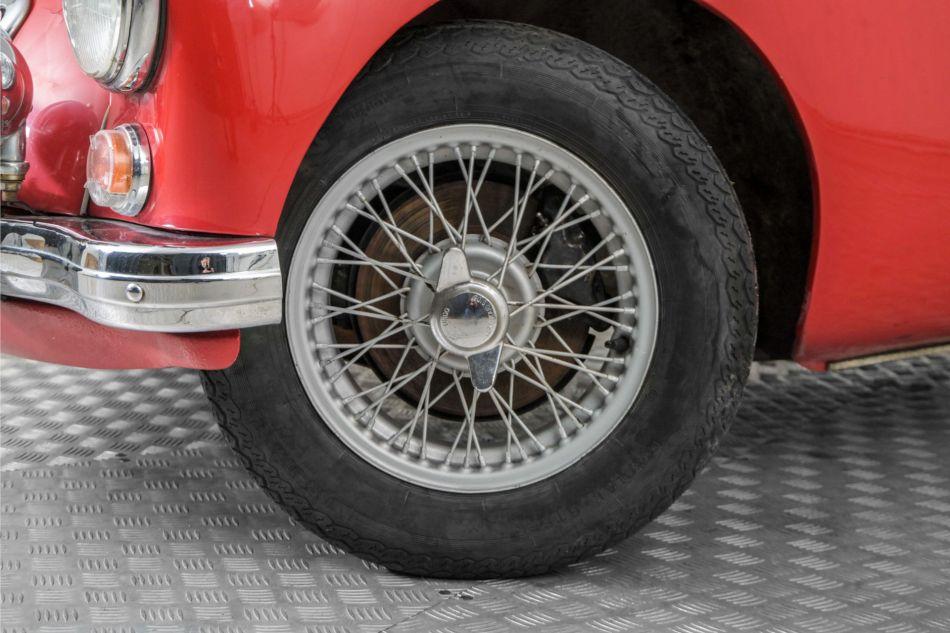
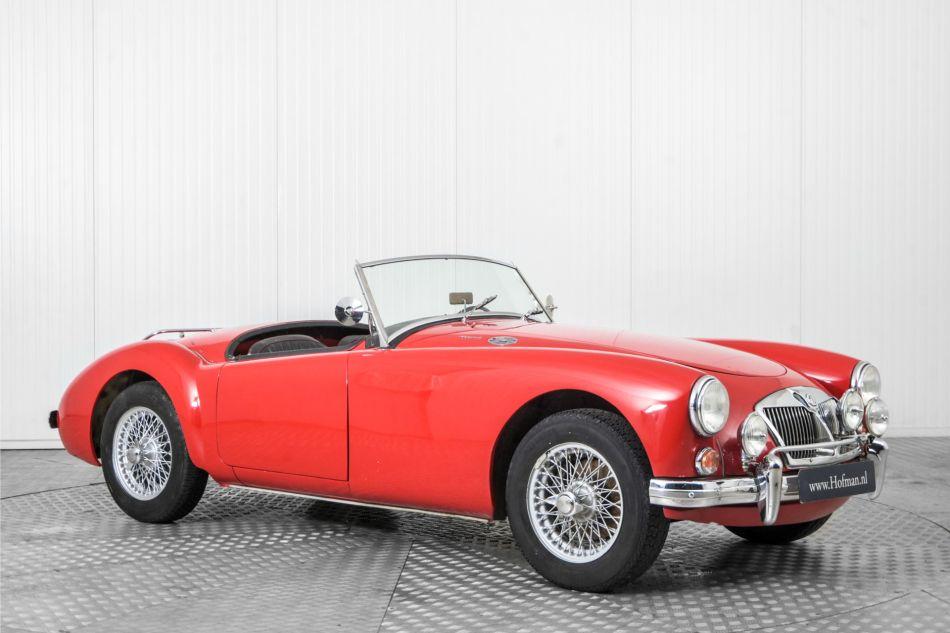
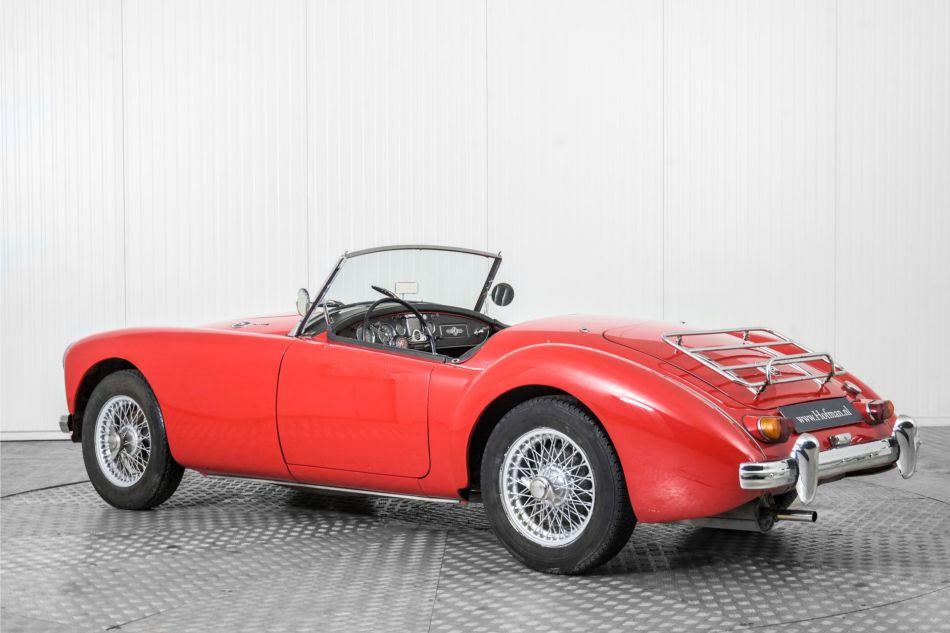
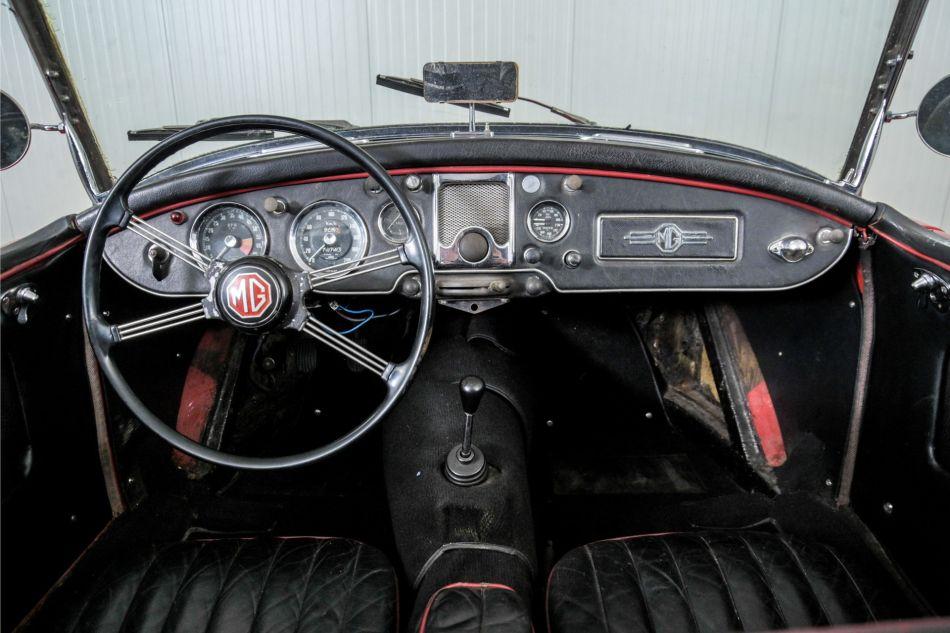
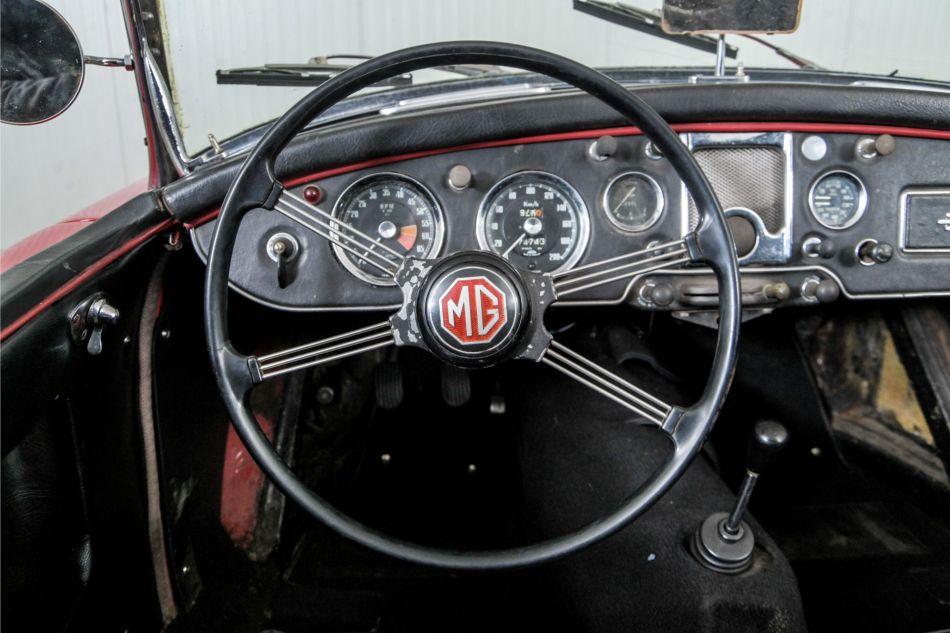
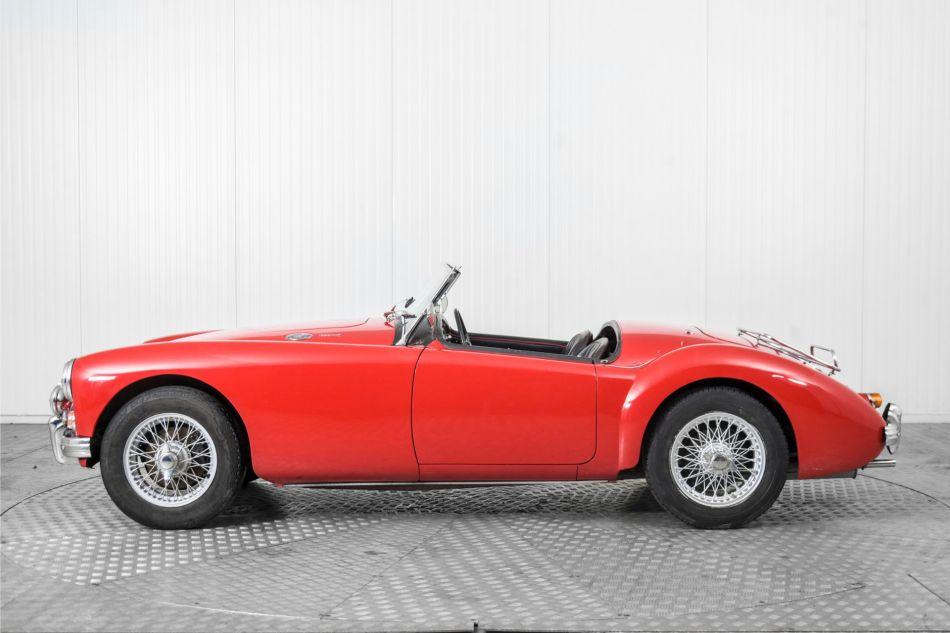
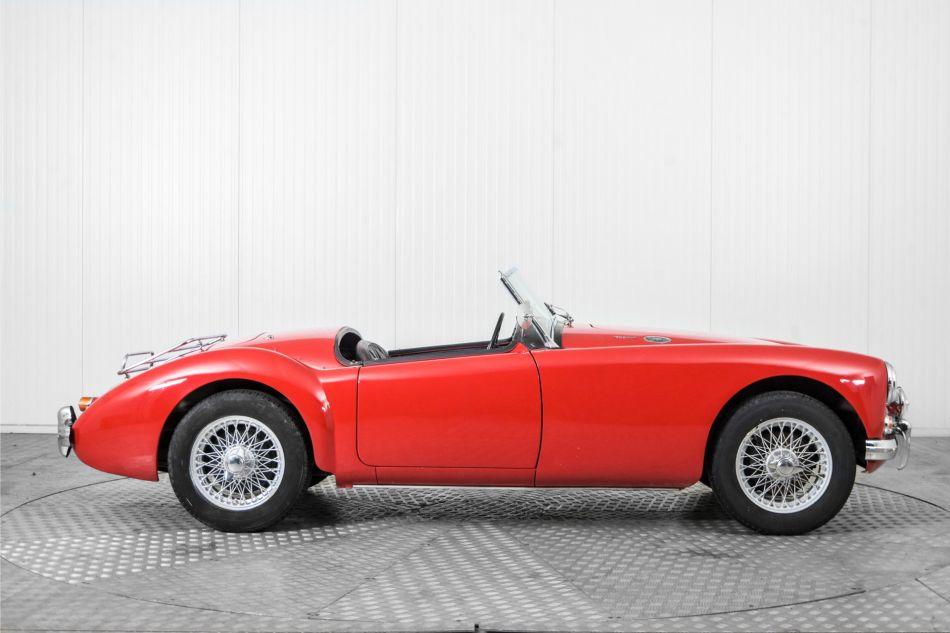
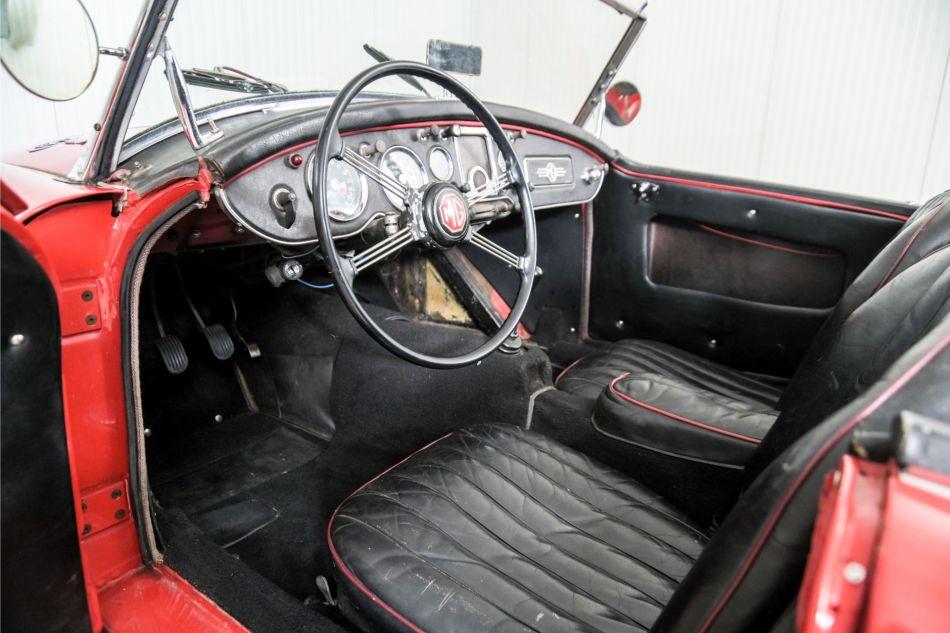
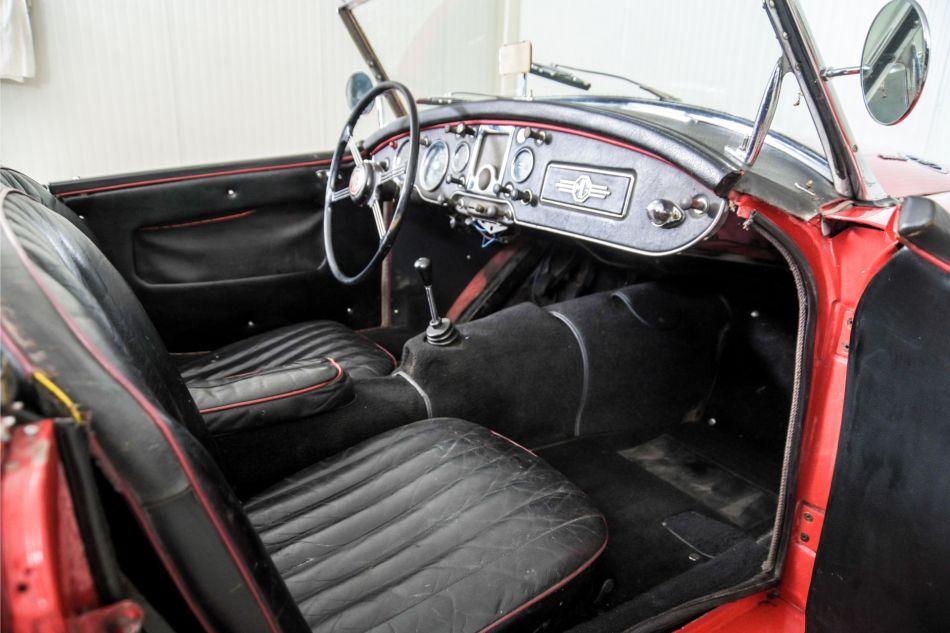
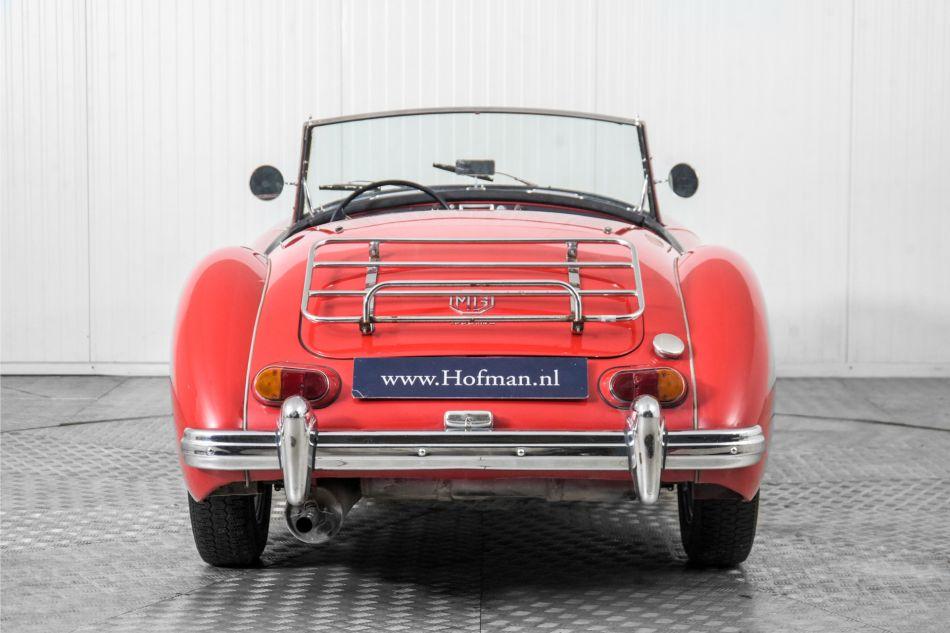
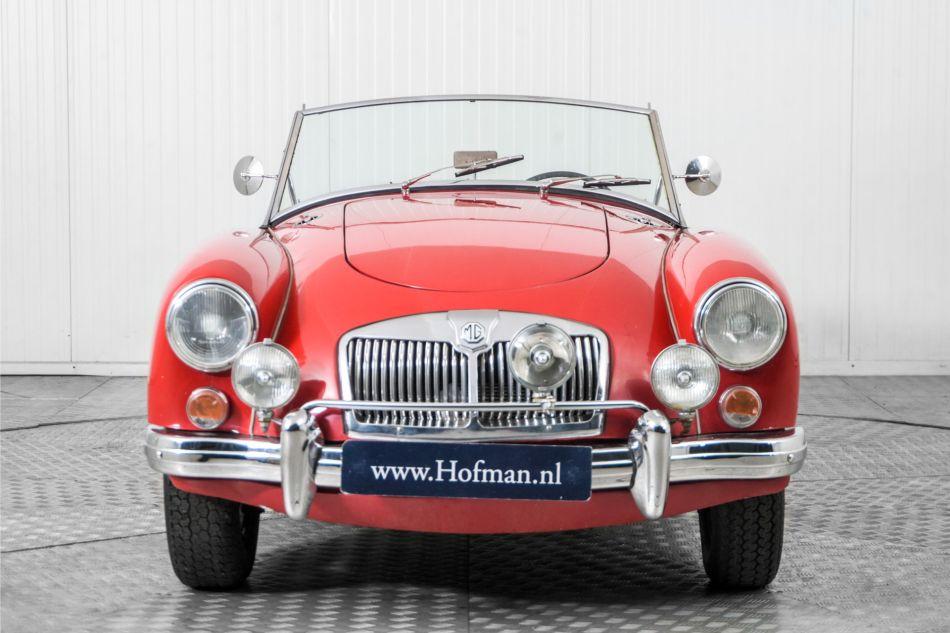
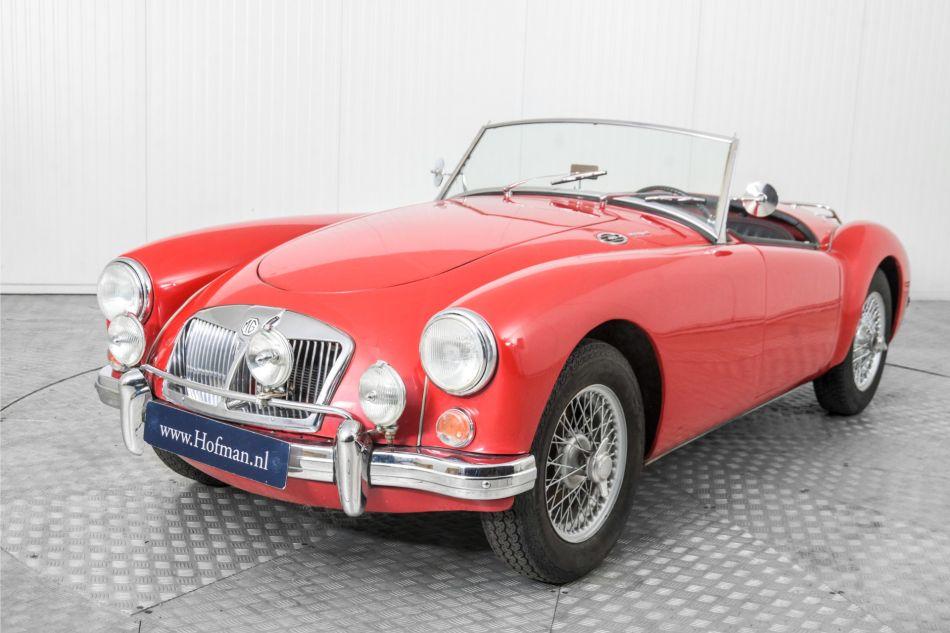
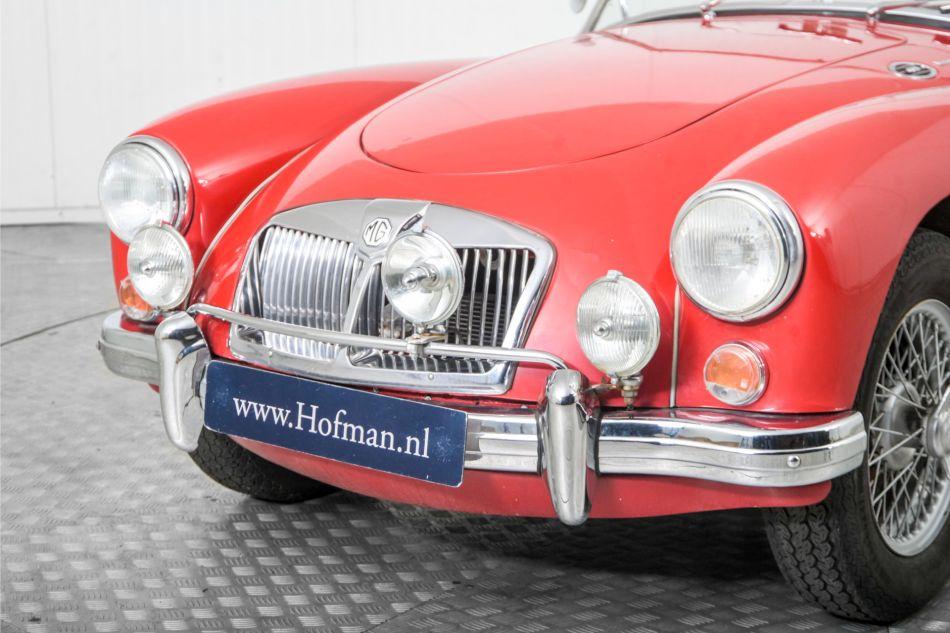
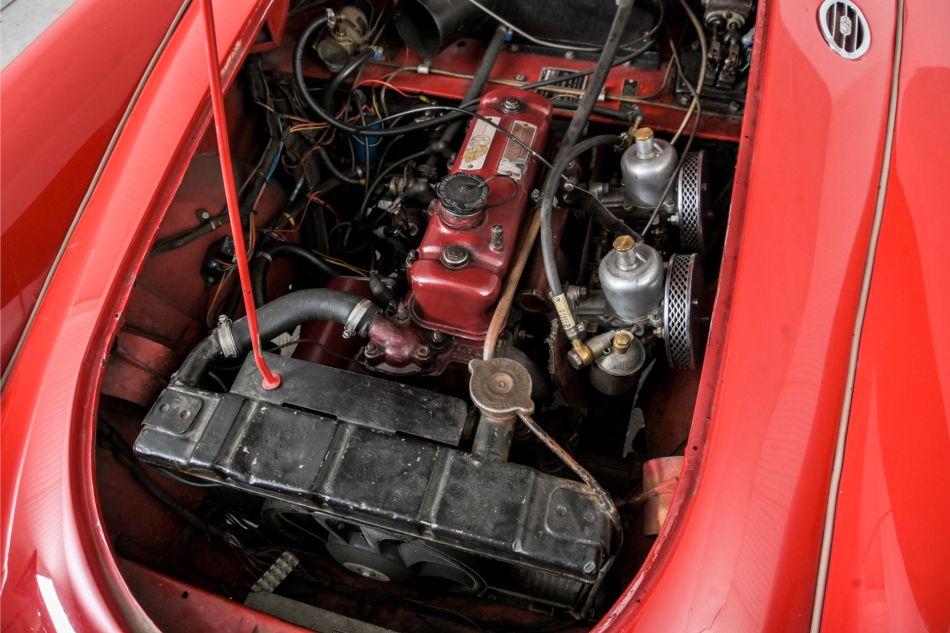
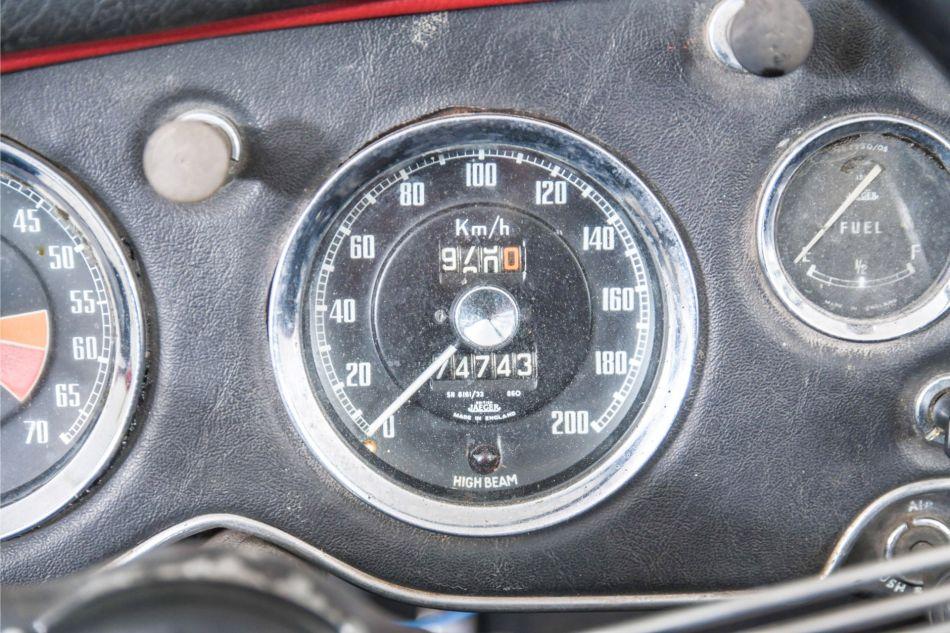
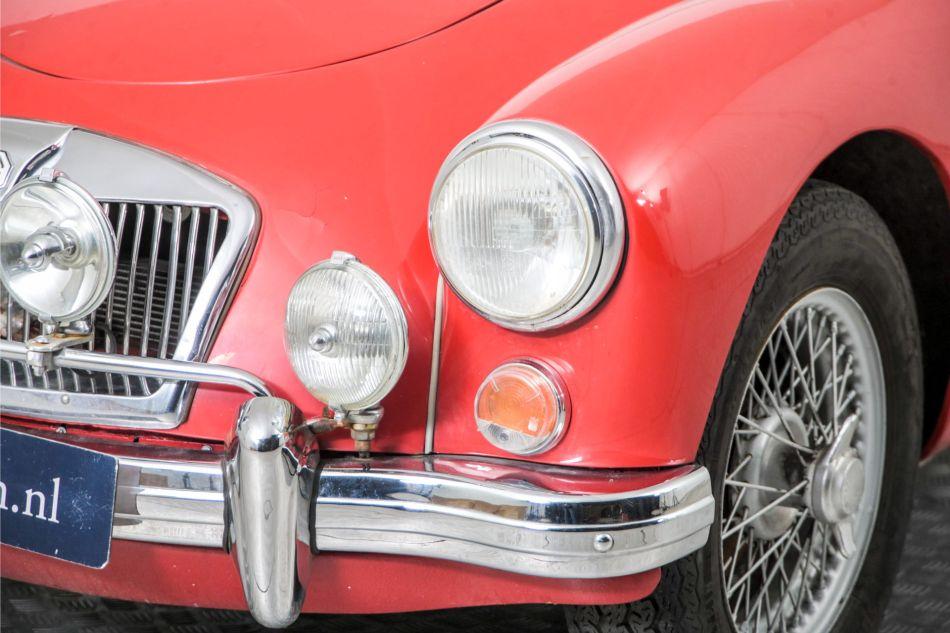
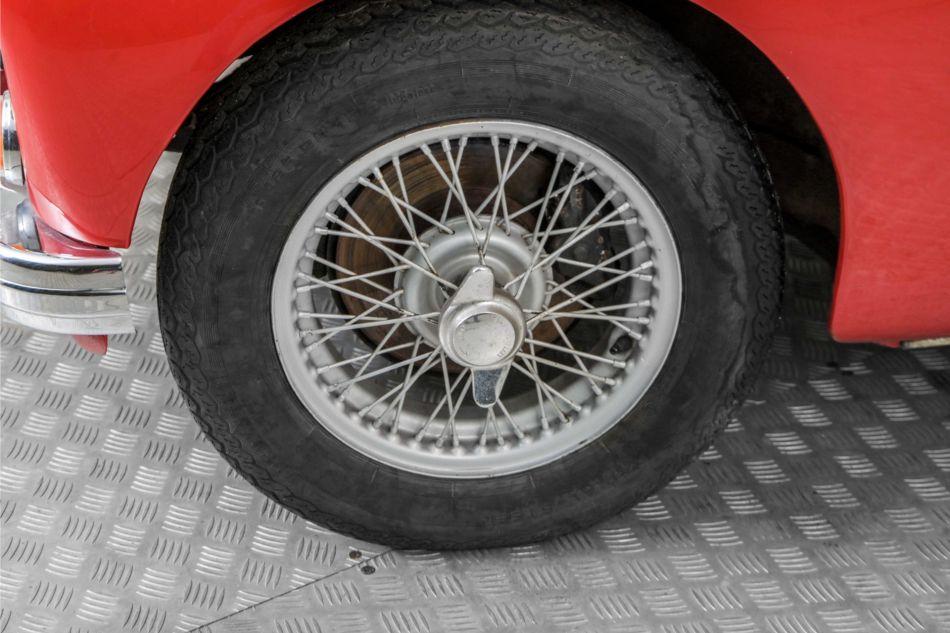
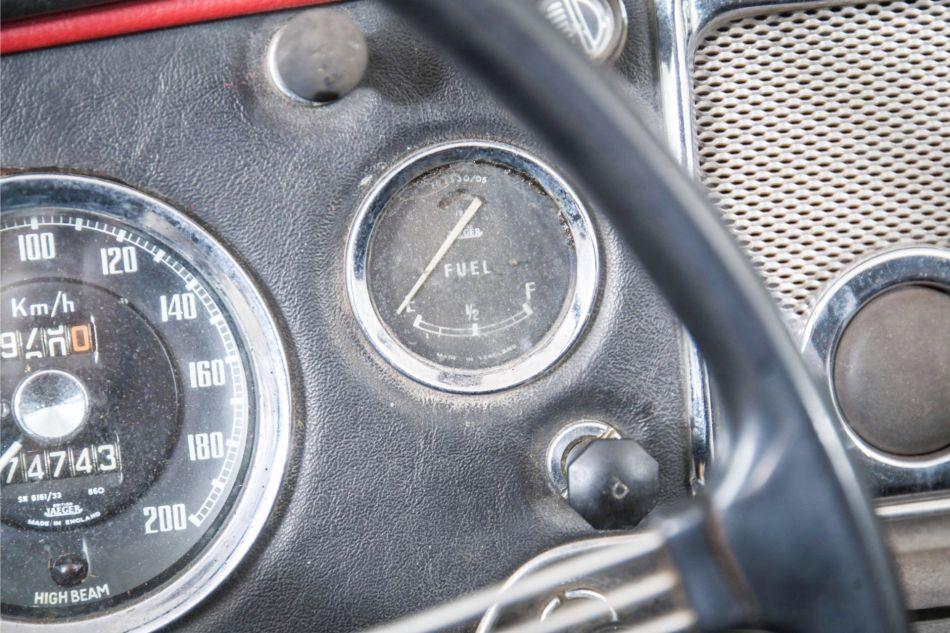
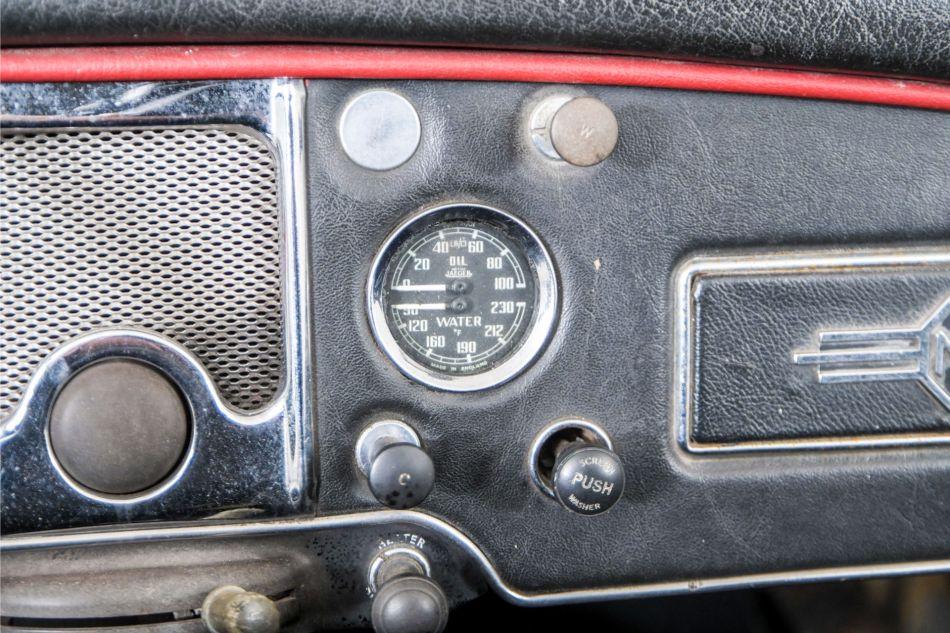
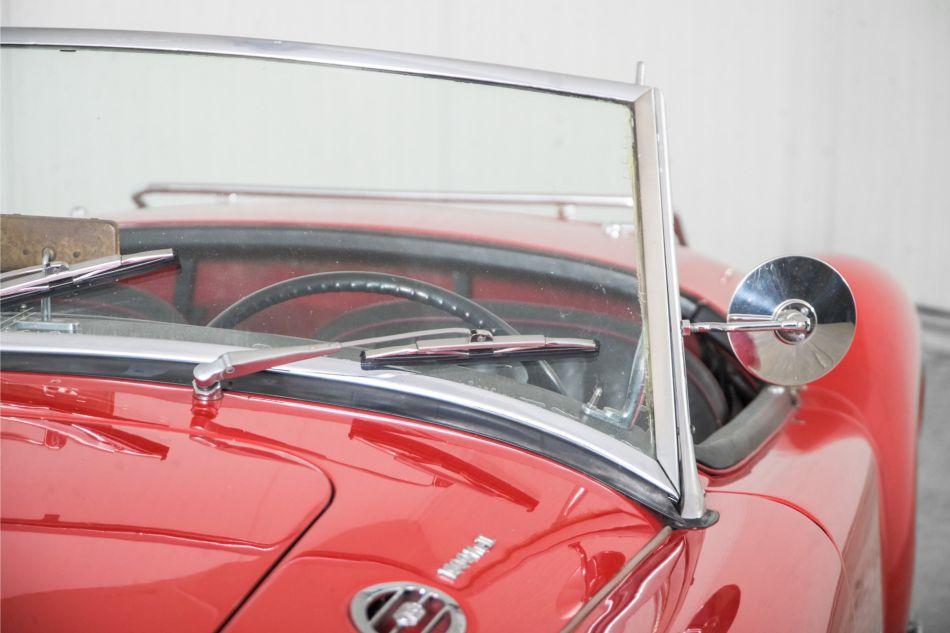
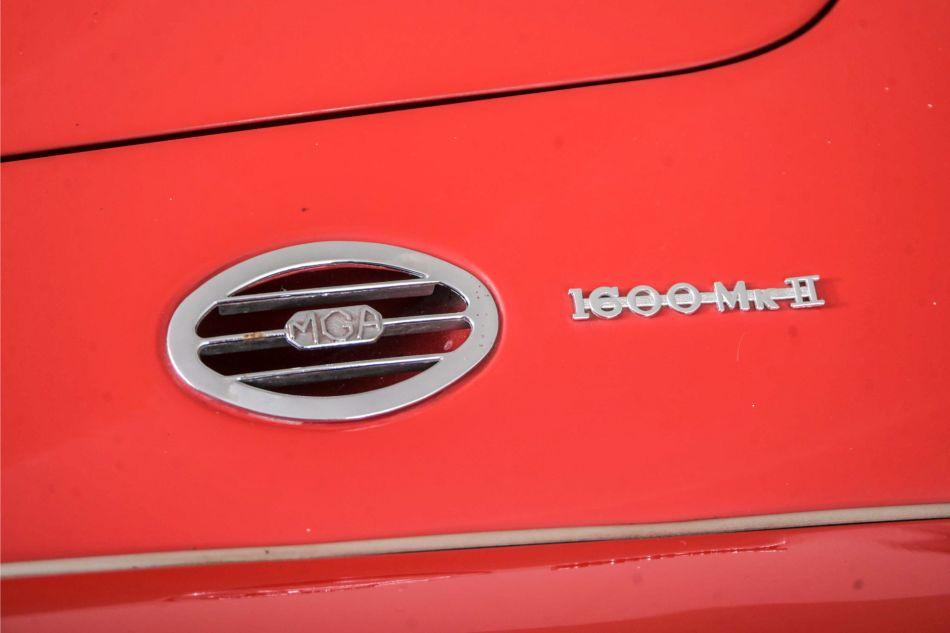
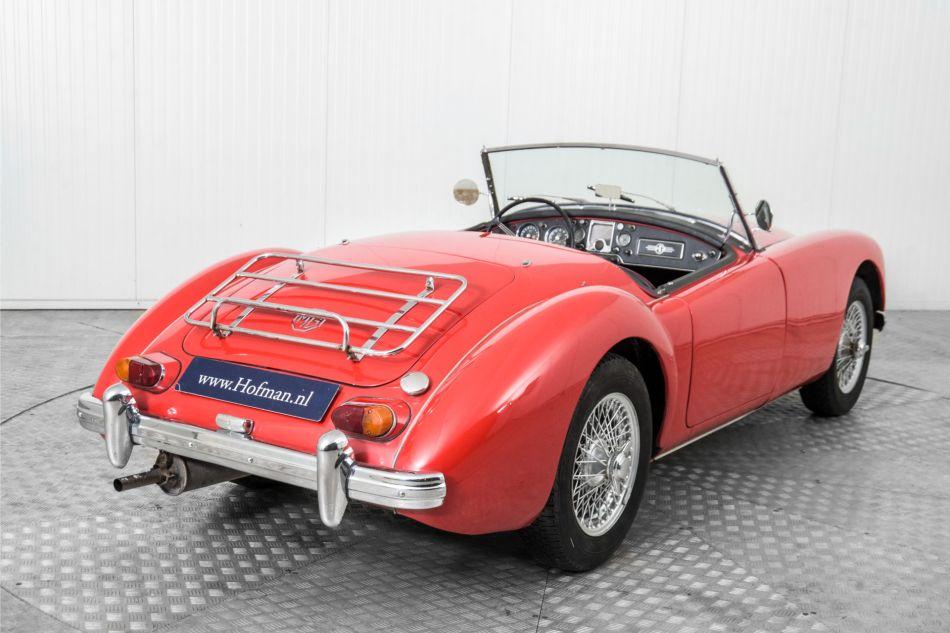
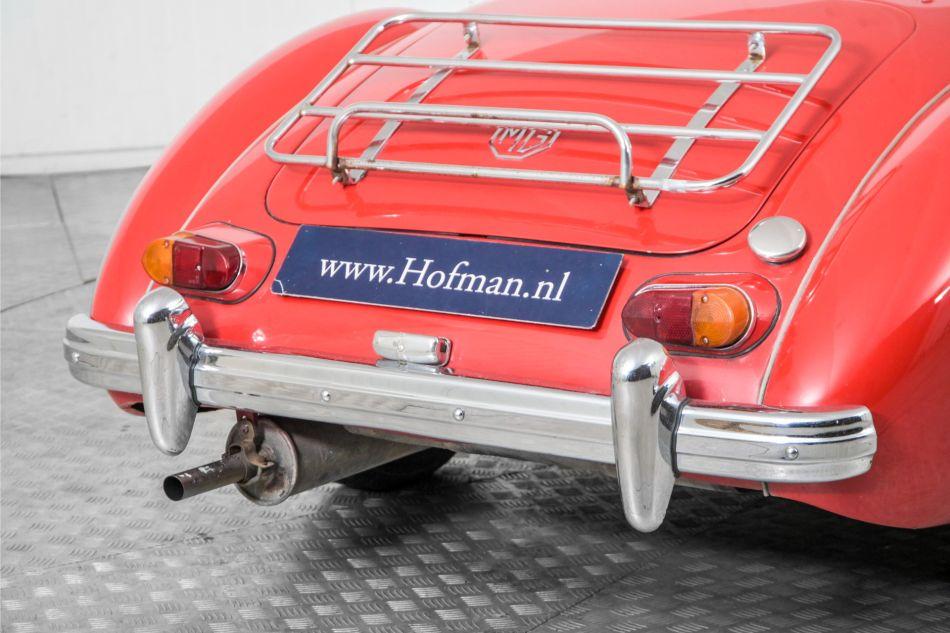
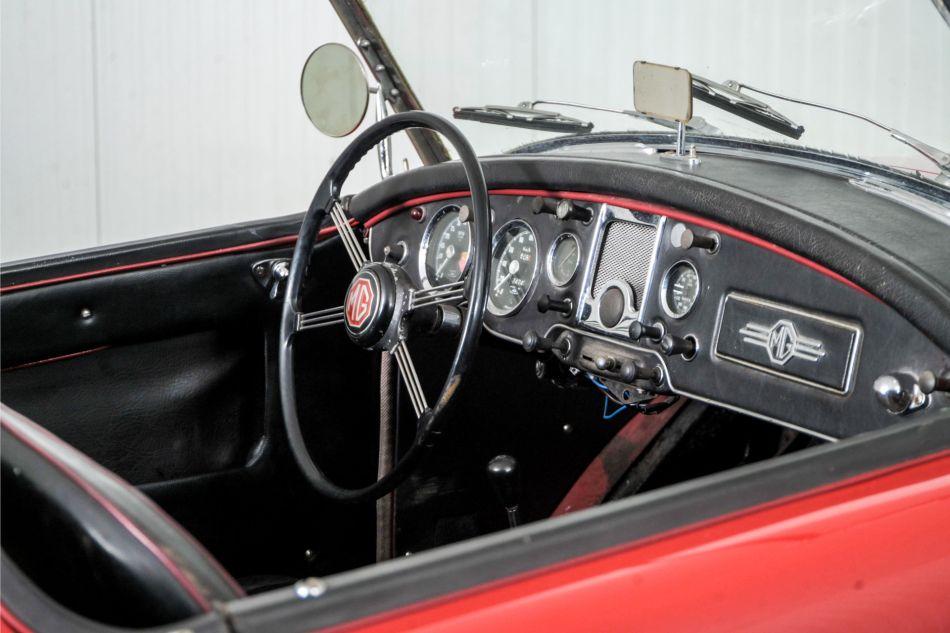
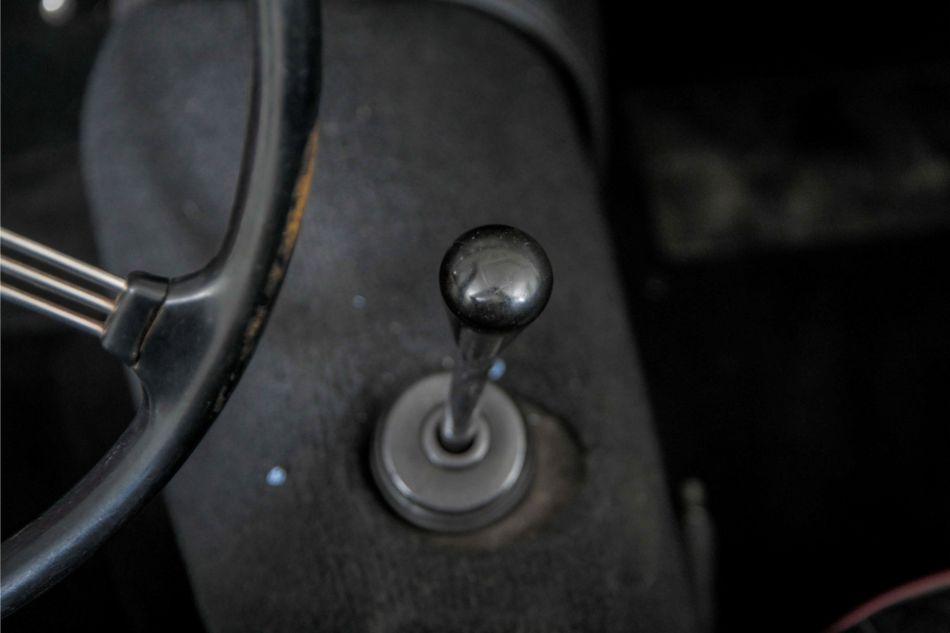
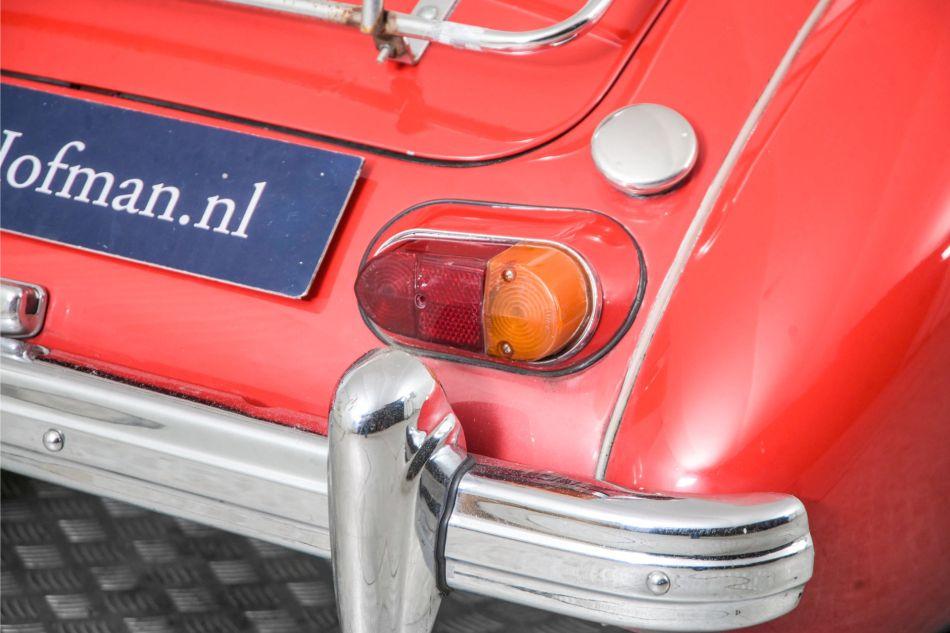
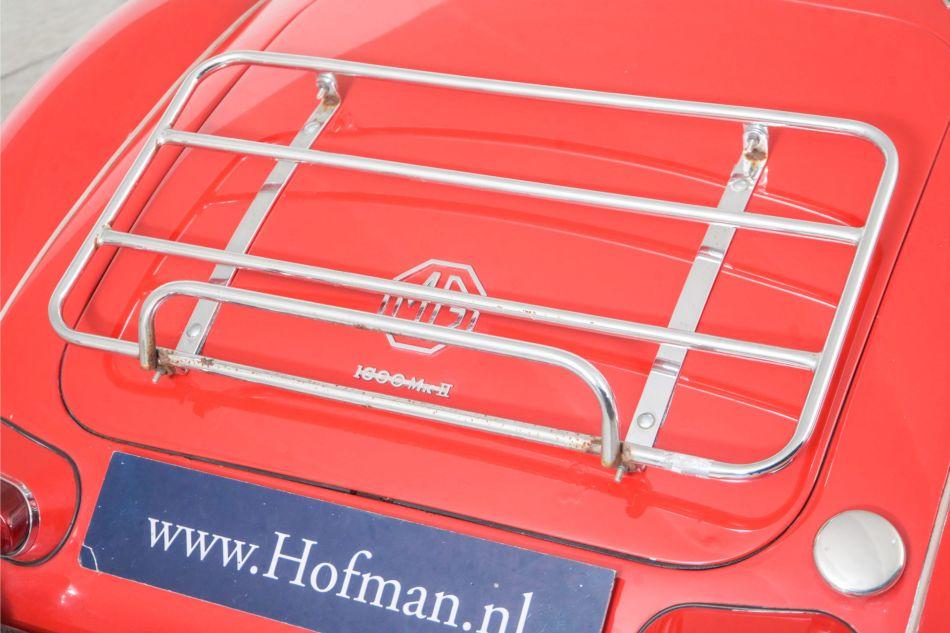
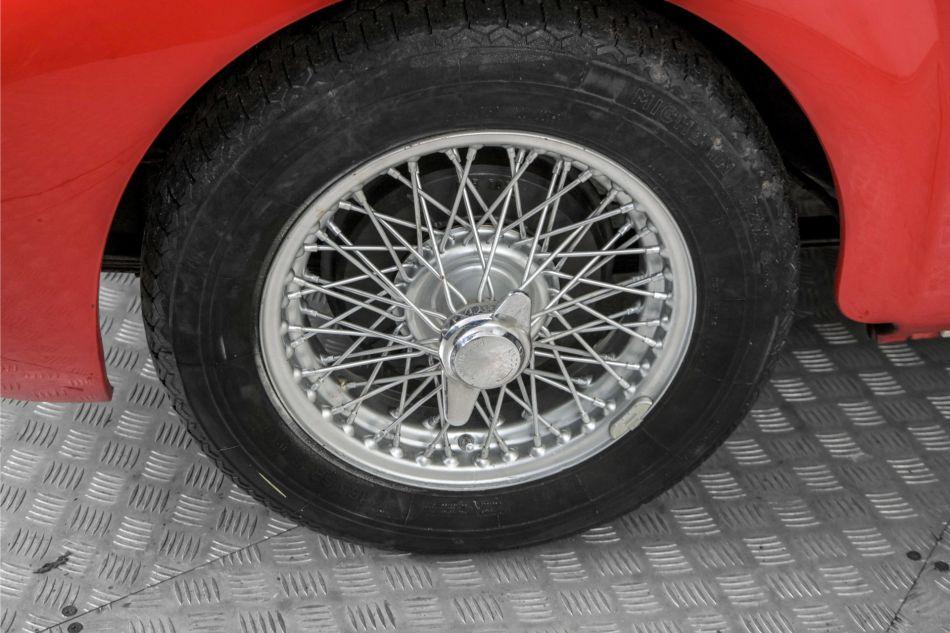
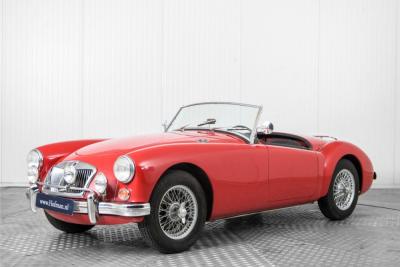
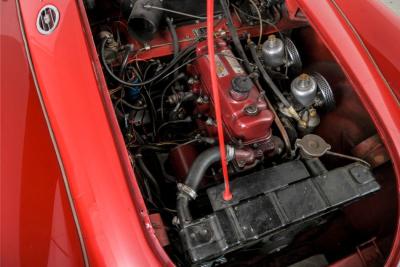
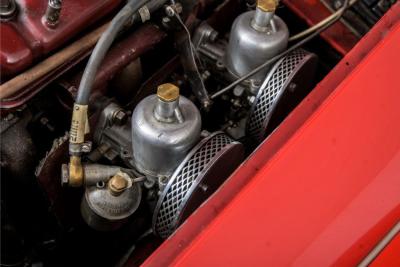
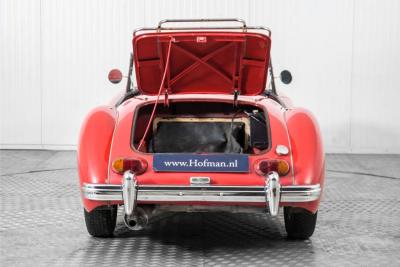
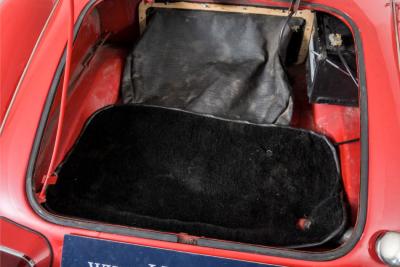
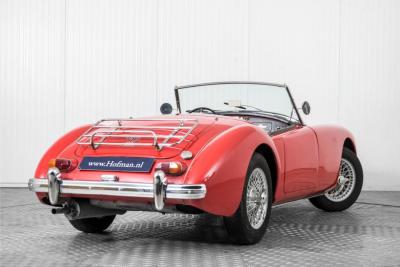
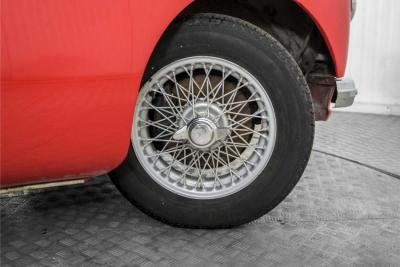
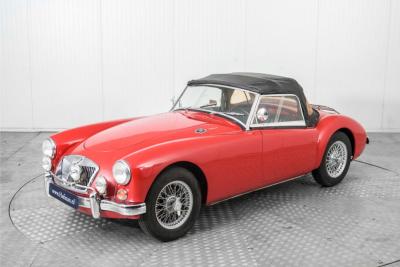
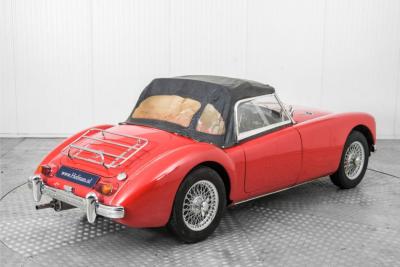
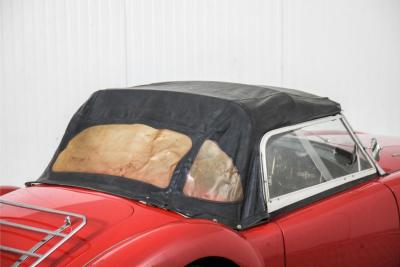
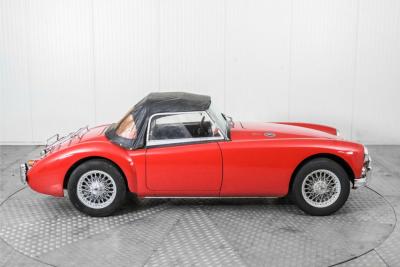
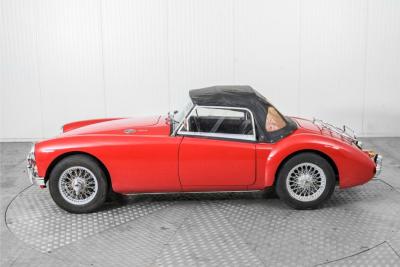
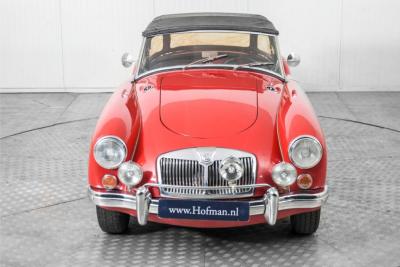
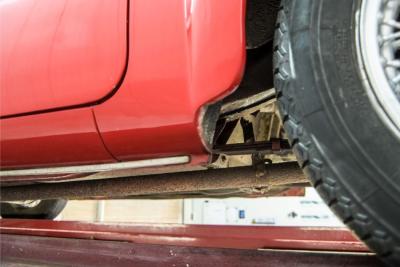
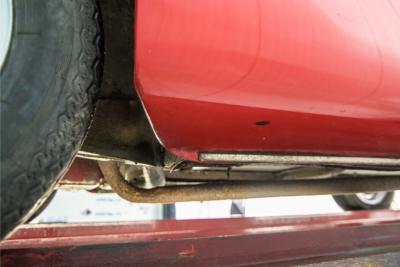
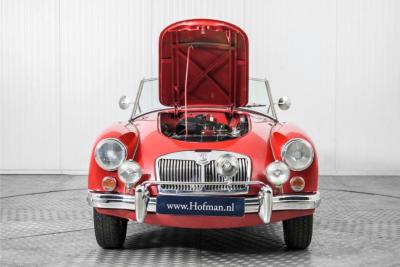
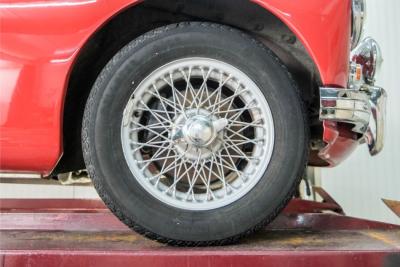
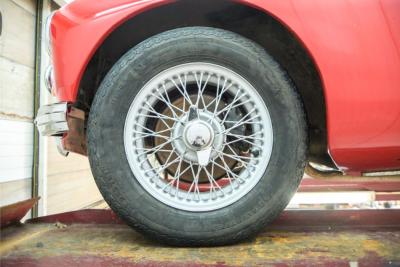
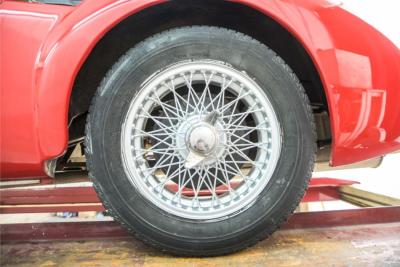
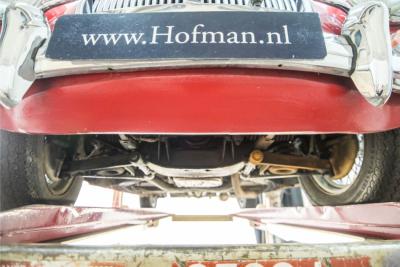
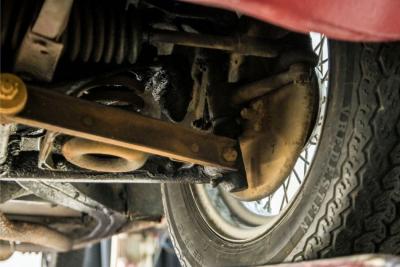
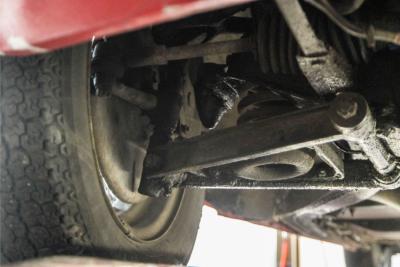
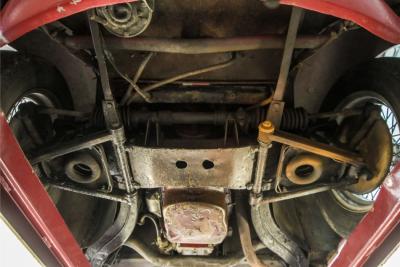
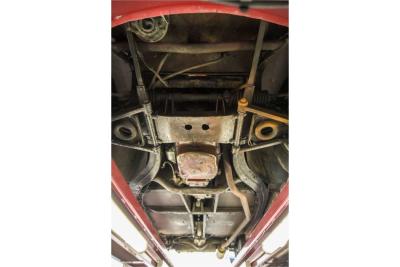
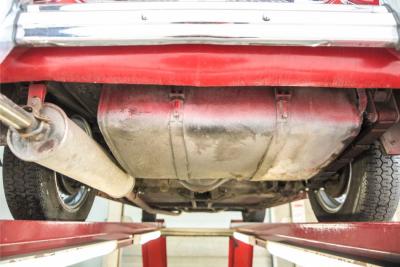
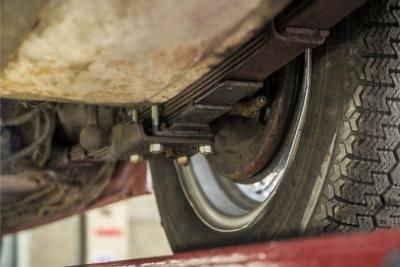
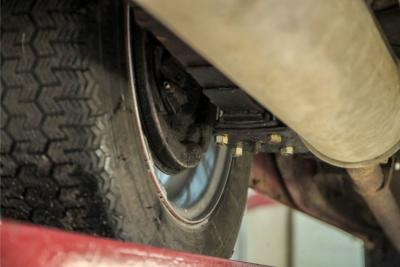
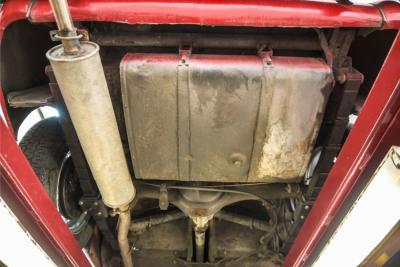
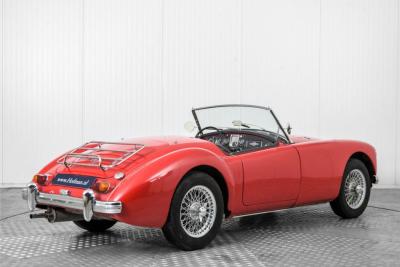
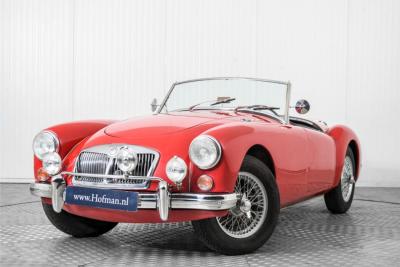
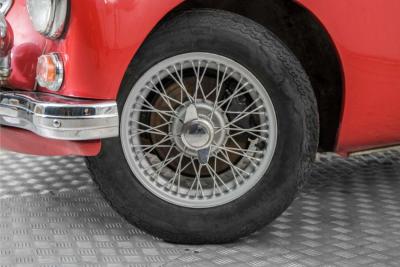
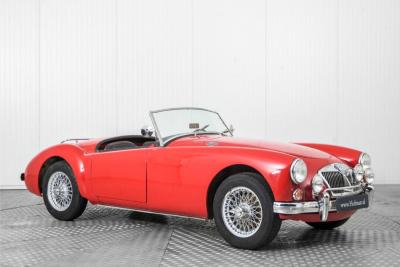
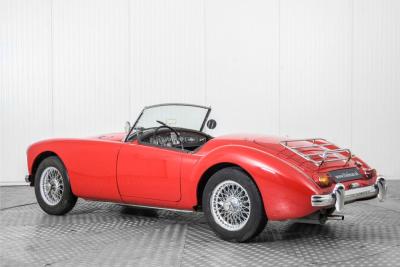
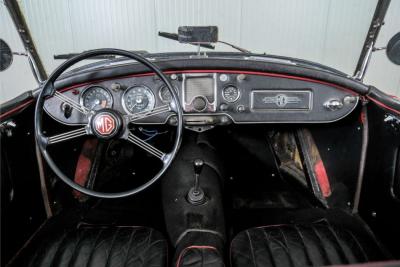
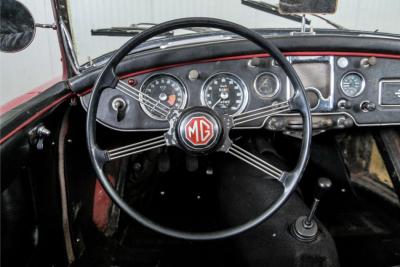
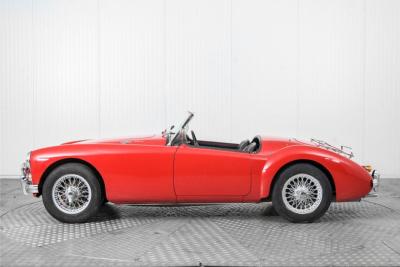
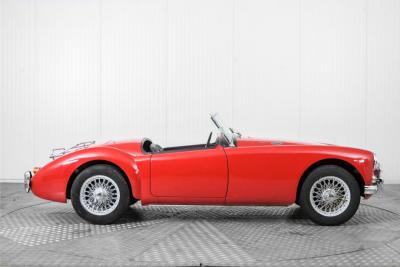
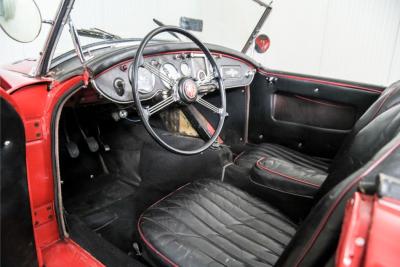
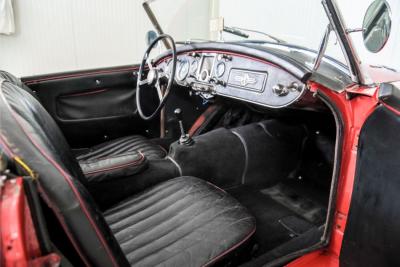
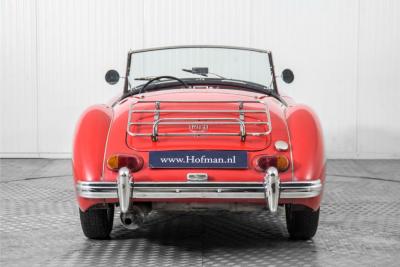
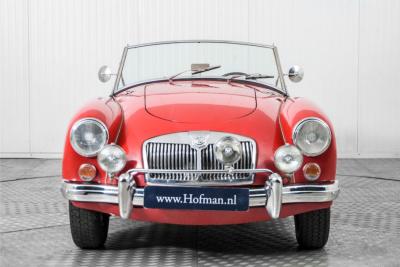
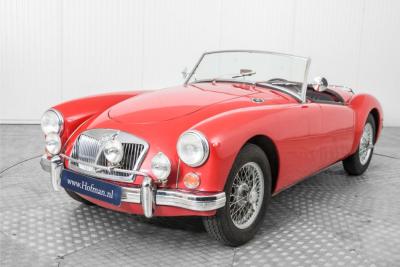
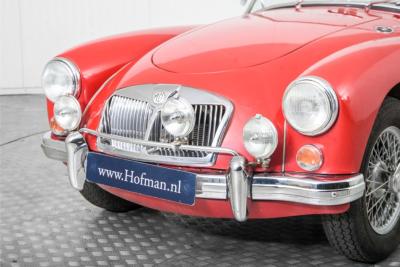
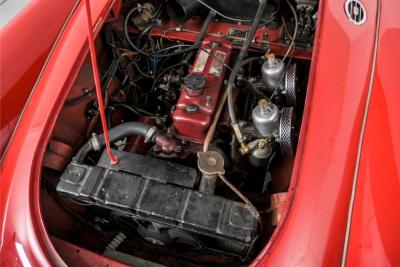
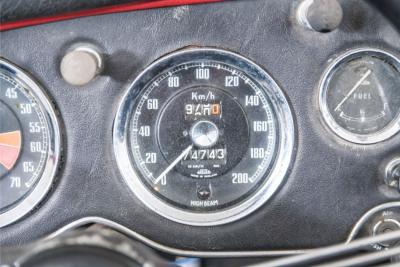
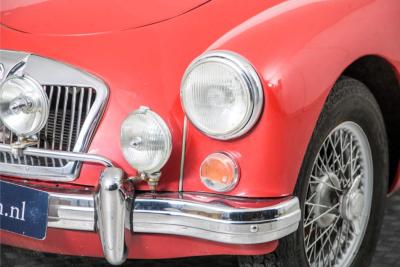
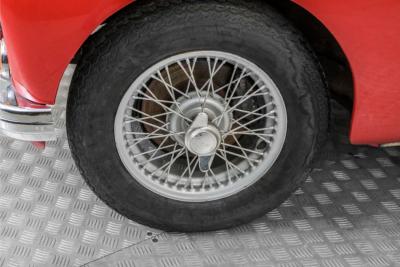
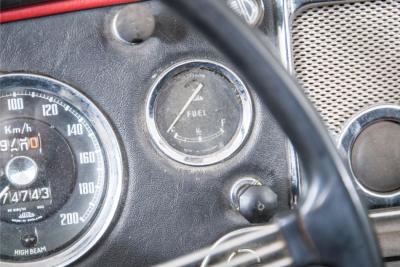
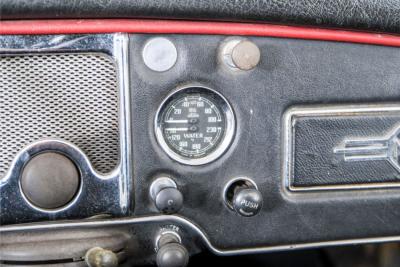
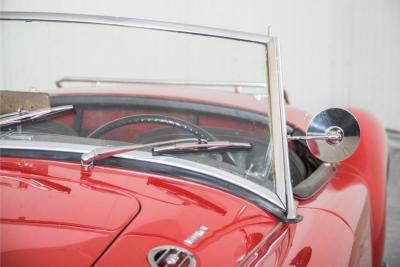
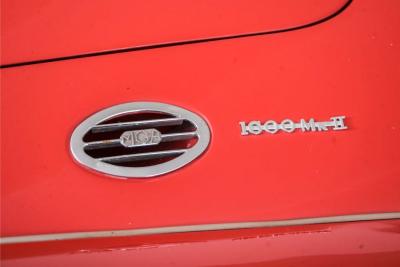
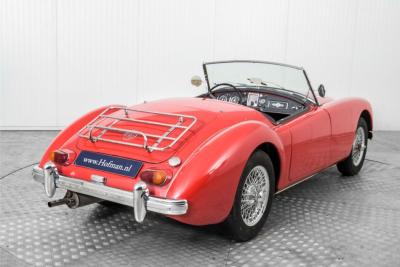
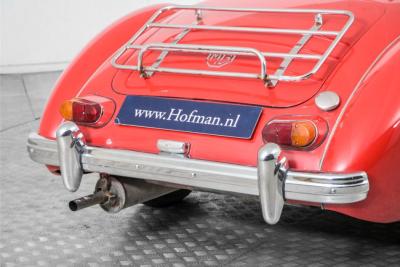
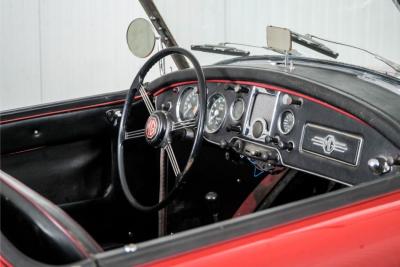
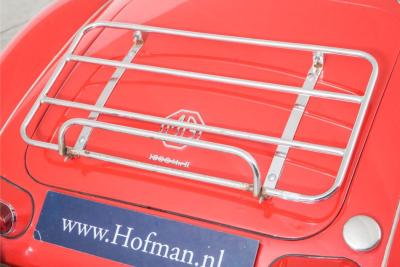
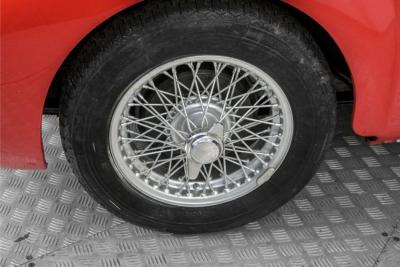
MGA MK2, fitted as an extra with the sought-after wire-spoke wheels and a chrome boot rack. A car that runs and drives well. With leather upholstery. The MGA was produced from 1955 to 1962. During that period, 101,081 units were built. However, as early as 1952, a prototype (EX175, registration HM06) featuring TD mechanics was presented to the then head of BMC, Leonard Lord. This prototype was largely based on the UMG400, a TD-special raced by George Philips in 1951 during the 24 Hours of Le Mans. Lord, however, rejected further development, as he had recently decided to put the Austin-Healey 100 into production. This decision, incidentally, led to the modernisation of the TD and the development of the TF. But eventually the time had come: at Le Mans in 1955, three MGAs (aluminium prototypes, EX182) took to the track, and later that year the first production MGAs appeared. With its low profile and streamlined bodywork, the MGA differed greatly from its predecessors with their traditional square radiators, separate mudguards and headlights, and square fuel tank with a spare wheel mounted at the rear.The MGA, as it appeared in 1955, was a two-seater roadster with a 1489 cc engine (XPEG series) mated to a four-speed gearbox. With 72 hp at 5500 rpm, the top speed was just under 160 km/h. Drum brakes were fitted all round, whilst the car was delivered as standard on steel disc wheels. Central Locking wire-spoke wheels were an optional extra. To meet the demands of customers who wanted more power for their MGA, the MGA 1600 was introduced in May 1959. This model featured the Twin-Cam’s 1558 cc engine, but without the twin overhead camshafts. In this form, the engine produced 80 bhp at 5600 rpm, enabling the MGA 1600 to (just) exceed the magical 100 mph mark. To ensure the increased power could be used safely, Lockheed disc brakes were fitted at the front; drum brakes were retained at the rear. The 1600 was available in both coupé and roadster versions. However, as the 1588 cc engine was not used anywhere else within BMC, production of the MGA 1600 was discontinued in June 1961 on economic grounds. By then, 31,501 units had been built. Its successor turned out to be the MGA 1600 MKII. The only (technical) difference was the larger (1622 cc) engine, which delivered 93 hp at 5500 rpm. The increased power mainly benefited acceleration. Until June 1962, the MGA 1600 MKII was available as a coupé and roadster; from June 1962 to September 1962, only the roadster was available. Production of the MGA then came to an end and work began on the MG B. A total of 8,719 units of the 1600 MKII were built.MGA MK2, als extra voorzien van de gewilde spaakwielen en een chromen kofferrek .Goed lopende en rijdende auto. Met lederen bekleding. De MGA werd geproduceerd van 1955-1962. In die periode werden er 101.081 exemplaren van gebouwd. In 1952 echter werd al een prototype (EX175, kenteken HM06) met TD mechaniek, aan het toenmalige hoofd BMC, Leonard Lord, getoond. Dit prototype was grotendeels gebaseerd op UMG400, een TD-special die door George Philips in 1951 tijdens de 24-uren van Le Mans geraced werd. Lord wees echter verder ontwikkelingen af, omdat hij kort te voren gekozen had de Austin-Healey 100 in productie te laten gaan. Deze beslissing heeft overigens geleid tot modernisering van de TD, de ontwikkeling van de TF. Maar uiteindelijk was het dan toch zover, op Le Mans in 1955 reden drie MGA's (aluminium prototypen, EX182) en iets later in dat jaar verschenen de eerste producties MGA's. Met zijn lage lijn en gestroomlijnde carrosserie week de MGA zeer af van zijn voorgangers met hun traditionele vierkante radiatoren, afzonderlijke spatborden en koplampen en vierkante benzinetank met reservewiel achterop.De MGA, zoals ze in 1955 verscheen, was een tweezits roadster met een motor van 1489 cc (XPEG-serie) gekoppeld aan een vierversnellingsbak. Met 72 PK bij 5500 omx/min bedroeg de topsnelheid net geen 160 km/u. Rondom waren trommelremmen gemonteerd, terwijl de wagen standaard op stalen schijfwielen werd afgeleverd. Central Locking draadspaakwielen waren een extra. Om toch te kunnen voldoen aan wensen van klanten die meer vermogen voor hun MGA wilden, werd in mei 1959 de MGA 1600 geintroduceerd. Deze had de 1558 cc motor van de Twin-Cam, maar zonder de dubbele bovenliggende nokkenassen. In die vorm leverde de motor 80 PK bij 5600 toeren, waardoor de MGA 1600 de magische 100 mijlsgrens(net) kon overschrijden. Teneinde het grotere vermogen veilig te kunnen gebruiken, werden voor Lockheed schijfremmen gemonteerd; achter bleven de trommelremmen gehandhaafd. De 1600 was leverbaar in zowel coupe als roadster. Omdat echter binnen BMC de 1588 cc motor nergens anders werd gebruikt, werd in juni 1961 op economische gronden de bouw van de MGA 1600 gestaakt. Er waren toen 31.501 exemplaren gebouwd. De opvolger bleek de MGA 1600 MKII. Het enige (technische) verschil was de grotere(1622 cc) motor die 93 PK leverde bij 5500 toeren. Het grotere vermogen kwam voornamelijk ten goede aan de acceleratie. Tot juni 1962 was de MGA 1600 MKII leverbaar als coupe en roadster, gedurende de periode juni 1962 tot september 1962 was alleen de roadster nog leverbaar. Daarna kwam een eind aan de productie van de MGA en werd begonnen met de MG B. In totaal werden van de 1600 MKII 8.719 exemplaren gebouwd.